I. Core Principle 1: Familiarize Yourself with Sample Performance to Avoid Test Risks
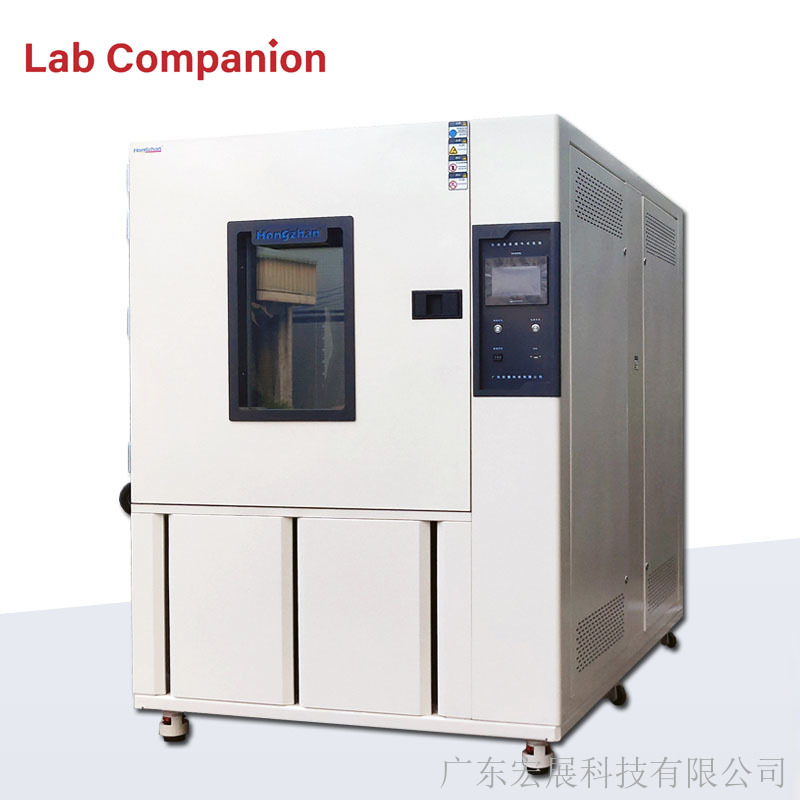
Before conducting tests with the Lab Companion High-Low Temperature Rapid Temperature Change Chamber, the primary task is to fully familiarize yourself with the basic performance of the samples. This is the fundamental prerequisite for ensuring test safety and avoiding sample damage and equipment failures. The Lab Companion High-Low Temperature Rapid Temperature Change Chamber is compatible with various types of samples, but different samples have significant differences in heat resistance, cold resistance, and heat generation characteristics. It is necessary to clarify key parameters of the samples in advance, such as material, size, heat generation power, and test tolerance range, to eliminate various risks caused by mismatches between sample characteristics and equipment operating parameters.
For example, when testing heat-generating samples such as new energy batteries, it is necessary to clarify their maximum heat generation power, ensure that the sample volume does not exceed 10% of the effective space of the equipment, and turn on the equipment's overheating protection function in advance to prevent overheating hazards. When testing fragile composite material samples, it is necessary to rely on the advantage of adjustable temperature change rate of the Lab Companion equipment, reasonably set the temperature change rate to 0.1~5℃/min, avoid sample cracking and damage caused by sudden temperature changes, and ensure the smooth progress of the test.
II. Core Principle 2: Clarify Test Conditions and Standardize Parameter Settings
Clarifying test conditions and standardizing equipment parameter settings are the core keys to ensuring the accuracy and reliability of test data. The Lab Companion High-Low Temperature Rapid Temperature Change Chamber is equipped with an industrial-grade PLC control system and a 7-inch color touch screen, which can realize fully intelligent parameter control. However, during operation, it is necessary to strictly follow the test standards and sample requirements to avoid the impact of improper parameter settings on the accuracy of test results.
First, it is necessary to clarify core parameters such as temperature range, temperature change rate, and heat preservation time in accordance with relevant test standards (such as GB/T2423, GJB150, etc.). For example, military product testing requires a wide temperature range of -70℃~150℃, and electronic component testing can adopt a temperature change rate of 5℃/min.
Second, it is necessary to accurately set safety parameters, including over-temperature protection threshold, overload protection current, water shortage alarm threshold, etc., to ensure that the equipment always operates within a safe and controllable range.
Finally, it is necessary to reasonably edit the preset test program according to the test process. The Lab Companion equipment can store 100 programs, each supporting 30 segments of temperature change curves, to avoid test interruption caused by program confusion and improve test efficiency.
III. Core Principle 3: Master Equipment Technology and Standardize Operation Procedures
Proficiency in the technical characteristics and operation procedures of the Lab Companion High-Low Temperature Rapid Temperature Change Chamber is the key to improving test efficiency and extending equipment service life. Operators need to be familiar with the equipment's structure, core functions, and operation specifications in advance to eliminate equipment failures or safety hazards caused by incorrect operations.
Before starting the machine, it is necessary to comprehensively check whether various indicators such as equipment power supply, refrigerant, refrigerating oil, and water level are normal, and confirm that the sample placement complies with the specifications (100~150mm away from the box wall) to avoid affecting the temperature uniformity inside the box. After starting the machine, first start the equipment's preheating or precooling program, and put the sample into the box only after the temperature inside the box reaches the set initial temperature to prevent the sample from being damaged by sudden cold and heat. During the test, it is necessary to observe the equipment operation status and sample changes in real time, and it is strictly prohibited to open the box door at will. If it is necessary to open it, it is necessary to first pause the heating and humidification functions, and then operate after the temperature inside the box tends to room temperature. After the test, first close the test program, take out the sample after the equipment naturally returns to room temperature, then turn off the equipment power supply, clean up the debris inside the box, and complete the equipment operation record for subsequent traceability and maintenance.
IV. Common Operation Mistakes and Avoidance Methods
Combined with the actual application scenarios of the Lab Companion High-Low Temperature Rapid Temperature Change Chamber, most equipment failures and test errors are caused by operation mistakes, which need to be focused on avoiding and standardized correction:
Mistake 1: Ignoring the heat generation characteristics of the sample and blindly setting operating parameters, leading to equipment overload and sample damage. Avoidance method: Detect the heat generation power of the sample in advance, reasonably match the equipment volume and temperature change rate, and ensure that the parameters are compatible with the sample characteristics.
Mistake 2: Opening the box door at will during the test, leading to drastic fluctuations in the temperature inside the box and affecting test accuracy. Avoidance method: Strictly follow the operation procedures, do not open the box door unless necessary, and if it is necessary to open it, first pause the relevant functions and operate after the temperature stabilizes.
Mistake 3: Directly turning off the equipment power supply after the test without completing the temperature recovery and cleaning process, damaging equipment components. Avoidance method: Strictly follow the process of "closing the program → natural temperature recovery → taking out the sample → cleaning the equipment → turning off the power supply" to do a good job in subsequent equipment maintenance.
In addition, Lab Companion can provide professional operation training services to help operators quickly master equipment use skills, fully avoid various operation mistakes, and ensure that the test work is carried out efficiently, safely and orderly.
As the "control core" of high-low temperature test chambers, the Q8 Series Controller delivers stable support for environmental reliability testing with full-scenario adaptability, ultra-high precision, and multiple safety designs. Whether for extreme testing of electronic components or weather resistance verification of new materials, its rich functions and user-friendly design meet the rigorous requirements of scientific research, industrial production, and other fields.
I. Intuitive Touch Interaction: Doubling Operational Efficiency
Adopting full-touch interaction, the Q8 Controller features a high-definition touchscreen with sensitive response, enabling parameter setting, program startup, and other operations with simple finger taps—no professional training required for new users. The customizable interface allows pinning frequently used functions, significantly reducing configuration time for complex tests and adapting to high-frequency, multi-batch testing scenarios.
II. 0.01-Class Precision: Core Guarantee for Accurate Data
Equipped with a high-precision data acquisition module and intelligent PID algorithm, the Q8 achieves 0.01-class temperature control precision, capturing real-time temperature fluctuations inside the chamber and adjusting rapidly. Within the wide temperature range of -80℃~150℃, the fluctuation is stabilized at ±0.01℃, avoiding temperature deviations in sensitive tests such as semiconductor and aerospace component testing, and providing authoritative data for product reliability evaluation.
III. Versatile Adaptability: Meeting Multi-Scenario Needs
Compatible with PT100, thermocouples, and other sensors, the Q8 supports flexible switching to reduce equipment upgrade costs. Its cooling output function precisely controls the refrigeration system to minimize energy waste, while the transmission output converts temperature data into standard electrical signals, seamlessly connecting to data acquisition systems for automatic upload and traceability of test data.
IV. Massive Storage: Intelligent Manager for Complex Processes
Catering to multi-stage testing needs (e.g., automotive parts), the Q8 supports storage of 100 process programs, each with up to 50 steps. Operators can preset parameters such as temperature and holding time to simulate working conditions like day-night cycles and extreme temperature shocks. Programs can be activated with one click for continuous operation, enhancing the standardization and efficiency of batch testing.
V. EVT Function: Early Warning Barrier for Test Safety
The Q8’s EVT (Event Verification Test) function monitors temperature abnormalities, sensor failures, and other issues in real time. When thresholds are triggered, it activates audio-visual alarms and records fault information. Supporting hierarchical fault handling, it automatically adjusts parameters to resume testing for minor anomalies and shuts down urgently for severe faults, safeguarding unattended long-duration tests.
Conclusion: Empowering Test Reliability with Strong Capabilities
Integrating intuitive touch operation, 0.01-class precision, versatile adaptability, and comprehensive safety guarantees, the Q8 Controller fully meets the core requirements of high-low temperature testing. Whether for precise scientific research or production quality control, its stable performance and intelligent design serve as the core competitiveness of test chambers, helping industries improve product quality.






 Consigue una cotización
 Red IPv6 compatible