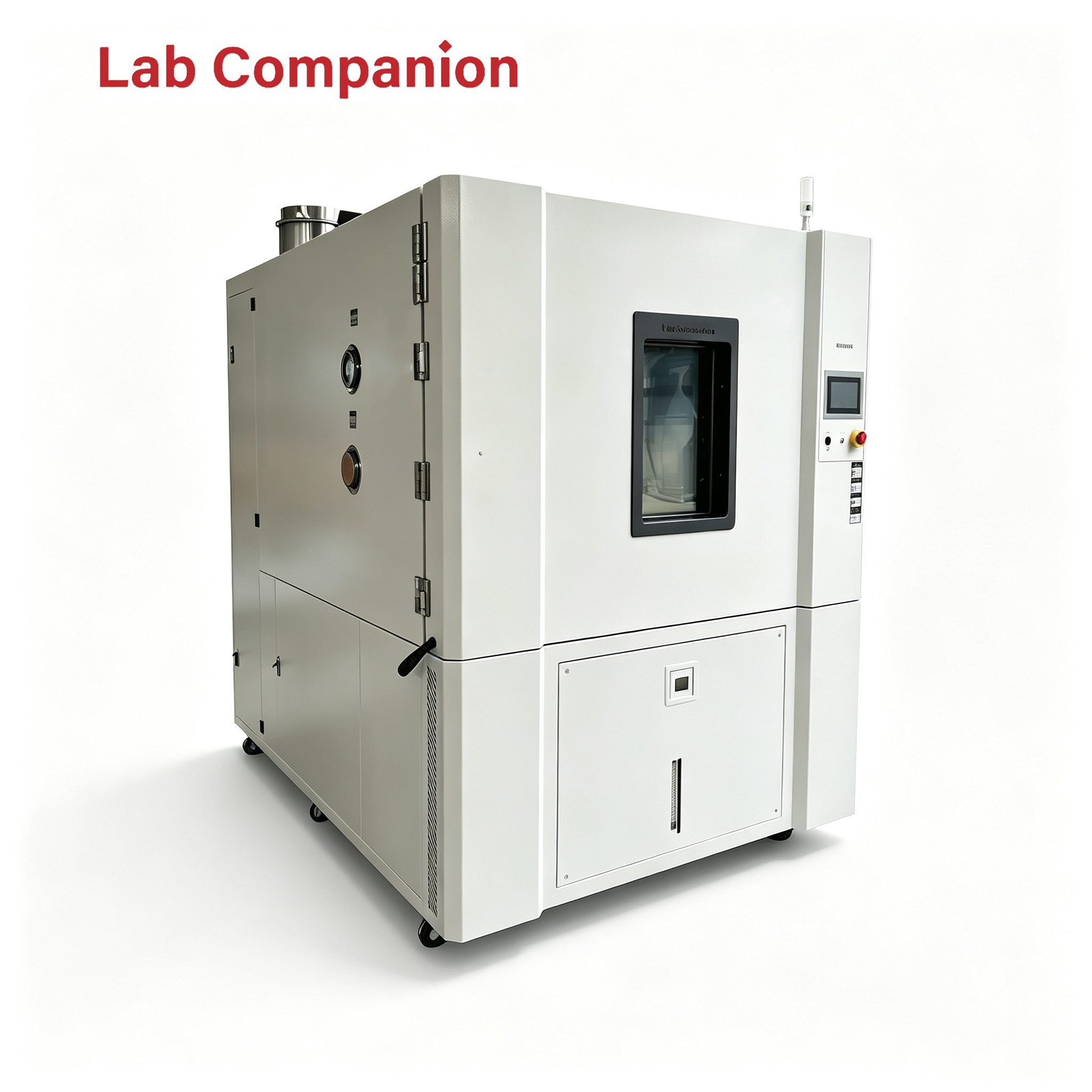
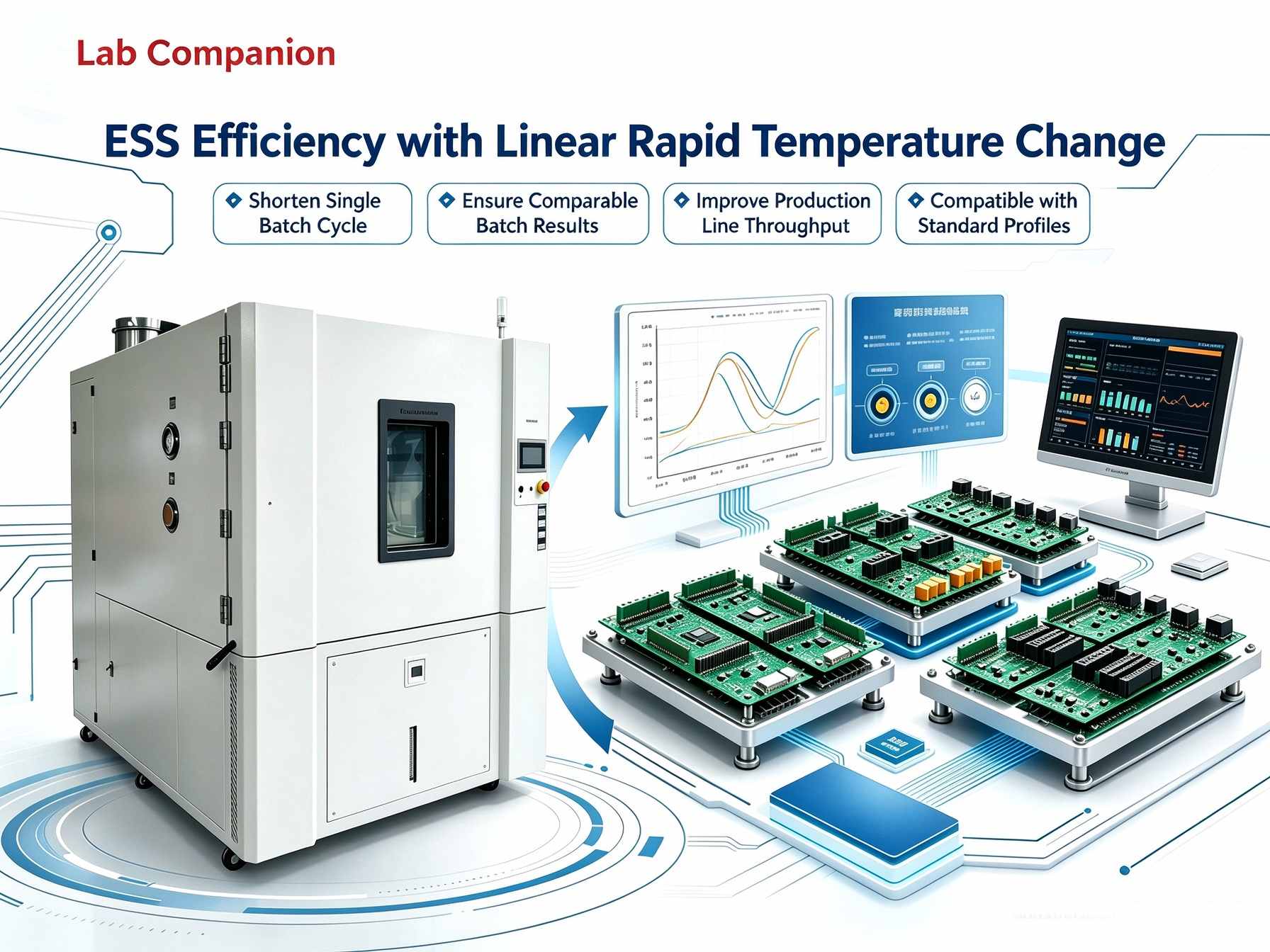
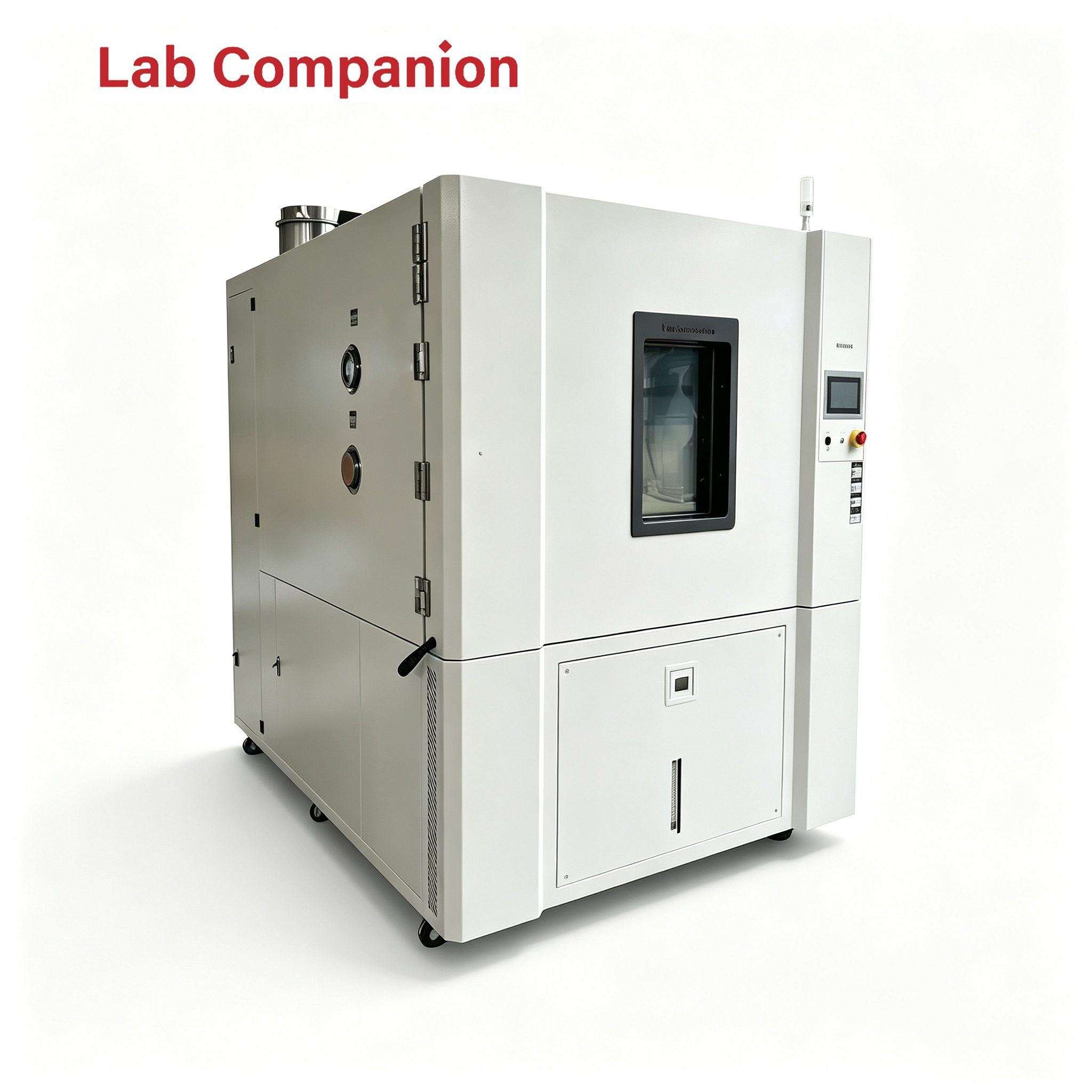
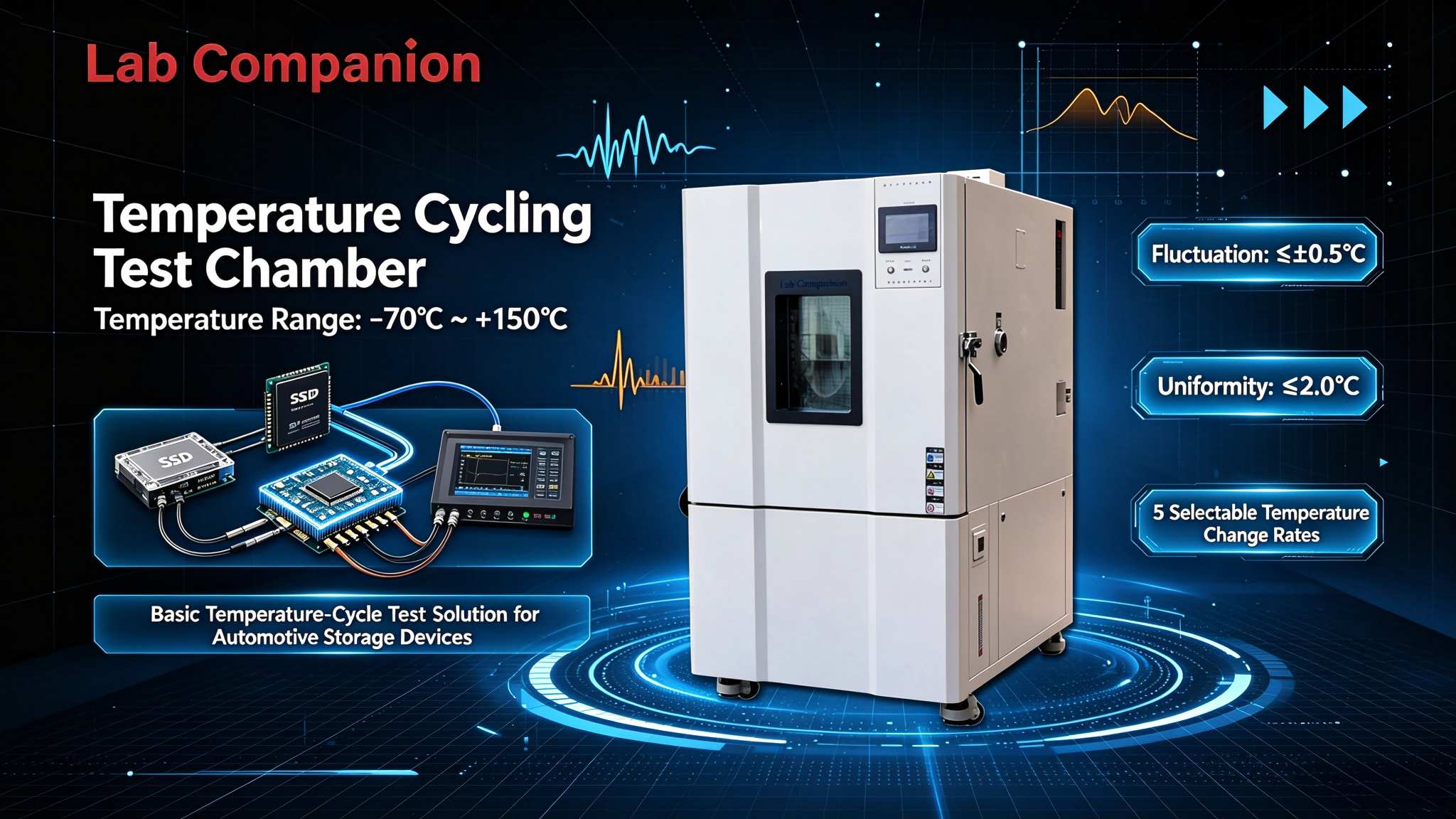
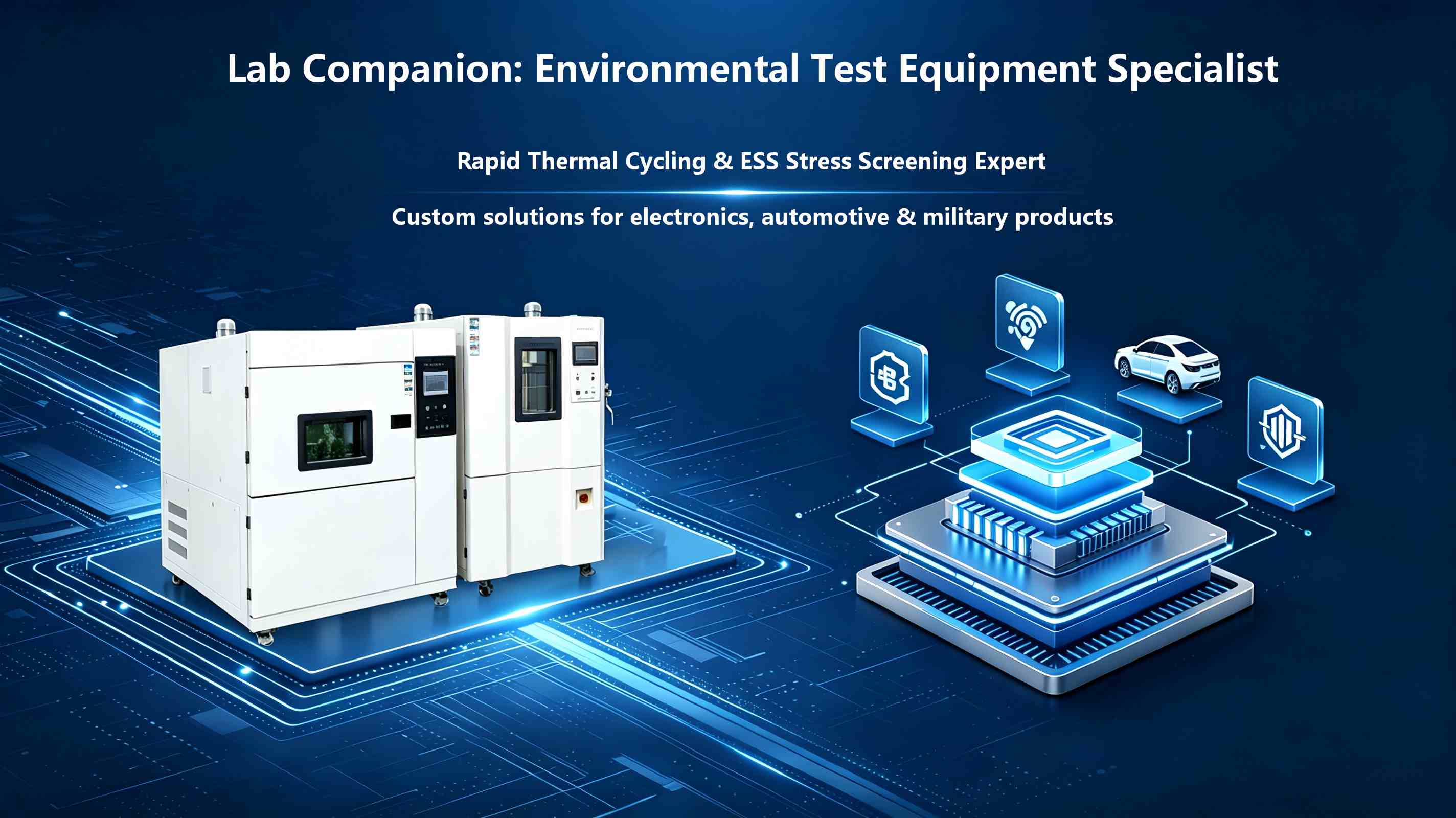
20℃/min ultra-fast temperature change + 72-hour continuous stable operation, with robust performance to guarantee urgent delivery, helping enterprises seize rush orders and retain core customers!
For small and medium-sized enterprises in industries such as electronic components, auto parts, and new energy batteries, urgent rush orders have long been the norm. Downstream automakers and core clients often place sudden orders, requiring temperature change testing and qualified reports to be completed within 24 hours — any delay will result in immediate cancellation of cooperation. However, traditional rapid temperature change chambers suffer from low efficiency and high failure rates, taking more than 12 hours to finish a single test run, and are prone to malfunctions that interrupt testing. This not only delays delivery schedules but also causes enterprises to lose orders and suffer heavy financial losses for no reason.
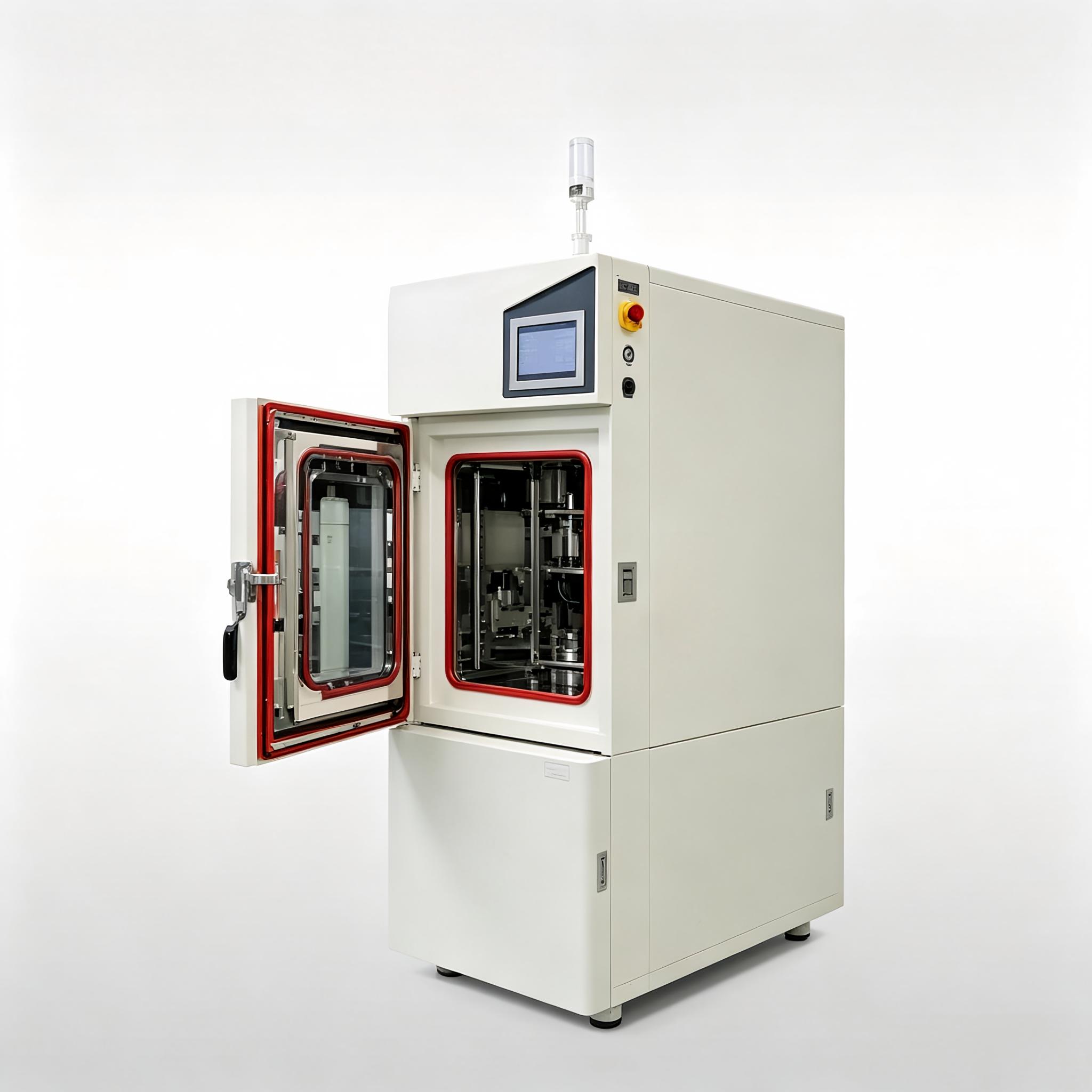
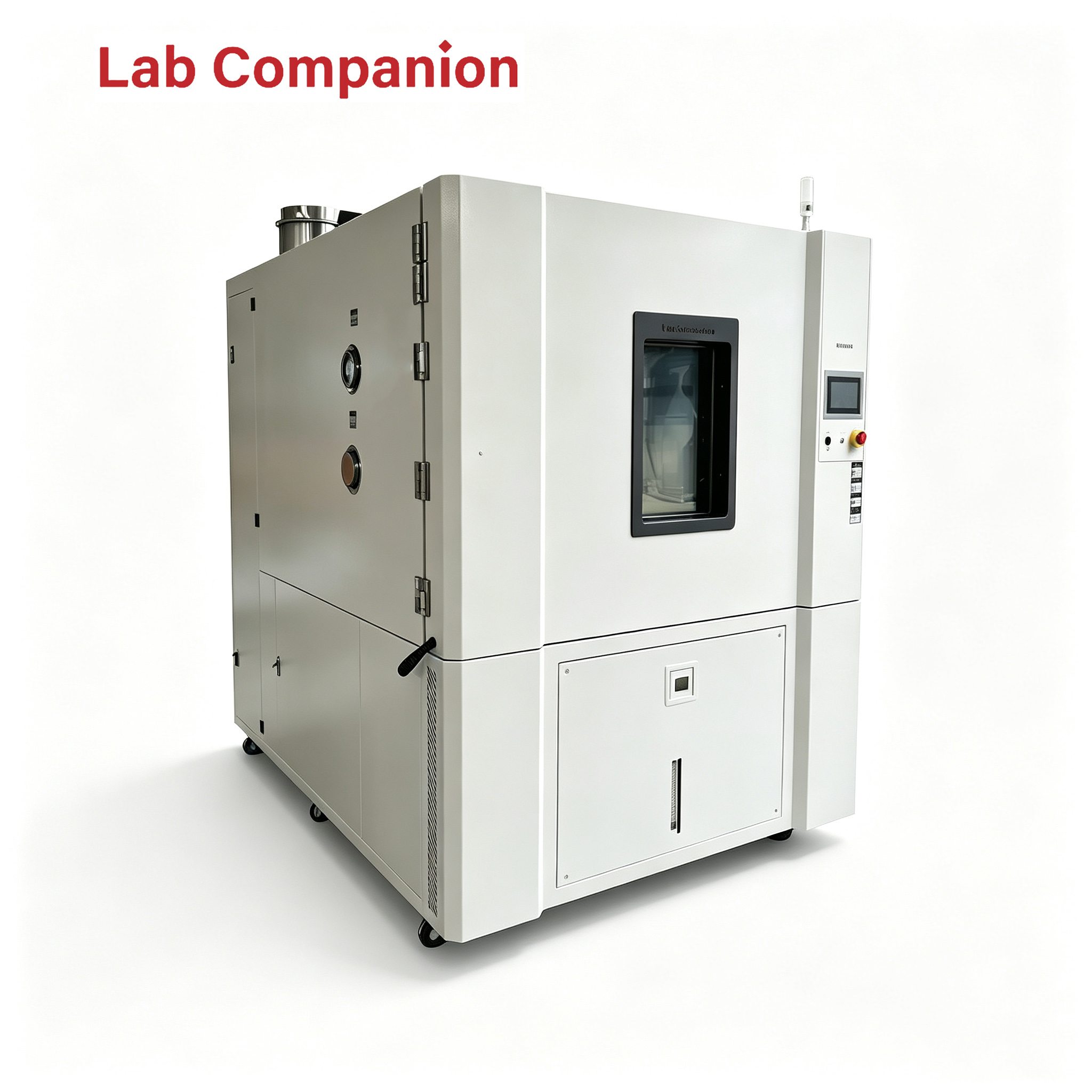
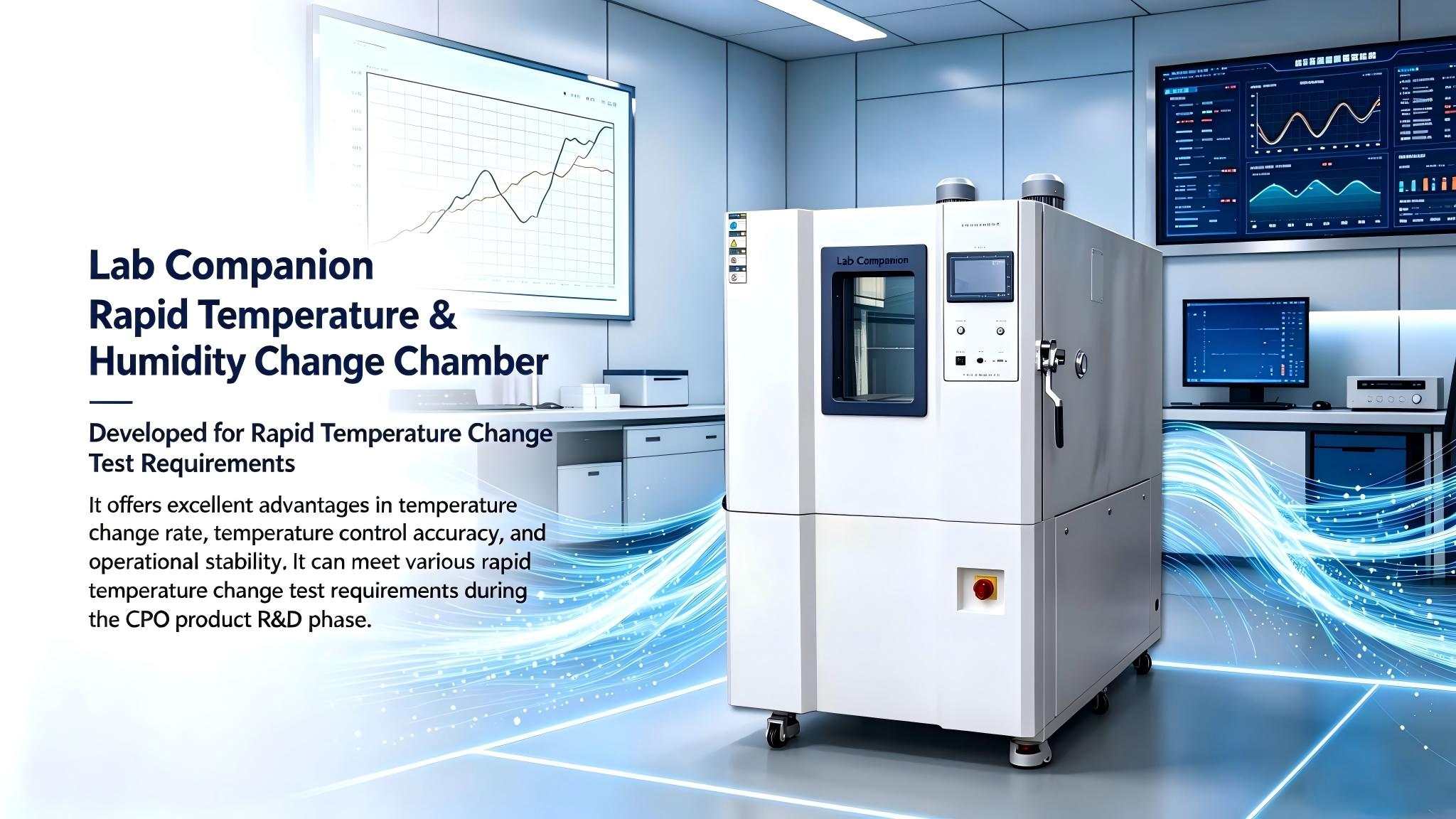
With 21 years of deep cultivation in the environmental testing equipment industry, Lab Companion fully understands the pain points of emergency testing for small and medium-sized enterprises worldwide. We have developed a dedicated emergency rapid temperature change chamber targeting these demands, relying on core advantages of ultra-high-speed temperature change and high operational stability. It can complete multiple sets of emergency temperature change tests within 24 hours, completely breaking the constraints of traditional equipment, enabling enterprises to handle rush orders calmly and firmly retain customer resources and market share.
Industry Emergency Pain Points: Traditional Equipment Fails Frequently, Making Rush Orders Hard to Fulfill
In-depth industry research shows that small and medium-sized enterprises generally face three core dilemmas when dealing with rush order testing, falling into a passive position throughout the process:
• Low Testing Efficiency, Unable to Meet Batch Demands: Traditional rapid temperature change chambers only achieve a load temperature change rate of 5-8℃/min, taking at least 12 hours to complete one -40℃~85℃ cycle test. Only one test run can be finished within 24 hours, making it completely inadequate for batch urgent testing needs and unable to meet customer delivery deadlines.
• Poor Equipment Stability, Prone to Testing Interruptions: Most traditional equipment uses low-quality core components, with an extremely high failure rate during continuous operation. Once it shuts down for maintenance mid-test, it often takes hours of downtime, directly missing the delivery window and wasting all previous testing efforts.
• Lack of Emergency Support, Exacerbating Delays: After equipment failures, manufacturers respond slowly with no dedicated services such as urgent debugging or expedited report generation, further prolonging the testing cycle and causing enterprises to miss cooperation opportunities.
An auto parts manufacturer once encountered such a predicament: it received an urgent order from an automaker, requiring 3 sets of vehicle sensor temperature change tests to be completed within 24 hours. When using traditional equipment, a refrigeration malfunction occurred after only 10 hours of operation, taking 6 hours to repair. Ultimately, the manufacturer failed to submit the test report on time, losing the long-term cooperative automaker client and incurring incalculable economic losses. Such cases are common in the industry, and the ability to handle emergency testing for rush orders has long become a core competitiveness for small and medium-sized enterprises to seize the market and gain a foothold.
Lab Companion Robust Emergency Solution: Speed + Stability + Remote Support, Complete Urgent Testing in 24 Hours
Targeting the pain points of industry emergency testing, Lab Companion launches a dedicated emergency rapid temperature change chamber, paired with a full-process remote emergency service system, realizing "faster testing, stable operation, and on-time delivery" to comprehensively help enterprises overcome rush order testing challenges and cope with market urgent demands calmly.
01 20℃/min Ultra-Fast Temperature Change, Doubling Testing Efficiency
Lab Companion's dedicated emergency model boasts a load temperature change rate of up to 20℃/min, 2-4 times more efficient than traditional equipment. It only takes 8 hours to complete one -40℃~85℃ cycle test, and 3 sets of urgent tests can be easily finished within 24 hours, perfectly adapting to the batch testing needs of rush orders. Equipped with a binary cascade high-efficiency refrigeration system and high-power heating module, it accelerates both heating and cooling: it only takes 3.2 hours to drop from 25℃ room temperature to -40℃, and 5.5 hours to surge from -40℃ to 85℃, greatly shortening the testing cycle and seizing delivery opportunities.
02 72-Hour Fault-Free Stable Operation, Eliminating Testing Interruption Risks
The equipment selects world-class core components, including French Tecumseh hermetic compressors and US Copeland refrigeration parts, combined with a modular precision structure design. It supports 72-hour continuous fault-free operation with a complete machine failure rate lower than 0.5%, completely avoiding the risk of mid-test shutdowns during emergency testing and ensuring smooth testing progress. It is also equipped with an intelligent fault early warning system that monitors the operation status of core components in real time, detects potential faults in advance, minimizes downtime, and keeps testing on track.
03 Full-Process Remote Emergency Service, Fully Guaranteeing On-Time Delivery
Lab Companion has a global service network and a professional technical support team, launching exclusive remote emergency services for rush orders: 2-hour rapid response, full-time online remote guidance and technical troubleshooting. If equipment faults occur, our professional engineers provide real-time remote debugging and maintenance guidance to resolve issues quickly and ensure uninterrupted testing. We also offer expedited test report services: standardized accurate reports can be generated within 1 hour after testing completion, helping enterprises submit for customer review quickly and fulfill orders smoothly.
Real Case Verification: Complete 3 Sets of Tests in 24 Hours, Successfully Retain Key Client Orders
An electronic components manufacturer received an urgent rush order from a leading smartphone brand, requiring 3 sets of -40℃~85℃ cycle temperature change tests for mobile phone camera modules to be completed within 24 hours with a qualified report submitted; otherwise, the order would be canceled directly. The manufacturer's traditional equipment could only complete 1 set of tests within 24 hours, leaving it helpless against the strict deadline. It immediately contacted Lab Companion to activate the dedicated emergency solution.
Lab Companion promptly arranged the T-200-20 rapid temperature change chamber, with our engineers providing remote debugging and pre-setting testing procedures. The equipment started testing at a 20℃/min ultra-fast temperature change rate, operating stably throughout without any malfunctions. Actual test data shows that each test run took only 7.5 hours, and 3 sets of tests were successfully completed within 24 hours. With a temperature control accuracy of ±0.1℃ and temperature field uniformity ≤±2℃, the test data was accurate and reliable. A standardized report was generated within 1 hour, allowing the manufacturer to pass customer review smoothly and successfully retain the large order and core cooperative relationship.
The person in charge of the enterprise stated: "The ultra-fast efficiency and high stability of Lab Companion's rapid temperature change chamber have completely solved our rush order testing problems. We later designated it as our exclusive emergency testing equipment, and to date, we have completed more than 20 rush order tests with Lab Companion's equipment, with zero delivery delays, helping us firmly stabilize our customer base."
Exclusive Emergency Support: Reserved Emergency Equipment, No Waiting for Rush Orders
To help small and medium-sized enterprises worldwide handle rush orders more calmly, Lab Companion reserves dedicated emergency testing equipment. Enterprises can make reservations in advance to secure exclusive equipment resources, and start testing immediately when rush orders arrive without waiting for equipment allocation. We also providefree remote debugging services for emergency testing: engineers connect with testing demands one-on-one remotely, pre-set testing procedures to enable quick test startup. For ultra-urgent needs, we offer priority remote technical support to further shorten testing preparation time, allowing enterprises to seize orders faster.
Lab Companion's dedicated emergency rapid temperature change chamber, paired with a comprehensive global remote emergency service system, completely resolves the rush order testing dilemmas of small and medium-sized enterprises. It frees enterprises from passive delays, helping them easily seize urgent orders, stabilize core customers, and comprehensively enhance core market competitiveness!
Industry Pain Point: Condensation Risks Threaten Precision Testing Safety
In high-end sectors such as semiconductors, optical components, and military-grade electronics, temperature and humidity testing is a critical process to verify product reliability and stability. However, condensation has long been a persistent industry challenge, especially under low-temperature high-humidity or alternating temperature-humidity conditions. Traditional test chambers are prone to forming condensation on inner chamber walls and sample surfaces, which can cause sample oxidation, performance degradation, or even short circuits and irreversible damage to precision components.
This not only leads to costly sample losses and interrupted testing schedules but also results in distorted test data, driving up R&D and testing costs for enterprises. Precision samples like microchips, high-precision optical lenses, and sensitive sensors are extremely vulnerable to condensation—even minor moisture buildup can render finished products scrapped, causing substantial financial losses and project delays. With 21 years of expertise in environmental test equipment, Lab Companion targets this core pain point with upgraded anti-condensation technology for its temperature & humidity test chambers, eliminating condensation risks at the source and securing full-process safety for precision sample testing.
Core Innovation: Triple Anti-Condensation System for Root-Cause Risk Elimination
Abandoning the traditional single anti-condensation design widely used in the industry, Lab Companion leverages its profound technical accumulation to develop an innovative "Pre-Heating + Anti-Condensation Coating + Optimized Airflow" triple closed-loop system. Tailored for the strict testing requirements of high-precision samples, this system achieves zero condensation under all operating conditions, thoroughly resolving the long-standing industry bottleneck with each upgrade directly addressing real-world testing pain points.
1. Intelligent Chamber Pre-Heating: Cut Off Condensation at the Source
The chamber is equipped with a self-developed intelligent pre-heating system that automatically raises the chamber temperature to 5-10℃ above the dew point before testing commences, while pre-conditioning samples to eliminate thermal temperature differences. This fundamentally prevents condensation caused by thermal shock in low-temperature high-humidity environments. During testing, a high-precision monitoring module tracks dew point temperature in real time, and AI algorithms dynamically adjust pre-heating power to maintain chamber temperature above the dew point consistently, blocking condensation formation at its origin.
2. Specialized Anti-Condensation Coating: Build a Physical Protective Barrier
Lab Companion applies a custom anti-condensation coating to all critical condensation-prone areas, including inner chamber liners, doors, and sample racks. This coating features excellent hydrophobic and anti-moisture properties, effectively preventing moisture adhesion. It also boasts high and low temperature resistance (-70℃ to +150℃) and corrosion resistance, ensuring long-term durability without peeling or degradation. Most importantly, it causes zero contamination to precision samples, balancing robust protection and operational safety.
3. Optimized Airflow Circulation: Suppress Moisture Accumulation
We have optimized the air duct design with a vortex guide duct and high-speed silent centrifugal fan, accelerating internal airflow circulation. This quickly disperses and evaporates trace moisture, preventing condensation buildup on samples and chamber walls. Uniform airflow also eliminates local low-temperature dead zones, further reducing condensation risks. Paired with an integrated boiler steam humidification system, it avoids the drawbacks of traditional water mist humidification, preventing secondary moisture damage to samples and maintaining a pure, stable testing environment.
Parameter Advantages: Precise Temperature & Humidity Control Boosts Anti-Condensation Performance
Complementing the core anti-condensation technology, Lab Companion test chambers deliver exceptional temperature and humidity control accuracy, creating a dual guarantee for reliable testing and enhanced anti-condensation performance, fully meeting the demands of precision sample testing.
• Wide Operating Range: Temperature coverage from -70℃ to +150℃, humidity control from 20%RH to 98%RH, adapting to extreme testing conditions and global industry standards;
• High Control Precision: Temperature accuracy ±0.3℃, humidity accuracy ±2%RH, temperature & humidity fluctuation ≤±0.3℃/±2%RH, locking in test parameters to avoid condensation from sudden temperature/humidity changes;
• Intelligent Dynamic Regulation: Equipped with high-precision dew point sensors that feed real-time data to a dual-PID cooperative control system, dynamically adjusting cooling, heating, humidification and dehumidification power to avoid mismatched "low temperature & high humidity" conditions;
• Flexible Alternation Speed: Adjustable temperature-humidity alternation rate from 0.1℃/min to 5℃/min, allowing customized gentle change curves based on sample characteristics to prevent condensation from rapid fluctuations.
Field Applications: Proven Performance Across High-End Industries
Lab Companion’s upgraded anti-condensation temperature & humidity test chambers have been widely deployed in semiconductor, optical, and military-grade electronics sectors worldwide, with proven performance validated by extensive real-world testing.
In thesemiconductor industry, leading chip manufacturers rely on Lab Companion HS Series chambers for reliability testing. Under harsh alternating conditions of -40℃ to +85℃, the chambers operate with zero condensation, boosting chip test pass rates and reducing costly sample scrap. In the optical industry, the chambers eliminate lens fogging and condensation, ensuring stable optical performance and accurate, repeatable test data for high-precision optical component R&D.
For military and defense applications, Lab Companion custom chambers meet strict military standards (GJB), providing a secure testing environment for electronic components and preventing condensation-related performance failures. Actual test data confirms: the chambers run continuously for 72 hours under extreme conditions (-40℃, 80%RH) with no condensation detected, far exceeding conventional industry performance benchmarks.
Craftsmanship & Innovation: Setting a New Standard for Precision Environmental Testing
While anti-condensation design may seem a detail, it directly impacts the safety of precision samples and the credibility of test data—two critical factors for enterprise R&D quality. For 21 years, Lab Companion has adhered to a customer-centric R&D philosophy, focusing on solving industry pain points through continuous technical refinement. Our triple anti-condensation system, paired with ultra-precise temperature and humidity control, completely eliminates condensation risks, protecting samples while improving testing efficiency and data reliability.
Moving forward, Lab Companion will continue to drive technological innovation and product iteration, upholding craftsmanship and professionalism to deliver safer, more accurate, and more reliable environmental testing solutions for global high-end industries. We are committed to empowering enterprises worldwide to enhance product reliability and core competitiveness through cutting-edge testing equipment.
Product Positioning: Exclusive for Semiconductor Chip Testing, Adapt to Extreme Temperature Changes from -70℃ to +150℃
Nowadays, semiconductor chips are accelerating iteration towards high integration, high computing power and miniaturization. The reliability test standards for high-end chips (including 5G communication chips, automotive-grade chips, radio frequency chips, etc.) continue to upgrade, imposing extremely stringent requirements on the extreme temperature change adaptability and temperature control accuracy of test equipment. Such high-end chips need to undergo hundreds of temperature change cycle tests in the ultra-wide temperature range of -70℃ to +150℃, simulating extreme working environments to accurately screen potential defects such as bonding wire fatigue, package delamination and performance attenuation, ensuring the long-term operational stability of chips.
However, conventional rapid temperature change equipment on the market generally has shortcomings such as insufficient temperature range coverage, low temperature control accuracy and poor scenario adaptability, making it difficult to meet international authoritative test standards such as JEDEC JESD22-A104, which directly restricts the R&D iteration and mass production progress of semiconductor chips. Focusing on the environmental testing equipment field and targeting industry pain points accurately, Lab Companion has launched an exclusive rapid temperature change test chamber for semiconductor chips. With its ultra-wide temperature range of -70℃ to +150℃ and high-precision temperature control performance, it perfectly adapts to the stringent test requirements of various semiconductor chips.
Customized Core Parameters, Precisely Matching the Rigid Needs of Semiconductor Testing
Lab Companion special rapid temperature change chamber for semiconductors is polished with all-dimensional core parameters around the characteristics of semiconductor chip testing, taking into account stability, accuracy and practicality, and fully conforms to the test standards of high-end chips:
• Ultra-wide Temperature Range Coverage: The basic temperature range covers -70℃ to +150℃, and can be flexibly expanded to -70℃ to +220℃. It is fully suitable for multiple scenarios such as -40℃~+150℃ cycle test of automotive-grade chips, ultra-low temperature test of radio frequency chips, and high-temperature aging test of advanced packaging chips, with no shortcomings in temperature range adaptation.
• Adjustable Temperature Change Rate + High-precision Temperature Control: The temperature change rate is freely adjustable from 5 to 20℃/min. Low-speed temperature change can be set for precision chips to avoid damage to the internal structure of chips caused by rapid temperature change; the temperature control accuracy reaches ±0.3℃, and the temperature uniformity in the chamber is ≤±0.5℃, fully in line with the international standard of JEDEC JESD22-A104. It can accurately capture the subtle performance fluctuations of chips during temperature change, ensuring the authenticity, reliability and traceability of test data.
• Exclusive Protection Design: Equipped with nitrogen replacement function, it can accurately control the low-oxygen environment in the chamber, effectively avoiding problems such as oxidation, condensation and corrosion during chip testing, protecting precision chips in all directions and ensuring the smooth progress of the test process.
Special Scenario-based Design, Adapting to Diverse Semiconductor Test Conditions
Based on the special process requirements of semiconductor chip testing, Lab Companion has created a full-process customized service, optimized the equipment structure and functional configuration, solved the industry problem of poor adaptability of traditional equipment, and covered multi-scenario test needs:
• Linkage Test Adaptation: Optimize the internal layout of the chamber and reserve standardized probe station interfaces, which can be directly connected to the chip test probe station to realize linkage testing without additional equipment modification, solving the pain points of incompatible interfaces and unreasonable layout, simplifying the test process and improving test continuity.
• Anti-interference Optimization: Built-in electromagnetic shielding module, which effectively isolates external electromagnetic interference, ensures stable signal transmission during chip testing, eliminates external factors interfering with test data, and guarantees accurate and error-free test results.
• Flexible Models + Intelligent Control: Launch compact small-capacity models such as 200L and 300L, suitable for small-batch R&D testing and sample verification of semiconductor chips; equipped with a 7-inch intelligent touch screen, supporting the storage of more than 200 sets of test programs, enabling rapid switching of test parameters within 45 seconds, adapting to the test needs of chips of different specifications and models, and greatly improving test efficiency.
Verified by Leading Enterprises, Helping Reduce Costs and Improve Efficiency in Chip R&D
With its robust performance, Lab Companion special rapid temperature change chamber for semiconductors has become the core test equipment for leading semiconductor enterprises in China and globally such as Hisilicon and SMIC, and has implemented multiple measured cases, effectively helping enterprises solve test problems and speed up R&D and mass production:
After a 5G chip enterprise was equipped with Lab Companion equipment, the full temperature range cycle test time from -40℃ to +150℃ was shortened to 30 minutes, the test efficiency was increased by 4 times, and the original 4-day test task could be completed in 1 day. The temperature control deviation was ≤±0.3℃, the test data fully met the standards, and it passed the JEDEC international certification at one time, avoiding rework loss and reducing test costs.
An automotive-grade MCU chip enterprise selected the 20℃/min rapid temperature change model, which can complete temperature switching in 2 minutes, with the temperature control accuracy stably maintained at ±0.3℃. Combined with the nitrogen replacement function to eliminate condensation, the test cycle was completed 15 days in advance, helping the chip pass the AEC-Q100 automotive-grade certification smoothly, and the chip package defect rate dropped below 0.05%, greatly improving product yield.
Supported by Authoritative Standards, Escorting Global Layout of Products
Lab Companion semiconductor rapid temperature change chamber strictly complies with many international and China’s authoritative test standards such as IEC, GB/T and JEDEC, and has passed CNAS calibration certification. The equipment test data is globally recognized and can be directly used for product compliance certification and overseas market access audit, helping semiconductor products go global easily.
At the same time, Lab Companion has built a global service system. Relying on global service outlets, it provides full-cycle technical support including 2-hour rapid response and dedicated on-site technical assignment. It is equipped with a professional semiconductor test technical team, which can customize personalized test solutions according to customers' exclusive test needs, helping semiconductor enterprises improve product reliability and seize core competitiveness in the global market.
With the rapid development of electronics, new energy, aerospace and other industries, conventional standard fast temperature chambers can no longer meet the personalized testing needs of some enterprises, making non-standard customization an increasingly popular choice. However, many enterprises fall into the misunderstanding of "blind customization" when making customizations, believing that all needs can be customized or over-customizing, which leads to doubled customization costs, extended cycles, and even some customization needs that are meaningless and become "false needs".
With 21 years of experience in non-standard customization and thousands of customized cases completed, Lab Companion combines practical experience to clarify the core customizable dimensions of fast temperature chambers, analyze common "false needs", help enterprises accurately sort out customization needs, avoid over-customization, and achieve "customized adaptation and controllable costs".
I. Core Customizable Dimensions of Fast Temperature Chambers (Achievable)
Combined with industry needs and technical feasibility, the customizable dimensions of fast temperature chambers are mainly divided into 4 categories, all of which can be accurately implemented:
1. Temperature Range Customization: The temperature range of conventional equipment is -70℃~+180℃. According to enterprise needs, we can customize a lower temperature (minimum -100℃) or a higher temperature (maximum +250℃) to adapt to harsh testing scenarios such as aerospace and military industry. For example, Lab Companion customized a fast temperature chamber for a military enterprise with a temperature range of -78℃~+150℃, which meets the GJB 150.5A military standard.
2. Volume and Size Customization: The conventional volumes are 150L, 225L, 400L, 600L and 1000L. According to the size and batch of test products, we can customize small volumes (minimum 50L) or large volumes (maximum over 10000L) to adapt to the testing of products of different sizes such as small chips, large automotive battery packs and motors. For example, Lab Companion customized a large fast temperature chamber with a volume of 5000L for a new energy enterprise, which can test multiple automotive battery packs at the same time, greatly improving testing efficiency.
3. Temperature Change Rate Customization: The conventional temperature change rate is 5-20℃/min. According to testing standards, we can customize a higher temperature change rate (maximum 30℃/min) or more precise temperature change rate control to adapt to the dynamic temperature testing needs of special products. For example, the equipment customized by Lab Companion for a semiconductor enterprise can realize stepless control of temperature change rate from 1-20℃/min, accurately matching the needs of different stages of chip testing.
4. Special Function Customization: According to industry testing needs, we can customize special functions such as nitrogen replacement, probe station interface, high heat load adaptation, remote monitoring upgrade and automatic data analysis to adapt to personalized testing scenarios in semiconductor, AI, military and other industries. For example, for semiconductor chip testing, the nitrogen replacement function is customized to prevent chip oxidation; for AI server testing, the high heat load adaptation function is customized, with a heat load capacity of up to 60kW, ensuring stable testing.
II. Common "False Customization Needs" (To Avoid)
The so-called "false needs" refer to needs that can be met through adjustment or simple modification of conventional equipment without customization. If such needs are blindly customized, they will increase customization costs and cycles, and have no practical significance. Common false needs are as follows:
1. Blind Upgrade of Temperature Change Rate: Many enterprises think that the higher the temperature change rate, the better, and blindly require customization of a high rate of 30℃/min, but their own testing standards only require 10℃/min. Customizing a high rate not only increases the cost by more than 30%, but also doubles the energy consumption in the later stage, which cannot play a role in actual use.
2. Excessive Volume Enlargement: Some enterprises blindly require customization of large-volume equipment for fear that the test products cannot be accommodated, but ignore their own test batch and laboratory space, resulting in excessive equipment volume, waste of energy consumption, excessive space occupation, and a significant increase in procurement costs. For example, if only small electronic components are tested, the conventional 225L equipment can meet the needs, and there is no need to customize large equipment above 600L.
3. Redundant Customization of Special Functions: Some enterprises blindly pursue "complete functions" and customize various special functions such as nitrogen replacement and probe station interface, but their own testing scenarios do not need them. For example, conventional electronic component testing does not require customization of nitrogen replacement function. Such redundant customization will increase the cost by 10%-20% and make later maintenance complicated.
III. Lab Companion's Non-Standard Customization Advantages
In the non-standard customization service, Lab Companion will first sort out the testing needs for enterprises, distinguish between "necessary customization needs" and "false needs", and provide reasonable customization schemes combined with the enterprise's testing standards, product characteristics and budget, so as to avoid over-customization. At the same time, Lab Companion has a professional customized R&D team with a short customization cycle (20-30 days for conventional customization and 45-60 days for complex customization), and communicates with enterprises throughout the customization process to ensure that the customized equipment accurately adapts to the needs, while controlling the customization cost and cycle.
IV. Core Principle of Non-Standard Customization
The core of non-standard customization is "adapting to needs and focusing on practicality", rather than blindly pursuing "completeness and high-end". When customizing fast temperature chambers, enterprises need to rationally put forward customization needs based on their own testing needs, avoid "false needs", and choose manufacturers with strong customization capabilities and rich experience, such as Lab Companion, to achieve "customized adaptation, controllable costs and improved efficiency", so that customized equipment can truly empower testing work.
Thermal shock test chambers are critical equipment for R&D and laboratory testing, used primarily to simulate extreme rapid temperature change environments and verify product structural stability and performance reliability under severe thermal shock. Proper equipment selection directly determines test data accuracy, service life, and long-term operation and maintenance costs.
In actual procurement, many companies and laboratories fall prey to manufacturers’ exaggerated parameters and overhyped concepts, resulting in incorrect selection decisions. This not only wastes procurement budgets but also delays testing schedules and product development efficiency.
Guangdong Lab Companion has over 21 years of expertise in environmental reliability test equipment. Our TS2 (two-zone) and TS3 (three-zone) thermal shock test chambers are trusted by global customers for their robust technology and fully transparent specifications. Based on real product parameters and practical experience in international projects, we break down the 3 most common technical pitfalls and provide practical solutions to help you select the right equipment.
Pitfall 1: Exaggerated Thermal Shock Speed – Trust Only Verifiable Real Parameters
The most common trap is false claims about temperature shock speed, where actual transition time differs drastically from advertised values.
Many manufacturers claim a “temperature transition time ≤5 seconds,” but real performance often exceeds 15 seconds, resulting in ineffective thermal shock and failure to replicate real-world extreme conditions.
Do not rely solely on marketing claims; verify structural design and testable parameters.
All Lab Companion specifications are third-party testable and fully traceable:
• TS2 Two-Zone Model: High-precision pneumatic basket design ensures stable sample movement, with actual temperature transition time ≤10 seconds, matching rated performance.
• TS3 Three-Zone Model: Equipped with patented air damper assembly (Patent No. CN 217084555 U), featuring excellent airtightness to eliminate cross-interference between zones. Transition efficiency is 30% higher than traditional models.
Both series feature a temperature range of -65℃ ~ +150℃ with no parameter exaggeration, enabling accurate reproduction of extreme thermal shock environments.
Pitfall 2: Unqualified Temperature Recovery Time – Severe Impact on Testing Efficiency
The second major issue: excessively long temperature recovery time, which drastically reduces testing productivity.
A core requirement of thermal shock testing is rapid temperature transition and stable temperature control. Long recovery times directly extend test cycles.
Many manufacturers claim “recovery time ≤5 minutes,” while actual performance often takes 8–10 minutes with large temperature fluctuations.
Lab Companion optimizes refrigeration and heating systems to solve this pain point:
• Cascade refrigeration system with premium imported compressors and environmentally friendly refrigerant
• Stainless steel heaters and PID precise temperature control for dynamic energy compensation
• After switching samples from -55℃ to 125℃, temperature recovery time stably ≤5 minutes
• Temperature fluctuation ≤±0.5℃, temperature uniformity ≤±2℃
Fully compliant with GB 10592-2008, IEC 60068-2-14 and other international standards, ensuring high testing efficiency and reliable data.
Pitfall 3: Poor Test Space Design – Low Compatibility and Potential Safety Risks
The third easily overlooked pitfall: inadequate interior chamber design, leading to poor compatibility and safety hazards.
To cut costs, some manufacturers use low load capacity and inferior interior materials, which fail to fit various sample sizes and may deform under repeated thermal cycling, shortening equipment life.
Lab Companion TS2 / TS3 series are engineered for international customer applications:
• Sample load capacity ranges from 2.5 kg to 15 kg, suitable for small electronic components, medium-sized parts, and more
• Interior chamber: SUS304 stainless steel; exterior: powder-coated cold-rolled steel with heavy-duty insulation layer for energy efficiency and deformation resistance
• Comprehensive safety protection: over-temperature protection, leakage protection, compressor overload protection, etc.
• Explosion-proof modules available for hazardous samples, eliminating safety risks
Extra Tips: 2 Commonly Overlooked Selection Mistakes
1. Focusing only on component brands, ignoring system integration capability
Imported parts do not guarantee high performance. System matching and control algorithms are critical.
Lab Companion uses premium imported compressors, Siemens PLC and 7-inch color touchscreen, combined with optimized air duct and control logic, achieving over 20% lower energy consumption than comparable industry models.
2. Blindly pursuing extreme low temperatures, ignoring actual testing requirements
Over-specification increases unnecessary procurement and operating costs.
Lab Companion supports full customization: temperature range, chamber size, load capacity, interfaces and more can be tailored to avoid waste.
Core Selection Principles: 3 Rules for Accurate, Risk-Free Purchase
For international customers, focus on three key factors:
1. Genuine, verifiable parameters (no exaggeration)
2. Compatibility with your samples and testing scenarios
3. Manufacturer’s technical strength and global service capability
With 21 years of manufacturing experience, Guangdong Lab Companion provides real, testable specifications for all products.
TS2 and TS3 thermal shock test chambers cover two-zone and three-zone configurations, meeting major international testing standards. Supported by a global service network for fast response and local support, we help you obtain stable, reliable and cost-effective test equipment to support your product R&D and quality control.
In environmental simulation testing, Rapid Temperature Change Chambers and Thermal Shock Chambers are both critical for verifying product reliability under temperature stress. However, many customers choose the wrong equipment due to unclear working principles and application scenarios:
• Simulating natural gradual temperature changes with a thermal shock chamber → test results do not reflect real working conditions.
• Testing resistance to instantaneous temperature shock with a rapid temperature change chamber → fails to meet test requirements.
Wrong selection wastes investment, delays R&D, and weakens market competitiveness.
Based on more than 20 years of industry experience, LabCompanion® explains the core differences between these two chambers to help you select the right equipment for your application.
I. Core Principle Differences
1. Rapid Temperature Change Chamber
Single-chamber design · Continuous & gradual temperature change
• The entire test is performed in one single test space.
• Heating and cooling systems work together to provide smooth, continuous, adjustable temperature ramping.
• Temperature change rate: 5–20°C/min (higher rates available upon request).
• LabCompanion® advantage: Binary cascade refrigeration, high-efficiency heating, and dual PID + AI intelligent control for stable, precise ramping without sudden fluctuations.
• Simulates real-world natural temperature cycles.
2. Thermal Shock Chamber
Multi-chamber design · Instant temperature switching
• Typically 3 independent zones (hot chamber, cold chamber, test area); 2-zone models also available.
• Test samples are rapidly transferred between hot and cold environments with no gradual ramping.
• Temperature shock speed: > 5°C/s (up to 10°C/s for high-performance models).
• LabCompanion® advantage: Independent heating & cooling systems, fast-acting valves, and airflow guidance for extreme temperature shock.
• Temperature range:
○ Hot zone: +60°C to +200°C
○ Cold zone: -70°C to 0°C (down to -196°C with liquid nitrogen)
II. Key Parameters & Temperature Characteristics
Rapid Temperature Change Chamber
• Focus parameters: Ramp rate, temperature accuracy ±0.1–±0.5°C, uniformity ≤ ±2°C
• Standard range: -70°C to 180°C (customizable to -220°C)
• Temperature behavior: Continuous, smooth, gradual
• Strength: High precision, uniform temperature field
Thermal Shock Chamber
• Focus parameters: Shock temperature range-196°C to +200°C, shock speed, recovery time
• Temperature behavior: Instant, extreme, non‑gradual change
• Strength: Ultra-fast shock, high stability for harsh testing
III. Application & Selection Guide
Choose Rapid Temperature Change Chamber if:
• You need to simulate natural daily/seasonal temperature cycles.
• You want to evaluate long-term reliability under repeated gradual temperature changes.
• Industries:
○ Automotive electronics & components
○ Consumer electronics
○ Semiconductors & PCBs
○ General electronic reliability testing
Choose Thermal Shock Chamber if:
• You need to simulate extreme, instantaneous temperature swings.
• You want to expose material weaknesses, cracks, or failures quickly.
• Industries:
○ Aerospace
○ Military & defense
○ High-performance alloys
○ Semiconductor packaging
○ Components used in extreme environments
IV. LabCompanion® Solutions & Services
1. Dual-Mode Customization
For customers needing both temperature cycling AND thermal shock, LabCompanion® provides customized dual-mode systems that support: Single-chamber rapid temperature changeDual-chamber thermal shock in one integrated unit, reducing cost and space.
2. Compliance & Quality
All LabCompanion® chambers meet international and national standards, providing reliable alternatives to imported equipment at a competitive cost.
3. Global Service Support
• Professional one-on-one application & selection support
• Comprehensive after-sales guidance service (2-hour response) to assist with installation, calibration, maintenance, and training remotely
• Full lifecycle support: professional guidance for installation, calibration, maintenance, and technical training
V. Summary – How to Choose
• Simulate real natural temperature changes → Rapid Temperature Change Chamber
• Test resistance to extreme instant temperature shock → Thermal Shock Chamber
LabCompanion® provides professional, reliable environmental test solutions to support your product R&D and quality assurance.
When the industry discusses the ranking of high and low temperature test chambers and selects the top 10, the core criteria are never a simple accumulation of equipment parameters, but whether the equipment can be deeply integrated into the rigorous R&D and quality inspection system, serving as a solid cornerstone for supporting product reliability engineering. The LabCompanion® high and low temperature test chamber series, with its positioning as a "trustworthy testing partner", has not only maintained a leading position in various rankings of high and low temperature test chambers through long-term market practice, but also silently verified the extreme performance of products in core projects in many key fields such as chips, automobiles, and semiconductors, becoming an industry benchmark.
I. Four Core Criteria for Selecting the Top 10 High and Low Temperature Test Chambers
Aspect 1: Precise Temperature Control and Quality Stabilization, Upgrading from "Data Provider" to "Risk Mitigator"
The accuracy of test data is the core competitiveness of high and low temperature test chambers, and even the primary prerequisite for being selected into the top 10 rankings. With excellent temperature fluctuation control and uniformity, LabCompanion® high and low temperature test chambers can effectively avoid environmental noise interference, accurately capture tiny performance attenuation of products, expose potential defects in advance, and fundamentally reduce R&D and mass production risks. For example, in the testing of new energy vehicle battery modules, tiny temperature gradient differences may directly affect the accuracy of evaluating the thermal management performance of battery packs, thereby laying a huge hidden danger of mass production recalls. The high-precision temperature control capability of LabCompanion® equipment ensures the uniqueness and reliability of test conclusions, minimizing test errors, which is also the core technical strength for it to maintain a leading position in the high-end high and low temperature test chamber industry ranking.
Aspect 2: Ensuring Test Continuity to Empower R&D Efficiency Upgrade
Interruptions in R&D and quality inspection processes often mean huge time and cost losses. Therefore, the stability of equipment is the key soft power for selecting the top 10 high and low temperature test chambers. LabCompanion® accurately addresses this pain point of customers, focusing on enhancing reliability in equipment design, adopting core components of well-known brands and system architectures verified by long-term market practice, and striving for extremely low failure rates and long mean time between failures. At the same time, the equipment integrates a number of humanized designs - the anti-condensation large viewing window facilitates real-time observation of test status, the adjustable controller adapts to different operating habits, and the convenient data export interface avoids data loss, comprehensively reducing the risk of manual operation interruptions. For industries such as semiconductors and optical devices that need to carry out long-term temperature cycle and high-low temperature dwell tests, the long-term stable operation of the equipment is not only a guarantee of the project cycle, but also a core support for the R&D rhythm. This intangible value is far beyond the price of the equipment itself, becoming an important weight for it to be selected into the top 10 rankings.
Aspect 3: Balancing Compliance and Flexibility to Meet the Challenges of Global Supply Chains
With the intensification of the global layout of the manufacturing industry, products need to meet the requirements of multiple standards in multiple countries and fields. Therefore, the standard compliance and scenario adaptability of equipment have become important indicators for selecting the top 10 high and low temperature test chambers. The LabCompanion® high and low temperature test chamber has built-in compliance design, which can directly meet a number of rigorous requirements such as national standards (GB/T 2423.1), military standards (GJB 150.3A), and International Electrotechnical Commission standards (IEC), providing customers with a "one-stop" compliant testing platform that can meet global quality inspection needs without additional adaptation. At the same time, the equipment covers a variety of standard models from 100L to 1500L, and supports in-depth non-standard customization, which can flexibly adapt to the full-scenario needs of incoming inspection (IQC), R&D pilot test, and finished product factory inspection (OQC) of enterprises of different sizes, serving as a standardized interface connecting the quality discourse power of the global supply chain and demonstrating its comprehensive adaptability.
Aspect 4: Full-Life-Cycle Services to Forge Long-Term Cooperation Value
The value of a truly high-end equipment is never limited to the moment of delivery. Perfect full-life-cycle services are the core bonus item for selecting the top 10 high and low temperature test chambers. LabCompanion® has always adhered to the concept that "delivery is the starting point of service", providing customers with not only a piece of equipment, but also a full-process solution covering pre-sales technical consultation, in-sales installation and commissioning, after-sales maintenance support, and regular calibration services. This service concept oriented to customers' long-term success has enabled the brand to maintain a high customer retention rate and recommendation rate after being tested by the market cycle. Compared with short-term marketing hype, this accumulated brand credibility is the core strength for it to maintain a leading position in various professional rankings of high and low temperature test chambers and be selected into the top 10 list.
II. Core Evaluation Dimensions for Cost-Effectiveness of High and Low Temperature Test Chamber Manufacturers
Evaluating the cost-effectiveness of high and low temperature test chamber manufacturers is never "low price first", but "value matching" - that is, the comprehensive balance between equipment performance, service quality and price. It can be judged from three core points: first, the matching degree between core performance and demand. Prioritize equipment whose temperature control accuracy, stability and compliance meet the needs of your own industry to avoid waste caused by blindly pursuing high-end parameters; second, the later operation and maintenance cost of the equipment, including the service life of core components, the cost of consumable replacement, and the efficiency of fault maintenance.
LabCompanion® can significantly reduce long-term operation and maintenance costs by virtue of high-quality core components and perfect after-sales service; third, service added value. Professional technical consultation, rapid after-sales response, and regular calibration services can effectively improve equipment utilization and reduce downtime losses, which is also an important embodiment of high cost-effectiveness.
Conclusion
In the view of LabCompanion® , a high and low temperature test chamber is never a simple collection of hardware, but a key system that carries customers' quality commitments and supports products to enter the market. It stands quietly in the laboratory, but deeply participates in every link of product reliability improvement, becoming a behind-the-scenes contributor to the quality upgrade of Made in China. In the future, LabCompanion® will continue to deepen its positioning as the "cornerstone of reliability testing", consolidate and enhance its core position in the global reliability testing field through more intelligent and interconnected technological iterations, and help Made in China win world trust with excellent quality.
About LabCompanion®
LabCompanion® is a leading provider of environmental reliability test equipment and solutions, always taking "helping customers improve the intrinsic quality of products" as its mission. With high-precision, high-reliability test equipment and professional and comprehensive full-life-cycle services, Hongzhan Technology has become a trustworthy long-term partner for many advanced manufacturing enterprises and scientific research institutions in China and even the world on the road of quality and reliability improvement.
In the reliability testing of new energy, electronic and electrical, aerospace and other fields, the multi-layer high and low temperature humidity test chamber breaks through the limitations of traditional single-chamber equipment by virtue of structural and technological innovations, becoming a core equipment for efficient and accurate environmental simulation testing. Its core features are as follows:
1. Layered Independent Structure to Block Working Condition Interference
• Adopts a vertical layered core structure with 3-5 built-in independent sealed chambers, made of 316L stainless steel for high/low temperature corrosion resistance and deformation resistance.
• High-density thermal insulation materials (thermal conductivity ≤0.023W/(m·K)) are installed between layers, combined with double-channel silicone rubber seals and door gap heating defrost strips to form a strong "thermal barrier".
• Practical tests confirm simultaneous operation of 80℃/95%RH (top layer) and -30℃/30%RH (bottom layer), with inter-chamber interference ≤1%, ensuring the independence and accuracy of multi-variable tests.
2. Parallel Testing Mode to Maximize Efficiency
• Breaks the time-consuming bottleneck of traditional "serial testing" and realizes "spatial parallel testing" upgrade.
• A four-layer equipment can simulate four different temperature and humidity conditions simultaneously; 16 sample groups complete 4-day test volume of ordinary equipment in 8 hours, improving efficiency by 12 times.
• Each chamber is equipped with independent compressors, humidifiers and air duct systems, supporting parallel operation of composite working conditions (constant temperature, alternating, low temperature, etc.), shortening R&D cycles by 30% (verified by new energy enterprises).
3. Dual-Algorithm Precision Control with Excellent Data Stability
• Adopts coordinated control of "PID + fuzzy control" dual algorithms, combined with high-precision capacitive sensors and temperature compensation technology.
• Temperature fluctuation is stabilized at ±0.5℃, humidity deviation ≤±3%RH (up to ±2%RH for some models); multi-directional guide fans and flow equalizing plates eliminate in-chamber temperature gradient, ensuring uniform environmental impact on samples.
• Fuzzy control adjusts refrigeration power quickly for sudden load changes, restoring stable conditions within 3-5 minutes and avoiding test interruption caused by temperature/humidity overshoot.
4. Intensive Energy-Saving Design to Reduce Comprehensive Costs
• Optimized design of "shared main unit + layered frequency conversion" reduces floor area of a three-layer equipment to 35% of three single-chamber equipment; centralized power supply cuts line cost by 40%.
• Frequency conversion module dynamically adjusts power based on chamber load, with total energy consumption 40% lower than same-capacity ordinary equipment and single-unit power ≤5kW.
• Reduces per-batch test cost by over 30% for enterprises, balancing space utilization, energy conservation and operation economy.
5. Intelligent Data Management to Meet Standardized Requirements
• Supports independent storage and on-screen display of layered data, generates "temperature-humidity-layer number" 3D curves, and automatically exports CNAS-certified reports to meet ISO, GB/T and other traceability standards.
• High-end models are equipped with IoT modules for remote monitoring, fault early warning and connection with R&D management systems, reducing material thermal aging rate analysis error from ±8% to ±1.5% and realizing full-process digital test control.
In summary, with the core advantages of "multi-chamber independence, efficient parallelism, precise control and energy-saving intensification", the equipment reconstructs environmental testing logic, provides technical support for product reliability verification, and becomes a key tool for R&D and quality control in high-end manufacturing.
High-low temperature test chambers are essential equipment in product reliability testing. However, many procurement managers struggle when choosing between standard models and rapid temperature change (RTC) models: What are the key differences? How much is the price gap? Which is more cost-effective for long-term use?
This guide clarifies the core differences in performance, applications, and costs to help you make the right choice.
I. Core Performance Differences: Beyond "Faster Heating/Cooling"
The gap between the two is far more than just temperature rate—extending to structural design and testing capabilities.
Comparison Dimension
Standard High-Low Temperature Chamber
Rapid Temperature Change Chamber
Temperature Rate
0.7-1℃/min (standard), meeting basic testing needs
3-20℃/min (customizable), some models support linear heating/cooling
Structural Design
Single compressor + standard air duct, simple structure
Dual-compressor cascade system + high-efficiency heat exchange module + impact-resistant structure, suitable for high-frequency temperature changes
Temperature Control Precision
Fluctuation ±0.5℃, uniformity ±2℃
Fluctuation ±0.3℃, uniformity ±1.5℃, no overshoot during temperature changes
Core Testing Capability
Complies with GB/T 2423 standard; suitable for steady-state high-low temperature storage and temperature resistance testing
Simulates extreme rapid temperature change environments; supports accelerated aging testing, significantly shortening verification cycles
Standard chambers suffice for consumer electronics, small home appliances, etc. For new energy batteries, automotive components, aerospace, RTC chambers are a must—they accurately simulate severe temperature changes during transportation/use to expose product defects in advance. Example: An automotive parts enterprise reduced testing cycles from 3 months (standard chamber) to 1 month (RTC chamber), advancing product launch by 2 months.
II. Cost Differences: Procurement, Operation & Maintenance
RTC chambers are more expensive, but the specific cost gap and long-term expenses are detailed below:
1. Procurement Cost: 2-5x Higher, Driven by High-Quality Components
For the same volume, RTC chambers cost 2-5x more than standard models. The gap stems from high-precision dual compressors, custom heating/cooling modules, and fatigue-resistant structural parts—all with higher R&D and production thresholds.
2. Operating Cost: Higher Power & Consumables
RTC chambers consume 1.5-3x more power: A 100L standard chamber uses 5-8kW, while an RTC model uses 8-20kW. Electricity costs increase with usage frequency. RTC chambers also require special high-temperature heat transfer oil and eco-friendly refrigerants, with consumable costs twice that of standard models (which mainly use low-cost filters and sensor calibration).
3. Maintenance Cost: Complex Structure = Higher Requirements
Standard chambers have simple structures and few wearing parts, with low annual maintenance costs (filter replacement, sensor calibration). RTC chambers require more frequent maintenance due to multiple core components and high precision; annual maintenance costs are 1.8-3x higher (e.g., dual compressor and precision control system overhauls).
III. Selection Guide: Choose Based on Needs
✅ Choose Standard Chamber If:
1. You’re in consumer electronics, home appliances, toys, etc., and only need to meet GB/T 2423 standard
2. Budget is limited, pursuing cost-effectiveness, and testing frequency is low
1. Testing goals: Basic high-low temperature storage and temperature resistance verification
✅ Choose RTC Chamber If:
2. You’re in new energy, automotive, aerospace, needing to simulate extreme temperature changes
• You want to shorten testing cycles and accelerate product launches
• High testing requirements: Precise temperature rate control and no overshoot
IV. Lab Companion: Customized Cost-Effective Solutions
As a professional test equipment manufacturer, Guangdong Hongzhan Technology offers cost-effective standard high-low temperature chambers and customizable RTC chambers (3-20℃/min) for new energy, automotive, and other industries with strict requirements.
Lab Companion provide not only equipment but also one-stop customized solutions based on your testing needs and budget—helping you clarify costs and select the right chamber for efficient, worry-free product reliability testing.
Contact us anytime for accurate quotes and customized selection plans tailored to your industry and needs!
Core Logic: Match testing requirements, balance performance and full life-cycle cost, and avoid over-specification for under-utilization.
I. Core Testing Requirements
1. Temperature Change Rate
Clarify the loaded rate and deviation requirements (e.g., ≤±0.5℃/min), and match the application scenarios:
l 5–10℃/min for consumer electronics
l 10–20℃/min for automotive/aerospace industries
2. Temperature & Humidity Range
Cover the specified testing standards:
l -40~85℃ for new energy products
l -55~125℃ for aerospace products
Select models with 20%–98%RH range if humidity testing is required.
3. Sample Compatibility
l The chamber volume should be ≥ 3 times the sample volume.
l Dynamic load compensation is required for high-heat-capacity samples (e.g., metal components).
II. Hardware Performance
1. Refrigeration System
Prioritize dual-compressor cascade systems equipped with imported brands (Danfoss/Copeland) and eco-friendly refrigerants (R404A/R23).
2. Air Duct & Heating System
Adopt scroll diversion + baffle design, with 0–100% linear adjustment of heating tubes.
3. Sensors
Use imported PT1000 sensors with a sampling frequency of ≥ 10 times/second.
III. Software Functions
1. Algorithm
PID closed-loop control + adaptive temperature zone compensation, supporting custom rate curve setting.
2. Data Management
Automatic data recording and export (Excel/CSV format), with support for remote control and multi-channel alarm.
3. Safety Features
Over-temperature protection, compressor overload protection, water shortage protection, etc. Explosion-proof pressure relief devices are mandatory for flammable and explosive samples.
IV. Full Life-Cycle Cost
1. Procurement Cost
Select models based on actual needs; avoid blind pursuit of high rates (the price of 10℃/min models is 1.5–2 times that of 5℃/min models).
2. Operation Cost
Prefer inverter compressors to reduce electricity consumption by 15%–20%.
3. Maintenance Cost
Choose models with modular structure, and confirm annual free calibration services.
V. Expandability & Compatibility
Support post-purchase installation of humidity, explosion-proof, and data acquisition modules.
Compatible with upper computers and testing fixtures for automated testing.
VI. Manufacturer Services & Qualifications
Provide customized solutions and loaded rate test reports.
Ensure the equipment has passed ISO 9001 and CE certifications, complying with the GB/T 2423.22 standard.
Ø Selection Case
Testing Scenario: Automotive motor controller testing (8kg, AEC-Q100 standard)
Recommended Model: 150L chamber with 10℃/min loaded rate, -40~125℃ temperature range, and explosion-proof function.
Benefits: Balances testing requirements and cost, improving testing efficiency by 4 times.
Equipment selection directly impacts efficiency, quality and data reliability. Standard ovens, precision ovens and temperature-humidity test chambers have distinct functional boundaries and application scenarios. Many enterprises suffer cost waste or functional insufficiency due to improper selection. This guide clarifies selection logic, breaks down matching schemes, avoids common pitfalls and provides precise guidance based on practical scenarios.
1. Core Selection Logic
Adhere to the four-step framework of defining demand types → verifying temperature accuracy → supplementing environmental requirements → matching budget to clarify equipment selection boundaries.
Step 1: Define Demand Types
Choose oven series for process applications (drying, curing, etc.).
Choose temperature-humidity test chambers for environmental reliability verification (extreme temperature variation, humidity exposure).
Note: Ovens lack cooling function and cannot replace test chambers.
Step 2: Verify Temperature Control Accuracy
Standard ovens: Suitable for applications allowing ±5℃ temperature deviation.
Precision ovens: Required for high-precision scenarios (±1℃ tolerance, e.g., electronic packaging, medical sterile drying).
Temperature-humidity test chambers: Ideal for extreme environment testing, with accuracy up to ±1℃ (even ±0.5℃ for premium models).
Step 3: Supplement Environmental Requirements
Ovens: Applicable for ambient temperature heating only.
Temperature-humidity test chambers (including humidity-controlled models): Necessary for low-temperature (-20℃ ~ -70℃), cyclic temperature variation or humidity control (e.g., 85℃/85%RH) applications.
Note: Precision ovens do not support cooling or humidity control functions.
Step 4: Match Budget
Standard ovens (thousands of CNY): For basic drying tasks with limited budget.
Precision ovens (10,000 ~ 100,000 CNY): For processes requiring high precision and stability.
Temperature-humidity test chambers (100,000 ~ hundreds of thousands of CNY): For professional environmental testing; reserve budget for operation and maintenance.
2. Typical Application Scenarios: Demand-Equipment Matching
This section breaks down matching schemes for three key sectors (electronics, automotive, medical & research) to provide intuitive references.
Electronics Industry
Simple component drying (±5℃ tolerance): Standard oven
PCB solder paste curing (±0.5℃ accuracy, ±1℃ uniformity, multi-stage temperature control): Precision oven
Chip cyclic testing (-40℃ ~ 125℃, data traceability required): Temperature-humidity test chamber
Automotive Industry
Basic part drying (±5℃ tolerance): Standard oven
Sensor 24-hour aging test at 85℃ (±0.3℃ accuracy): Precision oven
Battery pack rapid temperature cycling test (-40℃ ~ 85℃): Rapid temperature change test chamber
Medical & Research Industry
Routine consumable drying (±5℃ tolerance): Standard oven
Syringe & catheter sterile drying (±0.5℃ accuracy, clean inner chamber, data traceability): Precision oven with 316 stainless steel enclosure
Plastic material thermal stability study (-30℃ ~ 150℃): Temperature-humidity test chamber
3. Common Selection Pitfalls: Risk Avoidance
Misconceptions often lead to wrong selections. Focus on avoiding these three key pitfalls:
Pitfall 1: Using standard ovens instead of precision ovens
Short-term cost reduction may cause higher product rejection rates and increased long-term costs.
Solution: Always choose precision ovens for applications requiring ±1℃ accuracy; improved yield will offset the incremental cost.
Pitfall 2: Using precision ovens for temperature cycling tests
Ovens lack cooling capability, leading to test failure.
Solution: Directly select temperature-humidity test chambers for low-temperature or cyclic temperature variation tests.
Pitfall 3: Blindly pursuing high-spec test chambers
Results in cost waste and underutilization of functions.
Solution: Select equipment strictly based on actual test parameters to balance demand and budget.
Conclusion
The core of equipment selection lies in precise demand matching. Clarifying demand types and core parameters, combining scenario requirements with budget planning, and avoiding common pitfalls will maximize equipment value, support production quality improvement and boost R&D efficiency.
Ⅰ. Uso adecuado de COMPAÑERO DE LABORATORIOEl instrumento deLos equipos de pruebas ambientales siguen siendo instrumentos de precisión y gran valor. Su correcto funcionamiento y uso no solo proporcionan datos precisos al personal de pruebas, sino que también garantizan un funcionamiento normal a largo plazo y prolongan la vida útil del equipo. En primer lugar, antes de realizar pruebas ambientales, es fundamental familiarizarse con el rendimiento de las muestras, las condiciones, los procedimientos y las técnicas de prueba. Es fundamental comprender a fondo las especificaciones técnicas y la estructura del equipo de prueba, en particular el funcionamiento y la funcionalidad del controlador. Leer atentamente el manual de funcionamiento del equipo puede prevenir fallos de funcionamiento causados por errores operativos, que podrían dañar las muestras o generar datos de prueba inexactos. En segundo lugar, seleccione el equipo de prueba adecuado. Para garantizar una ejecución fluida de la prueba, se debe elegir el equipo adecuado según las características de las muestras. Se debe mantener una proporción razonable entre el volumen de la muestra y la capacidad efectiva de la cámara de prueba. Para muestras que disipan calor, el volumen no debe superar una décima parte de la capacidad efectiva de la cámara. Para muestras que no se calientan, el volumen no debe superar una quinta parte. Por ejemplo, un televisor a color de 21 pulgadas sometido a pruebas de almacenamiento de temperatura puede caber bien en una cámara de 1 metro cúbico, pero se requiere una cámara más grande cuando el televisor está encendido debido a la generación de calor. En tercer lugar, coloque las muestras de prueba correctamente. Las muestras deben colocarse al menos a 10 cm de las paredes de la cámara. Siempre que sea posible, varias muestras deben colocarse en el mismo plano. La ubicación no debe obstruir la entrada ni la salida de aire, y debe dejarse suficiente espacio alrededor de los sensores de temperatura y humedad para garantizar lecturas precisas. En cuarto lugar, para las pruebas que requieren medios adicionales, se debe agregar el tipo correcto según las especificaciones. Por ejemplo, el agua utilizada en cámaras de prueba de humedad Debe cumplir requisitos específicos: la resistividad no debe ser inferior a 500 Ω·m. El agua del grifo suele tener una resistividad de 10 a 100 Ω·m, la del agua destilada de 100 a 10 000 Ω·m y la del agua desionizada de 10 000 a 100 000 Ω·m. Por lo tanto, para las pruebas de humedad se debe utilizar agua destilada o desionizada, y debe ser fresca, ya que el agua expuesta al aire absorbe dióxido de carbono y polvo, lo que reduce su resistividad con el tiempo. El agua purificada disponible en el mercado es una alternativa económica y práctica. En quinto lugar, el uso correcto de las cámaras de prueba de humedad. La gasa o el papel de bulbo húmedo utilizado en las cámaras de humedad debe cumplir con estándares específicos; no cualquier gasa puede sustituirlo. Dado que las lecturas de humedad relativa se derivan de la diferencia de temperatura entre el bulbo seco y el bulbo húmedo (en rigor, también influenciada por la presión atmosférica y el flujo de aire), la temperatura del bulbo húmedo depende de las tasas de absorción y evaporación de agua, que se ven directamente afectadas por la calidad de la gasa. Las normas meteorológicas exigen que la gasa de bulbo húmedo sea una "gasa de bulbo húmedo" especializada, hecha de lino. Una gasa incorrecta puede provocar un control de humedad impreciso. Además, la gasa debe instalarse correctamente: 100 mm de longitud, firmemente enrollada alrededor de la sonda del sensor, con la sonda colocada a 25-30 mm por encima del recipiente de agua, y la gasa sumergida en agua para garantizar un control preciso de la humedad. II. Mantenimiento de equipos de pruebas ambientalesLos equipos de pruebas ambientales son de diversos tipos, pero los más comunes son las cámaras de alta temperatura, baja temperatura y humedad. Recientemente, se han popularizado las cámaras de prueba combinadas de temperatura y humedad que integran estas funciones. Estas son más complejas de reparar y sirven como ejemplos representativos. A continuación, se analiza la estructura, las fallas comunes y los métodos de solución de problemas de las cámaras de prueba de temperatura y humedad. (1) Estructura de cámaras de prueba comunes de temperatura y humedadAdemás del correcto funcionamiento, el personal de pruebas debe comprender la estructura del equipo. Una cámara de pruebas de temperatura y humedad consta de un cuerpo, un sistema de circulación de aire, un sistema de refrigeración, un sistema de calefacción y un sistema de control de humedad. El sistema de circulación de aire suele tener una dirección de flujo de aire ajustable. El sistema de humidificación puede utilizar métodos de evaporación superficial o con caldera. El sistema de refrigeración y deshumidificación emplea un ciclo de refrigeración de aire acondicionado. El sistema de calefacción puede utilizar calentadores eléctricos de aletas o calefacción directa por resistencia. Los métodos de medición de temperatura y humedad incluyen la prueba de bulbo seco-húmedo o sensores directos de humedad. Las interfaces de control y visualización pueden incluir controladores de temperatura y humedad independientes o combinados. (2) Fallos comunes y métodos de solución de problemas para Cámaras de prueba de temperatura y humedad1. Problemas de pruebas de alta temperatura Si la temperatura no alcanza el valor establecido, inspeccione el sistema eléctrico para identificar fallas.Si la temperatura sube demasiado lentamente, verifique el sistema de circulación de aire, asegurándose de que el regulador esté correctamente ajustado y que el motor del ventilador esté funcionando.Si se produce un sobrepaso de temperatura, vuelva a calibrar los ajustes del PID.Si la temperatura aumenta sin control, es posible que el controlador esté defectuoso y deba reemplazarse. 2. Problemas de prueba a baja temperatura Si la temperatura baja demasiado lentamente o rebota después de alcanzar cierto punto: Asegúrese de que la cámara esté previamente secada antes de realizar la prueba. Verifique que las muestras no estén sobrepobladas, obstruyendo el flujo de aire. Si se descartan estos factores, es posible que el sistema de refrigeración necesite servicio profesional.El rebote de temperatura a menudo se debe a malas condiciones ambientales (por ejemplo, espacio libre insuficiente detrás de la cámara o temperatura ambiente alta). 3. Problemas con la prueba de humedad Si la humedad alcanza el 100% o se desvía significativamente del objetivo: Para una humedad del 100 %: Compruebe que la malla de bulbo húmedo esté seca. Inspeccione el nivel de agua en el depósito del sensor de bulbo húmedo y en el sistema automático de suministro de agua. Reemplace o limpie la malla endurecida si es necesario. En caso de baja humedad: Verifique el suministro de agua y el nivel de la caldera del sistema de humidificación. Si estos valores son normales, es posible que el sistema de control eléctrico requiera una reparación profesional. 4. Fallas de emergencia durante el funcionamiento Si el equipo presenta fallas, el panel de control mostrará un código de error con una alarma sonora. Los operadores pueden consultar la sección de resolución de problemas del manual para identificar el problema y solicitar reparaciones profesionales para reanudar las pruebas lo antes posible. Otros equipos de pruebas ambientales pueden presentar diferentes problemas, que deben analizarse y resolverse caso por caso. El mantenimiento regular es esencial, incluyendo la limpieza del condensador, la lubricación de las piezas móviles y la inspección de los controles eléctricos. Estas medidas son indispensables para garantizar la longevidad y la fiabilidad del equipo.