Rapid thermal cycling test serves as a core method for reliability verification and Environmental Stress Screening (ESS) of electronic components. By executing controlled fast temperature ramping cycles, it amplifies alternating thermal stress generated from thermal expansion and contraction of materials, to expose latent early failures in solder joints, packaging and material interfaces. Lab Companion, a manufacturer based in Dongguan, Guangdong, China, developed the TC Series Rapid Thermal Cycling Chamber targeting testing standards for semiconductors, automotive electronics, and optical modules. Featuring wide temperature range, multi-level temperature ramp rates and stable long-term continuous operation performance, the equipment supports full-process testing requirements from R&D characterization to mass-production stress screening.
1. Definition & Boundary of Rapid Thermal Cycling Chamber
1.1 Difference from Conventional Temperature & Humidity Chamber
A standard temperature chamber mainly maintains a steady temperature environment or performs slow temperature cycling, with typical ramp rates between 1.2℃/min and 3℃/min, designed for steady-state environment simulation.
A rapid thermal cycling chamber boosts the effective temperature ramp rate to 5℃/min ~ 25℃/min, drastically shortening thermal cycle test duration; tests that originally take several days can be finished within hours. More importantly, higher temperature gradient strengthens thermal stress excitation, efficiently triggering potential early failures of products and meeting accelerated test requirements for ESS screening.
1.2 Difference from Thermal Shock Chamber
Thermal shock chambers realize abrupt temperature jump via switching between two independent temperature zones, either by moving samples or switching air paths. In contrast, rapid thermal cycling chambers adopt coordinated control of refrigeration and heating systems within a single test chamber, delivering continuous, programmable smooth temperature ramping. Its temperature profile is a continuous curve instead of step jump.
These two types of equipment differ fundamentally in thermal stress mechanism, applicable test standards and sample loading methods, and cannot replace each other. Thermal shock focuses on instant extreme temperature impact; rapid thermal cycling better simulates gradual temperature change under real service conditions of products, suitable for temperature cycling tests specified by AEC-Q100, JESD22-A104 and other standards.
2. Key Technical Parameter Breakdown
2.1 Temperature Range & Ramp Rate
The standard TC Series chamber covers -70℃ to +150℃, with a wide temperature span of 220℃, covering most temperature cycling assessment ranges for electronic devices.
Five optional ramp rates are available: 5℃/min, 10℃/min, 15℃/min, 20℃/min and 25℃/min, supporting both linear and non-linear temperature profiles:
• 5℃/min ~15℃/min: For general thermal cycling and automotive electronic ESS, compliant with AEC-Q100 and ISO 16750-4;
• 20℃/min ~25℃/min: For stringent accelerated reliability validation.
Valid ramp rate working range: -55℃ ~ +125℃, ensuring stable and accurate rate performance within core test temperature zone.
2.2 Linear & Non-Linear Profile Modes
Linear Mode: Maintains constant ramp rate throughout heating/cooling process with fixed-slope temperature-time curve. It precisely replicates standard-defined test profiles to guarantee consistent thermal stress input and test repeatability, widely used for compliance testing.
Non-Linear Mode: Enables users to customize multi-segment ramps, dwells and nested cycles to build complex temperature sequences, ideal for customized product validation and failure reproduction tests. Two modes are switchable flexibly to accommodate diverse test conditions.
2.3 Temperature Uniformity & Fluctuation
Under fast ramping conditions, temperature consistency inside the chamber directly determines test validity. TC Series features temperature fluctuation ±0.5℃, temperature deviation ±2.0℃, and no-load temperature uniformity ≤2.0℃.
Uneven temperature field leads to inconsistent thermal stress across samples. Some defects may fail to be triggered, resulting in unreliable screening conclusions. High-precision Pt100 sensors collect temperature data, paired with dynamic regulation of cooling/heating output and airflow design to balance fast ramping and temperature field stability.
2.4 Chamber Volume & Load-Bearing Capacity
Standard chamber sizes: 80L, 150L, 225L, 408L, 800L. Custom sizes from 80L up to 8000L are available, suitable for small components, PCBs, subassemblies and complete products.
When selecting equipment, ramp rate under loaded condition is critical. Sample thermal mass and self-heating will consume cooling/heating capacity. During selection, thermal mass and power consumption of DUT should be submitted for evaluation to avoid rate decay and temperature overshoot after loading samples, even if parameters meet specs under no-load condition.
3. TC Series Solution from Lab Companion
Lab Companion, located in Dongguan, Guangdong, China, is a National High-Tech Enterprise & Guangdong Provincial Specialized, Refined, Characteristic and Innovative Enterprise. With over 20 years of R&D and manufacturing experience in environmental reliability test equipment, our TC Series rapid thermal cycling chamber is engineered for semiconductors, automotive electronics, optical modules and PCBs, dedicated to thermal cycling tests and mass-production ESS.
3.1 Control System
Equipped with self-developed Q8 intelligent controller, 7-inch color touchscreen. Up to 1200 programmable test segments. Pt100 sensors sample at 10 Hz to fully capture temperature sequence even under 25℃/min high-speed ramping.
Standard interfaces: RS485 and Ethernet. Optional OPC UA / Modbus TCP for seamless MES integration. Supports scanning to input batch information. PDF reports with pass/fail judgment can be auto-generated once tests complete, ensuring full traceability for laboratory and production-line screening. Multiple safety protections including overtemperature, compressor overload, high/low pressure, fan fault and leakage protection enable long-term uninterrupted cyclic operation.
3.2 Refrigeration Architecture & Energy-Saving Control
Adopts binary cascade refrigeration system, equipped with world-class compressors, solenoid valves and expansion valves, paired with eco-friendly refrigerants to guarantee stable continuous operation at ultra-low temperature down to -70℃.
Proprietary cold-balance energy-saving control technology reduces energy waste caused by simultaneous heating and cooling in conventional equipment. Power consumption is lowered by 30%~60% compared with industry peers, while extending compressor service life. Every unit undergoes minimum 48-hour continuous cycling burn-in and 9-point temperature calibration before delivery to secure performance.
4. Typical Industry Applications
4.1 Semiconductor Devices
Performs chip thermal cycling test per JESD22-A104. Materials including silicon die, molding compound and solder have different coefficients of thermal expansion. Repeated thermal cycles introduce alternating stress to excite latent defects within packaging, solder joints and material interfaces for device reliability assessment.
4.2 Automotive Electronics
AEC-Q100 requires thermal cycling covering the full operating temperature range of automotive chips, with typical ramp rate of 10\15℃/min and 500\1000 cycles (up to 2000 cycles for stringent grades). ISO 16750-4 recommends ramp rates from 5℃/min to15℃/min. The 10℃/min and15℃/min preset rates of TC Series perfectly match automotive-grade ESS screening requirements, delivering repeatable reliability data for domain controllers, BMS, automotive sensors and AEC-Q100 chips.
4.3 Optical Modules & PCB Assemblies
Validates solder interconnection and material interface durability of communication optical modules and PCB assemblies under alternating thermal stress. Custom chamber sizes and fixture interfaces support batch testing of optical modules in various packages. Complete temperature curve logging facilitates root-cause analysis for failure events.
5. Equipment Selection Guidelines
5.1 Match Test Standards First
Clarify mandatory ramp rate requirements defined by target standards:
• JESD22-A104: ≥15℃/min for certain test conditions
• AEC-Q100 thermal cycling: typical 10~15℃/min
• ISO 16750-4: recommended 5~15℃/min
Select ramp rate according to standard clauses to avoid insufficient specs or over-spec configuration, optimizing capital investment.
5.2 Evaluate Load Performance
Sample mass, thermal capacity and self-heating power directly affect achievable ramp rate. For DUT with large thermal mass, provide sample weight, dimension and heat dissipation parameters at quotation stage to evaluate real ramp rate under loaded condition. Choose standard volume or customized chamber from 80L to 8000L based on sample layout and loading method.
6. Conclusion
Rapid thermal cycling chambers are critical assets for electronic component thermal cycling verification and ESS. Lab Companion TC Series, designed and manufactured in Dongguan, China, delivers -70℃ ~ +150℃ wide temperature range, 5~25℃/min adjustable linear ramping and ±0.5℃ temperature fluctuation. Combined with powerful programmable control, MES connectivity and strict factory burn-in, we provide integrated equipment solutions from R&D validation to mass-production screening for semiconductor, automotive electronics and optical communication industries. Custom specifications and configurations can be further discussed based on test standards and DUT conditions.
1. CPO Industry Transition: From Lab Validation to Mass Production
Driven by the rapid expansion of AI computing clusters, optical interconnection architectures are accelerating the shift from traditional pluggable optical modules to Co-packaged Optics (CPO) and Near-packaged Optics (NPO). Leading global players are scaling next-generation CPO switching platforms, while Chinese manufacturers are advancing prototype verification and mass production layout, pushing CPO from technical exhibition scenarios toward commercial deployment.
By co-packaging optical engines and switch chips on a single substrate, CPO shortens optical signal transmission paths and reduces power loss. However, this highly integrated structure brings higher thermal density and more complex temperature stress distribution. At the mass-production stage, the core industry challenge is no longer technical feasibility, but high-reliability, low-cost, and large-scale manufacturability.
2. New Reliability Challenges Brought by CPO Architecture Innovation
The rapid growth of large-scale GPU clusters has completely reshaped data center interconnection requirements. Traditional copper cable interconnection cannot meet the high-bandwidth, low-latency demands of AI clusters. Optical interconnection is now deployed closer to computing chips, extending from cabinet-to-cabinet transmission down to chip packaging level.
Unlike conventional pluggable optical modules — which can be replaced individually after failure — CPO integrates optical and electrical chips into one sealed package. Any single device failure may lead to the replacement of the entire system. This fundamental change makes temperature cycling reliability the core indicator of CPO mass production qualification.
3. Three Core Barriers Restricting CPO Commercialization
3.1 Ultra-low insertion loss requirements for optical coupling
A qualified CPO system requires optical coupling efficiency above 95% and single-joint insertion loss controlled below 0.5 dB, to maintain overall package loss within 1.8–3 dB. CPO packages multiple heterogeneous materials — including silicon photonic chips, laser chips, ceramic substrates, epoxy resin, and copper interconnects — with a thermal expansion coefficient difference of 2–8 times among materials. Repeated temperature cycling generates periodic thermo-mechanical stress, causing nanometer-level displacement of optical fibers and photonics alignment structures, which directly increases optical loss and deteriorates system performance.
3.2 Severe yield superposition risks
CPO presents extreme yield superposition effects. Assuming a 95% individual optical engine assembly yield, a single switch chip integrating 32 optical engines will achieve a system-level yield of only 19%. Complex packaging and high integration significantly raise manufacturing thresholds, leading the industry to predict large-scale CPO commercialization will be delayed until 2028–2029.
3.3 Difficult post-maintenance
Pluggable modules support rapid on-site replacement. In contrast, CPO’s highly integrated packaging fixes optical engines and switch chips as a whole. Once the laser or optical engine fails, the entire board needs replacement. The industry is promoting external laser source solutions to reduce maintenance costs, placing vulnerable components at replaceable panel positions.
4. Strict Temperature Cycling Reliability Standards for CPO
CPO devices face far more stringent thermal reliability tests than traditional optical modules, mainly reflected in thermal failure mechanisms and optical parameter temperature sensitivity.
High thermal density inside CPO packages causes thermal interface material fatigue, pump-out, and dry aging during rapid temperature cycling, continuously increasing thermal resistance. Typical failure modes include solder ball fatigue, gold wire bonding fracture, TEC delamination, substrate warpage, and fiber coupling offset — a unique failure mode of CPO devices.
Optical engines are extremely temperature-sensitive. The wavelength drift coefficient of DFB lasers is 0.08–0.1 nm/°C. With mainstream DWDM channel spacing of only 0.8 nm, tiny temperature fluctuations will cause wavelength deviation, crosstalk rise, and increased bit error rate. Therefore, CPO temperature cycling tests must monitor real-time optical parameter stability rather than only structural integrity.
Global industrial test standards form a complete certification matrix:
• GR-468-CORE: Temperature range -40 °C to +85 °C, linear temperature rate ≥ 10 °C/min, minimum 500 cycles, 10-minute dwell time at extreme temperatures.
• High-end 1.6T/ LPO upgrade criteria: Extended range of -55 °C to +125 °C, temperature rate ≥ 15 °C/min.
• JEDEC JESD22-A104 & IEC 60068-2-14: Mandatory supplier qualification evaluation standards.
5. Lab Companion Full-level CPO Thermal Validation Solutions (China High-end Manufacturing)
Lab Companion is a professional environmental test equipment manufacturer rooted in China, with 20+ years of R&D and manufacturing experience in reliability testing equipment. Supported by three major production bases in Dongguan, Kunshan and Chongqing, covering a plant area of over 6,000 ㎡ and an annual capacity of 1,000 sets of environmental chambers, the brand represents high-precision, cost-effective, and stable Chinese industrial manufacturing capabilities for global optical communication and semiconductor customers.
Global Service Note: For overseas clients, Lab Companion provides full-process online technical guidance, remote debugging, program setting, and after-sales support. No on-site door-to-door service is available in overseas regions. Professional online support ensures consistent test accuracy and equipment operation efficiency worldwide.
5.1 Optical Engine & Module-level Solution: TC Series Rapid Temperature Change Chamber
The Lab Companion TC series is specially optimized for high-density CPO optical engine screening.
• Temperature range: Standard -70 °C ~ +150 °C, extended extreme test range -55 °C ~ +125 °C
• Temperature rate: 5/10/15/20/25 °C/min (full loaded actual test rate, linear controllable)
• High precision control: Temperature fluctuation ≤ ±0.3 °C, uniformity ≤ ±2.0 °C, fully compliant with GR-468 linearity and consistency requirements
• Mass production adaptability: Compact chamber structure with multi-layer sample racks, supporting batch screening of hundreds of optical engines per cycle, matching mass production ESS screening rhythm
5.2 System & Rack-level Solution: Walk-in Rapid Temperature Change Chamber
For full CPO switch system and server cabinet verification, Lab Companion provides large-scale walk-in temperature cycling chambers:
• Volume range: 1,000L–10,000L
• Load capacity: 1,000 kg mechanical load, supporting 50 kW DUT self-heating test
• Working conditions: -20 °C ~ +55 °C, temperature rate ≥ 5 °C/min
• Application: Full-system loaded temperature cycling test for complete CPO switching platforms
5.3 MES docking & full data traceability
All Lab Companion test chambers support real-time recording of temperature curves, rate changes, and dwell data. Equipped with standard Ethernet and RS485 interfaces, and optional OPC UA / Modbus TCP protocols, the equipment can seamlessly connect with factory MES systems to build full-lot, full-process quality traceability, meeting international certification audit requirements.
6. Reliability Determines the Long-term Commercial Value of CPO
The global CPO market is transitioning from technical verification to large-scale manufacturing. In the next 3–5 years, the core competition of CPO products will focus on mass-production reliability rather than basic technical implementation.
From micro-level optical engine stress screening to full-system cabinet-level thermal verification, Lab Companion (China High-end Manufacture) provides standardized, compliant, and efficient temperature cycling test solutions for global CPO and optical communication clients. With reliable Chinese manufacturing quality and professional overseas online after-sales system, Lab Companion supports global customers throughout the entire R&D verification and mass production screening process.
As CPO market penetration grows from 0.5% (2026) to 35% (2030), standardized and high-precision environmental reliability test equipment will remain the core guarantee for product long-term stable operation.
1. Hierarchical Testing Requirements for AI Compute Hardware
1.1 The Validation Gap from Silicon to Full Rack
During R&D and mass production of AI compute hardware, a long-standing challenge exists: disconnected temperature validation across test layers. Traditionally, chip vendors perform thermal cycling and temperature testing at die level; board suppliers conduct functional and environmental validation on accelerator cards; server manufacturers run burn-in and stress tests at system level. However, these three tiers often adopt inconsistent standards and disjoint validation logic. Components that pass chip-level testing may suffer temperature-related failures at board level due to improper PCB thermal design. Even fully validated accelerator cards can encounter performance anomalies in full server racks caused by airflow interference and power fluctuation.
This validation gap stems directly from the high power density of modern AI hardware. A single AI accelerator chip consumes 300W–700W, with stacked HBM memory creating localized hotspots. One accelerator card with multiple chips and high-capacity HBM reaches 500W–1000W. A complete AI server rack, housing dozens of cards, draws tens of kilowatts. Under such thermal loads, temperature is no longer a standalone environmental parameter, but a systemic variable spanning chips, boards and full racks. A tiered validation framework is required to guarantee thermal reliability at every layer.
1.2 Architecture of the Three-Level Test System
Lab Companion establishes a progressive three-level rapid temperature change test system: Chip Level → Board Level → Full Rack Level. Each tier targets distinct specimens, equipment configurations, test profiles and validation priorities, while sharing one core objective: verifying thermal reliability across the entire stack of AI compute hardware.
• Chip-level testing: validates thermal cycling tolerance of bare components, assessing packaging, solder joints and HBM stack integrity under rapid temperature transitions.
• Board-level testing: evaluates thermal adaptability of accelerator cards, verifying PCB thermal layout, power delivery stability and cooling system performance.
• Full rack-level testing: examines system-wide thermal management and multi-device coordination, validating airflow distribution, power allocation and cross-card performance consistency.
Test conditions gradually mimic real operational environments. Validation focus evolves from component fatigue resistance to overall system stability, forming a complete thermal verification chain.
2. Chip-Level Rapid Temperature Change Testing
2.1 Test Specimens & Core Objectives
Test items include AI accelerators (GPU / ASIC / NPU), HBM high-bandwidth memory, PMIC power management ICs, and high-speed SerDes / Retimer interface chips. These foundational components determine the stability of downstream boards and systems.
Key validation goals:
1. Packaging reliability: Detect delamination, cracking and solder fatigue under rapid thermal cycling, with special focus on micro-bump interconnect integrity within HBM stacks.
2. Electrical stability: Monitor timing, power consumption and functional integrity during temperature ramps; verify signal integrity of high-speed interfaces.
3. Post-cycle performance consistency: Check whether computation throughput and power draw drift after repeated thermal cycles.
2.2 Equipment Selection: Small-Chamber High-Precision Models
Chip testing involves high sample volumes in compact form factors, demanding tight temperature uniformity and control accuracy. Lab Companion TC series small-volume chambers (34L, 64L, 100L, 180L) are the preferred solution. Compact workspace enables fast thermal stabilization. High-precision variants achieve temperature fluctuation ≤ ±0.3°C and temperature uniformity ≤ ±0.5°C, ensuring hundreds of DUTs experience identical thermal profiles in one cycle.
Chips are mounted on dedicated test sockets or burn-in boards secured by custom fixtures. Test cables pass through a port panel fitted with gaskets and thermal insulation to avoid cold leakage and temperature drift, enabling powered real-time monitoring connected to external testers.
2.3 Test Profiles & Parameter Setup
Standard chip-level profiles follow JEDEC JESD22-A104 Condition C / G:
• Temperature range: -40°C ~ +125°C or -55°C ~ +125°C
• Ramp rate: 10°C/min ~15°C/min
• Cycle count: 500 ~1000 cycles
This profile effectively exposes thermomechanical fatigue in packaging and solder joints. For thermally sensitive devices such as HBM, temperature range and ramp speed can be adjusted per component specifications.
Lab Companion TC series covers -70°C ~ +180°C. Five linear ramp rates are selectable: 5 /10 /15 /20 /25°C/min. The programmable touch controller defines multi-segment sequences (heat → high temp soak → cool → low temp soak). The chamber runs automatically and continuously logs temperature curves and alarms for full traceability.
3. Board-Level Rapid Temperature Change Testing
3.1 Test Specimens & Core Objectives
Board-level DUTs cover GPU accelerator cards, ASIC inference cards, NPU training cards, AI server motherboards, high-speed switches and storage expansion cards. These populated boards integrate multiple chips, HBM and complex power networks, serving as the functional bridge between components and racks.
Key validation goals:
1. PCB thermal design verification: Track temperatures of main die, HBM, PMIC and capacitors; identify hotspots during rapid temperature swings.
2. Power delivery stability: Evaluate output accuracy and dynamic response of multi-rail power supplies (core, HBM, I/O), preventing chip reset or functional failure induced by voltage noise.
3. Cooling system performance: Assess thermal behavior of onboard heatsinks, heat pipes and fans; check thermal throttling at high temperature and fan startup faults at low temperature.
3.2 Equipment Selection: Medium-Volume High-Load Models
Accelerator cards are physically large and dissipate significant power when powered on. Lab Companion TC series medium-volume chambers (340L, 600L, 1000L) feature upgraded heating and refrigeration capacity, supporting thermal load ≥100kg aluminum equivalent for one or multiple powered accelerator cards under live workloads.
Cards are vertically mounted using custom fixtures to replicate the original server orientation and airflow. External power supplies feed the DUT; PCIe signals are routed via extension cables to external test hosts or local onboard test motherboards. Feedthrough ports are thermally sealed for stable chamber conditions.
3.3 Test Profiles & Parameter Setup
Board-level thermal profiles are less aggressive than chip-level stress tests:
• Temperature range: -20°C ~ +70°C or 0°C ~ +70°C
• Ramp rate: 5°C/min ~10°C/min
• Cycle count: 100 ~500 cycles
The goal is to validate board-level environmental adaptability rather than stimulate component packaging defects. At high-temperature soak, cards run full compute loads such as matrix operations and model inference to monitor die temperature, HBM temperature, power consumption and throughput. Low-temperature soak validates cold startup reliability.
At ramp rates up to 15°C/min, temperature overshoot is controlled ≤ ±0.5°C, ensuring DUTs are not exposed to unintended thermal stress beyond defined limits.
4. Full Rack-Level Rapid Temperature Change Testing
4.1 Test Specimens & Core Objectives
Full rack testing covers standalone AI servers, multi-node servers, full AI racks and liquid-cooled servers. This tier most closely replicates real data center deployment and validates system-level thermal management, power distribution and multi-card coordination.
Key validation goals:
1. Airflow management: Detect airflow interference, hot air recirculation and concentrated hotspots across multiple servers and accelerator cards.
2. Rack power stability: Validate PDU and power module performance under thermal cycling, avoiding efficiency drop or protective shutdown triggered by temperature.
3. Cross-card performance consistency: Ensure uniform compute performance across all accelerators; prevent rack-wide training degradation caused by thermal throttling of individual cards.
4. Liquid cooling compatibility (if applicable): Verify sealing integrity and heat exchange efficiency of pipes, cold plates and quick-disconnect fittings under thermal cycling.
4.2 Equipment Selection: Large-Volume / Walk-In Custom Systems
Standard chambers cannot accommodate full-size server racks with high power draw. Lab Companion TC series supports custom engineering from 80L up to 8000L, including large chambers and walk-in temperature rooms.
• 1000L: suitable for single AI server testing
• 2000L ~8000L walk-in rooms: designed for full racks or parallel multi-rack testing
High-capacity heating/refrigeration offsets heat generated by live servers. Custom air ducts mimic hot aisle / cold aisle airflow of data centers, maintaining consistent inlet air temperature to servers. Reinforced flooring and heavy-duty fixtures support the weight of full server racks.
4.3 Test Profiles & Parameter Setup
Full rack profiles simulate moderate temperature fluctuations inside data centers, with milder stress:
• Temperature range: 10°C ~ +40°C or 15°C ~ +45°C
• Ramp rate: 2°C/min ~5°C/min
• Cycle count: 50 ~100 cycles
The objective is not to induce component defects, but to evaluate dynamic thermal control response and sustained system stability. During high-temperature soak, full racks run heavy AI training or inference workloads. Monitored metrics include server inlet temperature, CPU/GPU junction temperature, power supply efficiency and total rack power draw. During temperature ramps, engineers track fan speed regulation, liquid cooling flow, temperature control response and performance consistency across all accelerators.
Chamber refrigeration and airflow can be fully customized according to rack dimensions and power dissipation to guarantee stable thermal field and realistic air distribution.
5. Lab Companion’s Full-Scale Delivery Capability
5.1 Full Volume Matrix with Unified Standards
Lab Companion TC rapid temperature change chambers deliver a complete volume matrix from 34L benchtop units up to 8000L walk-in custom rooms. One brand, consistent precision standards and unified service framework cover chip, board and full rack testing. Customers maintain identical operating workflows and comparable datasets across all three validation tiers, lowering maintenance and training costs.
Performance specifications:
• Temp fluctuation: ≤ ±0.5°C (high-precision version ≤ ±0.3°C)
• Temp uniformity: ≤ ±2.0°C (high-precision version ≤ ±0.5°C)
• Linear ramp: 5~25°C/min, optional LN₂ for 30°C/min
• Temperature range: -70°C ~ +180°C
This portfolio meets requirements ranging from component qualification to data center system simulation.
5.2 Customization & Calibration at Dongguan Manufacturing Base
Lab Companion’s R&D and manufacturing center in Dongguan supports mass production of standard chambers plus custom engineering for walk-in systems up to 8000L. Custom options include dedicated card fixtures, high-speed signal feedthrough panels, high-power cable ports and data-center-style airflow designs tailored to AI hardware test requirements.
Localized manufacturing shortens lead times compared with imported equipment, matching the fast iteration cycle of AI hardware. Every unit undergoes strict factory validation: ramp rate verification, 9-point temperature mapping, extreme setpoint stability test and long-duration continuous run. Large / walk-in systems additionally complete loaded thermal and airflow validation. Delivery includes full calibration certificates and test reports for lab audit and third-party certification.
5.3 Nationwide Service Network
R&D labs and test facilities of AI hardware customers spread across China: Pearl River Delta, Yangtze River Delta, Beijing-Tianjin-Hebei region and western data centers. Lab Companion maintains regional service points for installation, commissioning, periodic calibration and repair.
For large walk-in systems, field engineers manage on-site placement, utility connection, airflow tuning and thermal mapping. Annual preventive maintenance covers refrigeration inspection, electrical tightening, temperature calibration and consumable replacement. Remote diagnostics quickly troubleshoot common faults and reduce downtime.
6. Conclusion
High power density makes AI compute hardware thermal reliability validation a multi-layer task rather than a single-stage test. Chip-level testing verifies thermomechanical fatigue of packaging and solder joints; board-level testing validates PCB thermal design and power integrity; full rack-level testing confirms system airflow and multi-card performance consistency. These tiers form an end-to-end thermal reliability validation chain.
Lab Companion TC rapid temperature change chambers feature wide temperature range, high precision and scalable volume from small benchtop chambers to large walk-in custom rooms. With in-house Dongguan manufacturing and nationwide service support, Lab Companion provides unified thermal test solutions for chip designers, accelerator card vendors and server OEMs. We help customers build standardized, traceable three-level validation workflows and ensure thermal reliability of AI compute hardware through development to mass deployment.
1. Real-World Thermal Challenges for New Energy Electronic Components
1.1 Extreme Temperature Cycling in Field Operation
New energy vehicles, photovoltaic power generation, and energy storage systems operate in fully exposed outdoor environments, where core electronic units endure drastic temperature swings from extreme cold to extreme heat. Reliability under wide temperature ranges is critical for system safety, efficiency, and service life.
A Battery Management System (BMS) is installed inside vehicle battery packs. In cold regions, internal pack temperatures can drop below -20 °C or even -30 °C during winter parking. In summer, solar radiation plus fast-charging heat can raise internal temperatures above 50 °C. The BMS must maintain accurate temperature sampling, cell voltage monitoring, passive/active balancing, and stable communication across the entire operating temperature spectrum.
PV inverters and Power Conversion Systems (PCS) face harsher ambient conditions. Desert summer cabinet temperatures can exceed 60 °C, while winter nights drop below -20 °C. Coastal regions combine high temperature with high humidity. Key components including IGBT modules, electrolytic capacitors, magnetic devices, and main control boards are highly temperature-sensitive. Excessive temperature deviation causes derating, over-temperature protection, reduced power generation efficiency, and unexpected system downtime.
1.2 Superimposed Heat Load from High-Power Operation
Unlike conventional consumer electronics, new energy power devices generate significant internal heat during high-rate charging, discharging, and full-load operation. Inverters produce continuous high power loss through IGBT switching and conduction, creating steep thermal gradients inside enclosures. When internal heat buildup overlaps with high ambient temperature, component temperatures approach or exceed maximum ratings.
For this reason, static temperature storage testing is insufficient. Real-world reliability verification requires dynamic, powered testing under temperature cycling. Chambers must support full-load operation, long-duration thermal stability, and real-time data monitoring to validate thermal derating, protection logic, and operational stability.
2. Standardized High/Low Temperature Test Items for BMS and Inverters
2.1 BMS Testing: Full-Range Temperature Accuracy & Control Stability
BMS temperature testing focuses on data accuracy, cold-start reliability, and thermal balancing performance across extreme conditions.
Low-temperature startup test: Soak at -20 °C to -40 °C before power-on to verify initialization, cell voltage and temperature sampling accuracy, and CAN communication stability under freezing conditions.
High-temperature operational test: Continuous running at +60 °C to +85 °C under fast-charging and high-discharge load conditions. Engineers monitor temperature sampling error, over-temperature protection thresholds, and balancing current stability.
Temperature accuracy is fundamental for SOC estimation, charge/discharge cutoff control, and fault protection. Minor sampling deviations may lead to incorrect battery strategy and potential safety risks. Lab Companion chambers support precise point-to-point calibration across -40 °C to +85 °C to validate BMS algorithm robustness.
2.2 PV Inverter & PCS Testing: Full-Load Stability & Thermal Derating Verification
Inverter testing emphasizes full-load operational reliability and temperature-based derating characteristics under extreme ambient conditions.
High-temperature full-load test: Operate at rated DC input and full AC output for minimum 4 hours at +40 °C to +60 °C. Monitor IGBT junction temperature, capacitor temperature, control board temperature, system efficiency, THD, voltage/frequency stability, and over-temperature protection behavior. Validated results ensure no unexpected derating or shutdown within specified temperature limits.
Low-temperature performance test: Verify cold-start capability and low-load stability at -20 °C to -40 °C. Low temperatures cause capacitance drop and ESR increase in electrolytic capacitors, which may induce bus voltage fluctuation. Tests confirm reliable startup, normal grid-tie/off-grid switching, and no false alarms in cold environments.
2.3 Global Compliance Standards
All test procedures comply with internationally recognized standards, including IEC 60068-2-1 / IEC 60068-2-2, GB/T 2423, as well as industry-specific specifications for BMS (QC/T 897, GB/T 31467) and inverters (NB/T 32004, GB/T 37408, GB/T 34120).
3. Lab Companion Chamber Technical Advantages for New Energy Testing
3.1 Full Volume Range for High-Power Device Testing
Lab Companion thermal chambers cover a full volume range from 34 L to 1500 L, fully matching new energy testing requirements. Medium and large chambers (340 L–1500 L) are specially optimized for high-calorific and heavy-load samples such as BMS units, onboard controllers, PV inverters, and energy storage PCS systems.
Enhanced heating and cooling systems guarantee rapid temperature recovery and uniform thermal field even with high-power heat-generating DUTs. SUS304 stainless steel interior provides corrosion resistance against electrolyte vapor and industrial dust. Customizable shelf spacing and load-bearing structures ensure stable sample placement and unobstructed internal airflow.
3.2 Ultra-Wide Temperature Range & High Precision Stability
Lab Companion chambers feature a wide temperature range of -70 °C to +150 °C, with customizable low-temperature thresholds to match different project specifications. The operational range fully covers standard BMS and inverter test boundaries with sufficient safety margin for long-term stable operation.
Precision performance meets strict industrial testing requirements: Temperature fluctuation ≤ ±0.5 °C, temperature uniformity ≤ ±2.0 °C (high-precision version ≤ ±0.3 °C). Equipped with proprietary Q8 intelligent control system and balanced temperature & humidity control (BTHC) technology, the chamber avoids temperature overshoot and oscillation, delivering consistent, repeatable thermal conditions for accurate algorithm calibration and reliability validation.
3.3 Customized Cable Ports for Powered & Live Testing
All Lab Companion environmental chambers support customized insulated cable ports for power cables, CAN/RS485 communication lines, and sensor wiring. The sealed and insulated port design prevents cold leakage and thermal field disturbance during long-duration powered tests.
Customers can perform real-time data acquisition including BMS cell voltage, temperature sampling error, SOC balance status, and fault logs. For inverters, users can connect external DC power sources and AC load banks to conduct full-load continuous aging and thermal derating testing, with complete data logging and export functions for technical reports and certification documents.
4. Global Service & Technical Support Model
4.1 Factory Direct Customization & Global Delivery
Lab Companion is a national high-tech enterprise and specialized & sophisticated manufacturer based in Dongguan, China. With 21 years of experience in environmental test equipment R&D and manufacturing, the brand holds Madrid International Trademark registration, as well as EU, UK, and Germany trademark certifications, supporting global project qualification and customer recognition.
We provide worldwide direct shipping and factory customization services, including customized internal dimensions, high-power port configurations, special load-bearing shelves, and tailored thermal solutions for customer-specific inverter and BMS test standards.
4.2 Global Online Remote Technical Support
To serve global customers efficiently, Lab Companion adopts an overseas online support system. We do not provide local after-sales service teams in foreign countries, but deliver full-life-cycle remote technical support.
Our professional international support team providesonline installation guidance, operation training, parameter calibration, program debugging, and remote fault diagnosis. Most technical issues can be resolved efficiently via online guidance, eliminating regional service barriers and ensuring stable and continuous equipment operation for global laboratories and factories.
4.4 Global Industry Application Cases
Lab Companion thermal test chambers are widely used in global new energy vehicle, photovoltaic, and energy storage industries. Our equipment has been adopted by automotive electronics suppliers, renewable energy manufacturers, and university research institutions for BMS temperature calibration, inverter high-low temperature cycling, full-load aging, and thermal derating validation. Stable temperature accuracy and reliable long-duration operation help customers optimize product algorithms, improve extreme environmental adaptability, and accelerate product certification and mass production.
5. Conclusion
Extreme temperature adaptability is a core indicator of reliability for EV BMS, PV inverters, and energy storage converters. Professional high-low temperature testing is essential for product R&D, performance optimization, and global market certification.
Lab Companion environmental test chambers provide ultra-wide temperature range, high-precision thermal stability, high-load compatibility, and customizable powered test interfaces, perfectly matching the full-cycle reliability testing needs of new energy power electronic products. Supported by factory direct customization and professional global remote technical support, we deliver stable, cost-effective, and standardized thermal testing solutions for global new energy enterprises, helping customers enhance product durability and market competitiveness in all-climate operating scenarios.
1. Core Challenge: Intermittent Failure in Solder Joint Reliability Testing
1.1 Fatigue Crack Behavior Under Thermal Cycling
In electronic assemblies, BGA/CSP solder balls, FPC and PCBA conductive traces undergo repeated thermo-mechanical stress during temperature cycling tests. Due to the CTE (Coefficient of Thermal Expansion) mismatch among chips, substrates, solder alloys and copper traces, inconsistent thermal deformation generates concentrated shear stress at solder joints and interconnection structures.
Solder material features viscoplastic properties. Each thermal cycle accumulates plastic strain. Once the strain energy density exceeds the fatigue threshold, microcracks initiate at the solder-interface and propagate gradually with ongoing cycling.
These cracks cause typical temperature-dependent intermittent failure: cracks open at low temperatures, resulting in high contact resistance or temporary open circuits; cracks close at high temperatures due to thermal expansion, and resistance returns to normal levels. This “fail-cold, pass-hot” behavior is the most common yet easily overlooked failure mode in solder fatigue evaluation.
1.2 Why Conventional Offline Testing Causes Undetected Defects
Traditional thermal cycling testing adopts an offline workflow: cycle in chamber → stop test → take samples out → measure resistance at room temperature. After being removed from the thermal chamber, samples recover at ambient temperature, and fatigue cracks close completely. As a result, final resistance measurements appear qualified, even though latent propagating cracks already exist inside solder joints.
Such undetected defects lead to severe field risks. Products with hidden fatigue flaws pass quality inspection but eventually fail during end-user thermal cycling conditions. For automotive electronics, industrial control and high-reliability applications, this problem causes field outage, batch returns and high maintenance costs. Essentially, the issue comes from de-synchronized stress loading and electrical monitoring, rather than insufficient test severity.
2. Traditional Test vs Lab Companion MLR In-Situ Monitoring
2.1 Limitations of Conventional Step-by-Step Testing
Traditional thermal cycling testing consists of three discrete stages: chamber operation, manual sample retrieval, and room-temperature measurement. Testing pauses at fixed cycle intervals (500, 1000 cycles, etc.) for manual resistance reading before resuming.
This method has three inherent drawbacks: discrete data points miss the entire failure evolution process; room-temperature measurement cannot replicate low-temperature crack-open failure states; manual handling introduces extra temperature fluctuation and mechanical interference, compromising data accuracy and repeatability.
2.2 MLR In-Situ Continuous Resistance Monitoring
The Lab Companion MLR resistance measurement system embeds real-time electrical monitoring into the full thermal cycling process. Samples connect to the MLR system via high and low temperature resistant cables through the chamber port. Continuous resistance data is captured throughout ramp-up, high-temperature dwell, ramp-down and low-temperature dwell without stopping the test.
The MLR system supports multi-channel parallel monitoring for dozens of circuits simultaneously, ideal for BGA arrays, multi-layer FPC and complex PCBA testing. With milliohm measurement resolution and high sampling frequency, it captures minor resistance drift and instantaneous step jumps caused by crack opening and closing.
2.3 Fundamental Differences in Data Dimension and Fault Locating Capability
Traditional testing only provides discrete pass/fail results at fixed cycle counts. It cannot identify early resistance degradation or latent failure trends even if all sampled points remain within specification.
MLR in-situ monitoring delivers continuous resistance curves correlated with time, temperature and cycle number. Engineers can directly identify the exact cycle count, temperature range and resistance variation where failure initiates. Traditional testing only answers “whether a failure occurred”, while the Lab Companion TC+MLR solution answers when, at what temperature, and in what manner the failure occurs.
3. Lab Companion TC + MLR System Configuration & Key Parameters
3.1 TC Series Rapid Thermal Cycling Chamber: Precise Thermal Stress Source
The Lab Companion TC series rapid temperature change chamber serves as the thermal stress loading unit. It covers a temperature range of -70℃ to +150℃, with linear ramp rates adjustable from 5℃/min to 25℃/min. Both linear and non-linear temperature profiles are supported to simulate real-world application thermal shock conditions.
For standard solder fatigue tests, the typical profile is -40℃ to +125℃ with a ramp rate of 10~15℃/min and 500~2000 cycles. The programmable controller enables independent setting of dwell time, ramp slope and total cycles. Strict temperature uniformity and stability ensure consistent and repeatable thermal stress for every sample in each cycle.
3.2 MLR Resistance Measurement System: Multi-Channel Real-Time Monitoring Unit
The Lab Companion MLR system is specially designed for solder joint and interconnection reliability validation, applicable to BGA/CSP micro-bumps, FPC/PCBA traces, passive components and connector contact resistance testing. It supports both daisy-chain structure and independent single-circuit measurement.
Configurable high sampling frequency captures millisecond-level transient resistance changes, ensuring full capture of intermittent crack failures. Isolated channel design eliminates crosstalk and guarantees independent, valid data for each monitoring channel.
3.3 Synchronized Time-Series Calibration for Accurate Failure Pinpointing
The TC chamber and MLR system operate on a unified time base. Temperature profiles, cycle counts and resistance curves are fully synchronized in one coordinate system. Any resistance step jump can be precisely mapped to the corresponding cycle number and ambient temperature, generating accurate failure records for reliability analysis and report documentation.
4. Standard Test Workflow & Failure Curve Interpretation
4.1 Sample Preparation & Custom Fixture Design
Samples are mounted on dedicated test boards with daisy-chain layout to series all target solder joints and traces. The test board is optimized for CTE matching to avoid extra structural stress. High-temperature resistant shielded cables connect the test board to the MLR system through the chamber reserved port, maintaining chamber tightness and test environment stability.
4.2 Thermal Profile Configuration
Test parameters follow global standards such as JESD22-A104 or customer-specific specifications. The system configures temperature range, ramp rate, dwell duration and total cycles. The MLR system starts synchronously to record initial resistance baseline data before formal cycling.
4.3 Three Typical Failure Modes
Mode 1: Intermittent Jump FailureResistance rises sharply at low temperatures and recovers at high temperatures, indicating early-stage crack initiation and temperature-dependent opening/closing status.
Mode 2: Permanent Open FailureResistance steps up permanently without recovery, representing fully propagated cracks and complete solder joint degradation.
Mode 3: Gradual Drift FailureResistance increases slowly with cycling, caused by continuous interfacial oxidation and IMC layer aging.
4.4 Lifespan Statistics & Optimization Guidance
Failure cycle numbers from Mode 1 and Mode 2 can be directly adopted as sample fatigue life. Weibull distribution analysis is available for batch reliability evaluation. For Mode 3, a threshold (e.g., 1.5× initial resistance) is defined to judge degradation failure.
Test data provides clear optimization direction: low-temperature early failure indicates severe CTE mismatch, requiring optimization of substrate material, solder alloy or underfill process; gradual drift failure indicates abnormal IMC thickness or soldering interface contamination.
5. Application Coverage
5.1 Advanced Packaging Solder Joints
Fully applicable for reliability testing of BGA, CSP, SiP and FCBGA micro-bumps. Multi-channel monitoring captures weak and intermittent failure signals of single micro-joints in advanced packaging.
5.2 FPC & PCBA Interconnection Structures
Effectively detects crack and fracture failure on FPC copper traces and vias caused by CTE mismatch. Also suitable for reliability verification of PCBA BGA joints, QFN pins and metallic vias.
5.3 Passive Components & Connectors
Supports batch testing of solder joints for resistors, inductors and capacitors. Monitors contact resistance fluctuation and permanent degradation of precision connectors under thermal cycling conditions to evaluate contact reliability.
6. Lab Companion Global Delivery & Technical Support
Lab Companion provides one-stop integrated thermal stress test solutions worldwide, including TC thermal cycling chambers, MLR multi-channel monitoring systems, custom test fixtures, system integration and professional operation training.
To fit global overseas service scenarios, no on-site door-to-door service is provided in overseas regions. All overseas technical support is delivered viaonline remote guidance, including equipment calibration, parameter configuration, system synchronization debugging, data exception troubleshooting and operational technical training.
Our professional global technical team supports remote log checking, real-time technical consultation and long-term test stability guarantee, ensuring continuous, stable and valid testing for overseas customers without on-site attendance.
1. Overview: The Importance of GR-1221-CORE for Passive Optical Component Reliability
Passive optical devices, including optical splitters, WDM components, fiber couplers, and fiber connectors, serve as fundamental building blocks for optical communication transmission systems. As the industry’s authoritative reliability specification,GR-1221-CORE defines a complete set of environmental stress screening criteria for passive optical components, in which temperature cycling is one of the most critical reliability test procedures.
A passive optical component consists of multiple materials such as optical fiber, adhesive resin, metal base, and plastic housing. Each material features a different coefficient of thermal expansion (CTE). Under rapid temperature transition, inconsistent thermal expansion and contraction generates continuous thermo-mechanical stress inside the device. This commonly leads to typical failures such as adhesive cracking, fiber delamination, coupling offset, and excessive insertion loss drift.
To eliminate latent packaging defects and prevent early field failures, mainstream optical component manufacturers worldwide adopt GR-1221-CORE temperature cycling as a mandatory factory quality control procedure. The Lab Companion TS Series Thermal Shock Chamber is fully optimized and calibrated to meet GR-1221-CORE test requirements, providing standardized hardware, programmable test recipes, and custom fixture solutions for passive optical component reliability validation.
2. Industry Challenges in Traditional Temperature Cycling Testing
Conventional thermal shock equipment often fails to meet the strict screening standards of GR-1221-CORE, resulting in insufficient stress excitation, poor test repeatability, and unstable batch testing. The main pain points are summarized as follows:
2.1 Insufficient Temperature Switching Speed
GR-1221-CORE requires rapid temperature transition to generate effective thermo-mechanical stress that simulates long-term ambient temperature fatigue. Ordinary chambers feature slow cavity switching and gentle temperature gradients, which cannot produce enough stress to expose micro-cracks, weak bonding, and latent assembly defects. This leads to undetected risks and early product failure after shipment.
2.2 Poor Temperature Uniformity Causes Unstable Test Results
Precision passive components such as fiber couplers and array gratings are highly sensitive to ambient temperature variation. Many standard chambers suffer from uneven airflow and large spatial temperature deviations. Samples in different positions undergo inconsistent thermal stress, causing uneven defect excitation and poor test repeatability. This often results in failure during third-party certification audits.
2.3 Lack of Custom Fixtures for Diverse Component Types
Passive optical devices cover a wide range of shapes and sizes, including miniature connectors, block-shaped WDM devices, multi-channel splitters, and planar optical chips. Generic sample trays cannot fit all component specifications, easily blocking internal airflow, exacerbating temperature inconsistency, and causing fiber bending damage during testing, which introduces artificial test errors.
2.4 Low Long-Term Stability and Insufficient After-Sales Support
GR-1221-CORE temperature cycling requires hundreds of continuous hot-cold cycles, demanding high durability from refrigeration systems, fans, and control modules. Most conventional equipment is not designed for long-duration high-load operation and is prone to downtime. In addition, limited global service coverage leads to long maintenance cycles, severely affecting mass production QC schedules.
3. Lab Companion TS Series Core Hardware Advantages for GR-1221-CORE Compliance
The Lab Companion TS Thermal Shock Chamber is professionally optimized for optical component reliability testing. All performance parameters fully comply with GR-1221-CORE stress screening standards, delivering stable, repeatable, and certification-ready temperature cycling tests.
3.1 High-Precision Wide-Range Temperature Control
The chamber supports a wide temperature range of -70℃ to +150℃ and achieves ≤10 seconds hot/cold cavity switching, satisfying the rapid temperature transition requirements of GR-1221-CORE. The optimized air circulation structure ensures excellent temperature uniformity throughout the chamber, enabling identical stress conditions for every sample. Users can freely set linear temperature change rates from 5℃/min to 25℃/min to match different component sensitivity levels.
3.2 Customized Dedicated Test Fixtures
Lab Companion provides customized fixture solutions for all types of passive optical components, including precision positioning jigs for fiber connectors, dedicated racks for WDM devices, and multi-layer trays for optical splitters. Custom fixtures standardize sample placement, protect optical fibers from bending damage, and maintain unobstructed internal airflow, effectively eliminating temperature deviation and human-induced test errors.
3.3 Programmable Multi-Recipe Storage for Batch Testing
The intelligent touch control system supports saving multiple sets of GR-1221-CORE test profiles. Users can independently configure and store high-temperature dwell time, low-temperature dwell time, and cycle counts for connectors, couplers, AWG devices, and other products. One-click recipe calling eliminates repeated parameter setup, greatly improving testing efficiency for mass production.
4. Full-Category Test Implementation for Passive Optical Components
Lab Companion TS chambers enable standardized GR-1221-CORE temperature cycling screening for the full range of passive optical components:
• Fiber Connectors: Verify the reliability of plastic housings and ceramic ferrules under alternating thermal stress to detect assembly gaps and structural defects.
• Optical Splitters & Couplers: Evaluate the thermal fatigue resistance of epoxy adhesive layers to prevent delamination and cracking during long-term service.
• AWG & Planar Optical Chips: Adopt controllable low-rate temperature ramping to apply uniform and mild thermal stress, protecting ultra-precision optical structures while completing standard reliability screening.
All test procedures strictly follow GR-1221-CORE specifications for cycle times, temperature thresholds, and dwell durations, and have been widely deployed in optical component manufacturing laboratories.
5. Lab Companion Global Technical & Service Support
5.1 Global Service Network
Lab Companion maintains a global service layout, providing fast on-site commissioning, fixture customization, calibration, and after-sales maintenance. Rapid response support minimizes equipment downtime and ensures continuous batch reliability testing.
5.2 Professional GR-1221-CORE Technical Guidance
Our technical team is fully experienced in GR-1221-CORE test specifications. We provide professional parameter configuration, procedure optimization, and test standard guidance to help customers build fully compliant laboratory systems and pass third-party certification smoothly.
5.3 Complete Environmental Test Equipment Portfolio
Beyond thermal shock chambers, Lab Companion offers a full lineup of environmental test equipment, including rapid temperature change chambers, constant temperature & humidity chambers, and walk-in environmental rooms. Our solutions cover GR-1221-CORE high-temperature aging, humidity endurance, and other environmental tests, and also support GR-468-CORE active component validation, providingone-stop reliability testing solutions for both active and passive optical devices.
6. Conclusion
Temperature cycling screening defined by GR-1221-CORE is the most essential procedure to eliminate latent structural and adhesive defects of passive optical components and ensure long-term field reliability.
Equipped with ultra-fast cavity switching, wide temperature range, high uniformity airflow design, custom fixture solutions, and intelligent programmable control, the Lab Companion TS Series Thermal Shock Chamber delivers fully GR-1221-CORE compliant reliability testing for passive optical components. Supported by global after-sales service and professional technical capabilities, Lab Companion helps optical communication manufacturers standardize quality control procedures and stabilize product reliability for global market delivery.
1. High Energy Consumption of Traditional Rapid Thermal Cycling Chambers
1.1 Root Cause of High Power Consumption
Rapid thermal cycling chambers require extreme and fast temperature changes from -70℃ to 150℃, demanding high output from both refrigeration and heating systems. A standard 100L conventional temperature chamber runs at 5–8 kW, while an equivalent rapid thermal cycling model reaches 8–20 kW.
For laboratories and production lines operating 24/7, the energy cost is substantial. Industry data shows a traditional rapid thermal cycling chamber consumes over 100,000 kWh per year. The major energy waste does not come from fast temperature ramps, but from the outdated control logic of conventional equipment.
1.2 Cold-Heat Counteraction: Up to 40% Wasted Energy
Most traditional thermal cycling chambers adopt a passive temperature stabilization method: the refrigeration system runs at full power continuously, while the heating system compensates excessive cooling to maintain target temperature.
This “cool-first-heat-later” mechanism creates internal energy offset. While the system keeps producing redundant cooling, electric heaters consume extra power to neutralize it. This conflicting operation causes up to 40% ineffective energy loss.
In typical cycling tests (-40℃ to 150℃), refrigeration accounts for over 60% of total power consumption and heating accounts for around 30%. Fast thermal cycling equipment normally dominatesmore than 30% of a laboratory’s total energy usage.
1.3 Hidden Lifecycle Costs
Continuous full-load compressor operation and frequent startups accelerate component aging, leading to higher failure rates and expensive maintenance. For ESS, optical communication, and automotive reliability labs with non-stop operation, energy and maintenance overhead drastically increase total cost of ownership (TCO).
Against the global low-carbon trend, energy efficiency has become a critical procurement indicator for industrial testing laboratories worldwide.
2. About Lab Companion
2.1 Brand Strength & Experience
Lab Companion is a professional manufacturer of environmental test equipment with 21 years of R&D and production experience. Headquartered in Dongguan, China, the brand operates three advanced manufacturing bases in Dongguan, Kunshan and Chongqing, serving global clients with standardized, high-reliability test solutions.
Our product portfolio covers rapid thermal cycling chambers, thermal shock chambers, temperature & humidity chambers and more than 30 types of environmental simulation equipment, widely adopted in electronics, automotive, new energy, aerospace and communication industries.
2.2 Integrated Energy-Saving Technology System
To resolve the inherent energy waste of traditional thermal cycling equipment, Lab Companion has built a systematic energy-saving solution covering optimized components, intelligent control and structural upgrading. The core independent innovation — Cold-Balance Energy-Saving Control Technology — fundamentally eliminates the classic “simultaneous cooling and heating” energy offset problem.
3. Core Innovation of Lab Companion Cold-Balance Technology
3.1 Adaptive Cold-End Regulation (Patented Technology)
Equipped with the self-developed C100 PID + fuzzy logic control system, Lab Companion chambers dynamically coordinate refrigeration, heating and load responses. Different from traditional fixed full-power cooling mode, our patented cold-end adaptive regulation adjusts cooling output in real time according to actual thermal load.
During cooling and low-temperature soaking stages, the system provides exactly matched cooling capacity without excess output. This drastically reduces heating compensation demand and even realizes zero heating power consumption under most low-temperature stable conditions, stopping energy conflict at the source.
3.2 Inverter Compressor: Avoid Overcapacity Waste
Traditional fixed-speed compressors only support full ON/OFF operation, resulting in severe low-load waste. Lab Companion adopts high-efficiency imported inverter compressors that dynamically adjust power output based on test conditions.
Combined with the Q8 intelligent control system and AI load prediction algorithm, the compressor avoids frequent start-stop operation. This design achieves over 30% energy saving under light-load conditions and 20%–30% saving during temperature cycling.
3.3 Eco-Friendly Refrigerant & Indirect Refrigeration System
Lab Companion fully adopts R404A zero-ODP environmentally friendly refrigerant, improving refrigeration efficiency by 15%. For high-cycle continuous test scenarios, selected models apply indirect refrigeration: the refrigerant cools the heat-transfer medium in an external closed loop, which further exchanges heat with internal chamber air.
This structure greatly reduces compressor start-stop frequency and achieves over 50% energy saving compared with conventional direct refrigeration systems.
4. Verified Energy-Saving Performance
4.1 Authoritative Test Data
Real-world laboratory tests prove outstanding energy-saving performance of Lab Companion Cold-Balance Technology:
• 30%–60% lower overall energy consumption than industry average level
• 28%–38% comprehensive energy reduction vs traditional chambers; over 40% saving during constant temperature soaking
• Core cold-balance control realizes a benchmark 35% stable energy reduction
• Over 30% energy saved under light-load working conditions
Taking a 150L Lab Companion rapid thermal cycling chamber as an example with 8-hour daily operation, more than $2,800 annual electricity cost can be saved per unit. For enterprises with multiple devices, the long-term cost benefit is extremely significant.
4.2 No Performance Compromise for Energy Saving
Lab Companion breaks the industry stereotype that “fast thermal cycling means high energy consumption”. Our TC/TH series supports adjustable temperature ramp rates from 5℃/min to 25℃/min, with a temperature range of -70℃ to 150℃ and humidity range of 20%–98%RH.
Precision indicators remain top-tier: temperature fluctuation ±0.5℃, temperature uniformity ≤±2℃. The equipment fully meets international reliability standards while maintaining low-energy operation.
5. Long-Term Operational Benefits
5.1 Lower Total Cost of Ownership (TCO)
By optimizing cooling output and reducing compressor full-load runtime, Lab Companion technology effectively lowers component wear and startup frequency. This extends service life and greatly reduces long-term maintenance costs.
With modular design, 5-year warranty for core components and minimum 2-year full-machine warranty, Lab Companion equipment delivers superior long-term ROI for industrial and laboratory clients.
5.2 Global Leading Enterprise Applications
Lab Companion TC series strictly complies with the GR-468-CORE telecom reliability standard, ideal for temperature cycling and stress screening of optical modules, optoelectronic components and new energy parts.
Our equipment has been widely deployed in the R&D and production testing lines of global leading enterprises. It is highly recognized for 24/7 continuous operational stability and outstanding energy-saving performance for high-frequency reliability test scenarios.
6. Conclusion
Traditional rapid thermal cycling chambers suffer from severe cold-heat counteraction energy waste, short service life and high lifecycle costs. As global manufacturing enters the low-carbon era, energy-efficient test equipment has become a key factor for laboratory cost control and sustainable production.
With 21 years of industry expertise, Lab Companion’s proprietary Cold-Balance Energy-Saving Technology and integrated energy-efficient system reduce overall energy consumption by 30%–60% and cut soaking-stage energy loss by over 40%.
Balancing high test precision, fast cycling speed and low energy consumption, Lab Companion rapid thermal cycling chambers provide reliable, cost-effective and eco-friendly testing solutions for global industrial laboratories.
1. Thermal Shock Testing: Indispensable for Semiconductor & Optical Communication Reliability
1.1 Thermal Shock vs. Temperature Cycling
Thermal shock testing differs fundamentally from standard temperature cycling. In temperature cycling tests, DUTs (devices under test) experience gradual temperature transition with dwell time at ambient conditions to relieve thermal stress.
In thermal shock testing, products are transferred instantly between extreme high and low temperatures without ambient buffer. The rapid thermal gradient generates intense internal thermal stress, effectively exposing latent failures that cannot be detected by standard cycling, including solder fatigue, material CTE mismatch, interfacial delamination, and chip-substrate thermal mismatch.
1.2 Strict Test Requirements for Semiconductor Chips & Optical Modules
Semiconductor chips and high-speed optical modules require ultra-precise and stable thermal shock verification. Automotive and industrial-grade chips demand wide-temperature reliability validation from -40℃ to +125℃, where test chamber accuracy directly determines the validity of electrical parameters such as on-resistance and threshold voltage.
Optical modules are extremely sensitive to mechanical vibration. Traditional basket-transfer thermal shock chambers cause subtle vibration and mechanical impact during zone switching, which may damage precision optical coupling structures and lead to inaccurate test results. Meanwhile, GR-468 certification requires in-power, real-time monitoring during temperature shock to simulate actual working conditions, making live powered testing a mandatory capability for qualified test equipment.
2. Lab Companion: Professional Environmental Test Chamber Manufacturer Based in Dongguan, China
2.1 Company Strength & Technical Background
Lab Companion is a national high-tech enterprise specializing in R&D and manufacturing of environmental test equipment. With two modern production bases in Dongguan and Kunshan (total area of 10,000 ㎡), the company delivers over 2,000 units of precision test chambers annually.
All products are manufactured under ISO 9001, ISO 14001, ISO 45001 and ISO 27001 management systems to ensure consistent quality, safety and environmental compliance.
Since 2020, Lab Companion has established a strategic cooperation with Froilabo France, a century-old thermal control supplier serving the French aerospace industry. By introducing the advanced Dragon thermal shock system technology, Lab Companion has upgraded its temperature control accuracy to ±0.3℃, reaching top-tier international standards.
2.2 Thermal Shock Chamber Product Portfolio
Lab Companion provides two core series of thermal shock chambers to cover diverse industrial test scenarios:
• TS2 Series (2-Zone Basket Type): Adopts cavity-fixed and moving-sample design. The pneumatic basket completes high/low temperature transfer within 10 seconds, suitable for general electronic component testing.
• TS3 Series (3-Zone Airflow Switch Type): Features stationary sample + airflow switching. DUTs remain static in the test chamber throughout the whole test process, while pneumatic dampers switch hot and cold airflow instantly. This design is specially optimized for high-precision semiconductors and optical modules requiring GR-468 certification.
3. Core Specifications & Test Performance of Lab Companion TS3 Series
3.1 High Precision Temperature Control & Uniformity
Equipped with imported French thermal control technology and honeycomb air duct optimization, the TS3 series achieves:
• Temperature fluctuation: ≤±0.5℃
• Temperature uniformity: ≤±2.0℃
Ultra-stable temperature field ensures repeatable and reliable test data for advanced 7nm semiconductors and 400G/800G high-speed optical modules, fully meeting the strict temperature consistency requirements of GR-468 certification.
3.2 Wide Temperature Range & Fast Response
The independent three-zone structure supports independent pre-heating and pre-cooling:
• Hot chamber: +60℃ ~ +200℃; heating up to 200℃ within 20 minutes
• Cold chamber: -78℃ ~ 0℃; cooling down to -75℃ within 60 minutes
Airflow switching eliminates temperature backflow and delay, realizing true extreme thermal shock conditions.
3.3 Multiple Chamber Volume Options
Standard volumes cover 80L, 150L, 225L and 408L. The 180L model is the most popular configuration for semiconductor and optical module certification tests. Full-range volume options support small-batch component testing and large-module mass production screening.
3.4 Live Powered Test Support
The TS3 chamber is equipped with a reserved φ50mm test port for external power supply and signal wiring. It supports full-process powered testing and real-time parameter monitoring, simulating the actual operating status of optical modules and chips during thermal shock, which is essential for valid GR-468 test results.
4. Core Technical Advantages & Industry Application Value
4.1 Stationary Sample Design: Zero Mechanical Stress for Precision Devices
Different from traditional moving-basket chambers, the Lab Companion TS3 three-zone design keeps samples completely stationary. All temperature switching is realized via high-speed pneumatic airflow adjustment.
Key benefits:
• No vibration, no mechanical impact, no friction damage
• Protect optical coupling structures, MEMS sensors and chip pins
• Avoid solder cracking and optical path offset caused by mechanical movement
Only the thermal stress acts on the DUT, ensuring test failure modes are accurate and traceable — a critical requirement for official GR-468 certification.
4.2 Full International Standard Compliance
Lab Companion TS3 thermal shock chambers are CE certified and comply with global mainstream test standards:
GB/T 2423.22, IEC 60068-2-14, MIL-STD-883, GJB 150.3A, GJB 150.5A and more than 20 international specifications.
The unique energy-storage airflow switching technology prevents temperature backrush, fully satisfying the strict thermal shock criteria of military and telecom-grade certification. All test data is globally laboratory recognizable and mutually acceptable.
4.3 Ideal Solution for Semiconductor & Optical Communication Industries
Lab Companion TS3 series is widely adopted in semiconductor ICs, high-speed optical modules, automotive electronics, aerospace and military industries.
For semiconductor manufacturing, ±0.5℃ high precision ensures stable and repeatable reliability screening for advanced process chips. For optical communication enterprises, the vibration-free stationary sample design plus real-time powered monitoring capability perfectly meets the test demands of 40G/100G/400G/800G optical modules, supporting customers to complete GR-468 certification efficiently.
5. Conclusion
Thermal shock testing is a core procedure for semiconductor and optical module reliability qualification and international certification. As a professional environmental test equipment brand, Lab Companion delivers high-reliability thermal shock solutions featuring stationary sample structure, zero mechanical interference, high-precision temperature control and full-standard compliance.
With consistent technical innovation and strict quality control, the TS3 series has become a trusted test solution for global manufacturers pursuing GR-468 certification and high-level product reliability verification in the semiconductor and optical communication industries.
1. Industry Gaps in AI Hardware Reliability Testing
1.1 Distinct Testing Requirements Across Chip, Board and Rack Levels
As AI compute hardware enters large-scale commercial deployment, every stage — from IP core verification and GPU chip packaging to multi-GPU integration, server board validation and full rack delivery — requires rigorous thermal cycling reliability testing. Chip-level, board-level and rack-level testing impose drastically different requirements on chamber volume, temperature ramp rate, load capacity and sensor accuracy, creating unique technical barriers for traditional testing solutions.
Chip-level testing demands small-volume, high-precision chambers with ultra-fast temperature transitions. A single high-performance GPU can reach 700W under full load, requiring wide-temperature thermal cycling to validate operational stability under extreme stress conditions.
Board-level testing requires medium-volume chambers with multi-point temperature monitoring. AI server boards integrate numerous GPUs and HBM modules. Thermal expansion mismatch between different materials may cause solder fatigue and BGA cracking during temperature cycling, which can only be exposed through full-board thermal validation.
Full-rack testing relies on large-scale walk-in chambers with powerful continuous cooling capacity to accommodate standard 42U server racks for system-level reliability verification.
1.2 Key Drawbacks of Traditional Segmented Testing Solutions
Most AI hardware manufacturers currently procure separate testing equipment from different suppliers for chip, board and rack validation. This fragmented approach creates three critical pain points:
Higher overall costs: Multi-vendor procurement eliminates bulk bargaining advantages, resulting in high capital investment and elevated maintenance expenses.
Inconsistent test data: Different chamber brands adopt unique temperature control algorithms and thermal field distributions. Inconsistent testing environments lead to inconsistent datasets, complicating failure analysis and cross-batch result comparison.
Complicated after-sales support: Three sets of equipment mean three independent after-sales systems. Fault diagnosis and maintenance cycles are prolonged, severely delaying R&D and mass production schedules.
2. About Lab Companion: Professional Thermal Test Equipment Manufacturer
2.1 Company Strength
Lab Companion is a professional high-tech manufacturer specializing in environmental reliability test chambers, with 21 years of industry experience. We operate a dedicated R&D center and three manufacturing bases across Dongguan, Kunshan and Chongqing, covering over 6,000 ㎡ of production space with an annual output of 1,000 environmental test units.
Leveraging mature supply chain resources and independent R&D capabilities, Lab Companion has developed a full lineup of rapid temperature change chambers covering the entire AI hardware testing workflow. Our TC/TH series is CE-certified and fully compliant with global mainstream reliability standards including GB, IEC, JESD and GR, ensuring test data validity for global certification and market entry.
2.2 Full-Coverage 3-Tier Product Matrix
Lab Companion TC/TH series offers standardized chamber volumes of 80L, 150L, 225L, 408L and 800L, with customizable sizes ranging from 80L to 8,000L, fully covering component-level, board-level and system-level testing scenarios.
The TC series provides five optional temperature ramp rates: 5℃/min, 10℃/min, 15℃/min, 20℃/min and 25℃/min, with a standard temperature range of -70℃ to +150℃, covering most semiconductor and AI component testing requirements. An optional liquid nitrogen cooling system boosts the maximum ramp rate to 30℃/min. All ramp rate parameters are fully load-tested with zero performance attenuation under full operating load.
3. Chip-Level Testing: HASS Validation for IP Cores & GPU Chips
3.1 Core Testing Challenges for Semiconductor Chips
At the upstream of the AI supply chain, IP cores, packaged GPUs and wafer-level components require ultra-stringent thermal screening. Despite small sample sizes, chip-level testing demands extreme precision in temperature stability, rapid transition speed and condensation prevention to detect latent packaging and material defects.
3.2 Technical Advantages of Lab Companion Small TC Chambers
Lab Companion small-size TC rapid temperature change chambers are purpose-built for semiconductor screening. The standard temperature range of -70℃ to +150℃ covers general semiconductor testing, while an extended custom range of -80℃ to +200℃ supports automotive-grade and high-end AI chip validation.
Industry-leading precision ensures temperature fluctuation ≤±0.3℃ and temperature deviation ≤±2℃, delivering accurate and consistent thermal stress to avoid over-testing or under-testing issues that cause invalid test results.
3.3 Mass Production Screening & Anti-Condensation Design
Equipped with multi-layer sample racks, TC chambers support batch testing of hundreds of chips in a single cycle, significantly improving mass production screening efficiency. The standard anti-condensation system precisely controls internal humidity, eliminating surface condensation during temperature recovery and preventing chip oxidation and short-circuit risks during testing.
TC series chambers are widely deployed for R&D verification and mass screening of GPUs, HBM memory, CPO optical chips and high-speed IP switching chips.
4. Board-Level Testing: Reliability Validation for Multi-GPU Modules & Server Boards
4.1 Necessity of Full-Board Thermal Cycling
Multi-GPU modules and complete AI server boards integrate heterogeneous materials with different thermal expansion coefficients. Wide-range thermal cycling from -70℃ to +150℃ effectively exposes latent failures such as solder joint fatigue and BGA cracks. Testing split sub-boards cannot simulate real operating conditions and will miss critical system-level defects, making full-board integrated testing indispensable.
4.2 Technical Adaptation of Medium-Size TC Chambers
Lab Companion medium-size TC chambers feature 340L, 600L and 1000L standard volumes, fully accommodating standard ATX/E-ATX server boards and multi-GPU modules without disassembly.
Even at a high ramp rate of 15℃/min, temperature overshoot is controlled within ±0.5℃. The chambers maintain uniform temperature distribution (≤±1.5℃) after thousands of continuous thermal cycles, ensuring consistent thermal stress across all board components, solder points and connectors.
4.3 Field Case: 72-Hour Continuous Cycling for 8-GPU Server Boards
For a leading AI chipmaker, the Lab Companion TC-1000 chamber completed 72-hour uninterrupted thermal cycling on a fully loaded 8-GPU server board. The chamber maintained stable temperature uniformity without drift or performance decay throughout the test, delivering highly repeatable and consistent test data recognized by professional testing teams.
5. Full-Rack Testing: Walk-In Chambers for 42U Server System Validation
5.1 Challenges of Full System-Level Testing
A fully configured 8-GPU AI server reaches a peak power consumption of over 10kW. Standard 42U racks with liquid cooling pipelines and power distribution units exceed the capacity of conventional thermal chambers, which typically suffer from slowed ramp rates and poor thermal uniformity under full-rack load conditions.
5.2 Lab Companion CW Walk-In Rapid Temperature Change Chambers
Lab Companion CW series walk-in thermal chambers are engineered for large-scale AI server racks and liquid-cooled systems, with volume ranging from 1,000L to 10,000L and support for customized oversized dimensions.
Different from simply enlarging standard chambers, the CW series adopts fully optimized structural design, upgraded refrigeration systems, independent air circulation and intelligent temperature control algorithms. Custom internal dimensions are available based on specimen size and layout, maintaining stable ramp rates from 5℃/min to 15℃/min in ultra-large test spaces.
5.3 Field Case: 300-Hour Full-Rack Reliability Validation
For a top-tier global server manufacturer, the Lab Companion CW2000 walk-in chamber completed a 300-hour comprehensive reliability test on a fully configured 8-GPU server rack, covering high-temperature, low-temperature and thermal cycling scenarios. The system maintained stable cooling capacity and uniform thermal field distribution throughout the long-cycle test, successfully qualifying the full rack for mass production.
6. Global Compliance & Industry Application
6.1 Global Standard Compliance
All Lab Companion rapid temperature change chambers hold CE certification, complying with EU low-voltage and EMC directives. The performance fully meets global industrial standards including GB/T 2423.22, IEC 60068-2-14, JESD22-A104 and GR-468. Test data generated by Lab Companion equipment is globally recognized for product certification and market approval.
6.2 Mass Industry Deployment
Lab Companion thermal test chambers are widely deployed in R&D laboratories and production lines of global chip design firms, server manufacturers and optical module suppliers, supporting reliability verification and mass screening of GPUs, HBM modules, CPO devices and high-speed switching chips.
7. Conclusion
AI compute hardware requires systematic and standardized thermal reliability validation across chip, board and full-rack stages. The traditional fragmented multi-vendor testing model leads to high costs, inconsistent data and inefficient support, limiting scalable development of AI hardware products.
With 21 years of professional experience, Lab Companion provides a one-stop 3-level full-link thermal testing solution for the AI computing industry. Our integrated TC and CW chamber lineup covers the entire testing workflow from small semiconductor components to complete 42U server racks. Featuring load-stable rapid temperature ramping, high-precision temperature control, unified data consistency and global compliance, Lab Companion delivers reliable thermal validation infrastructure for AI hardware R&D, qualification and mass production worldwide.
1. Operational Challenges of Long-Duration Thermal Cycling Testing
Thermal cycling is one of the most frequent and time-consuming reliability tests for consumer electronics, semiconductors, and automotive electronic components. In accordance with mainstream industry standards including JESD47 and AEC-Q100, semiconductor ICs require up to 1000 complete thermal cycles, while automotive component testing often lasts hundreds of hours. Continuous 7×24-hour chamber operation has become standard for modern reliability laboratories.
Conventional thermal cycling chambers with fixed-frequency single-stage refrigeration widely suffer from three critical drawbacks that raise overall lab operational costs:
• High idle energy consumption: Frequent compressor start-stop cycles during steady-temperature stages cause massive wasted power, leading to high monthly electricity expenses.
• Frequent maintenance & short service life: Long-term high-low temperature alternating operation accelerates wear on refrigeration and air duct components, resulting in frequent part replacement and high labor maintenance costs.
• Temperature overshoot & energy conflict: Poor temperature control accuracy causes continuous heating and refrigeration system counteraction to maintain standard temperature tolerances, further increasing power consumption.
To solve the pain points of high energy consumption and high maintenance frequency in long-duration thermal cycling tests, Lab Companion has fully optimized the TC series energy-saving thermal cycling chambers. Equipped with self-developed dual-stage cascade variable-frequency refrigeration, adaptive air duct system and multi-layer structural protection, the TC series fully complies with JESD22-A104 standards while reducing comprehensive energy consumption by 30% compared with traditional models. It extends core component service life and effectively lowers long-term laboratory operation and maintenance costs.
2. Core Hardware & Energy-Saving Configuration of Lab Companion TC Series
2.1 Standard Temperature Performance: Full Compliance with JEDEC Standards
The Lab Companion TC series covers a temperature range of -70℃ to +150℃, with temperature fluctuation ≤0.5℃, cavity deviation ±1.5℃, and full-load uniformity ≤±2℃. Every unit completes a 3-hour 9-point temperature field calibration before delivery, fully meeting Condition A, G, H, T and all other working conditions specified in JESD22-A104.
Standard ramp rates include 5℃/min, 10℃/min and 15℃/min. Custom models support 20℃/min and 25℃/min. The system supports fixed linear rate control from 10℃/min to 14℃/min for solder joint reliability testing, eliminating temperature overshoot and energy waste caused by sudden rate changes.
2.2 Dual-Stage Cascade Variable-Frequency Refrigeration System
The TC series adopts a high-efficiency dual-stage cascade refrigeration system, with R23 refrigerant for the low-temperature stage and R404A for the high-temperature stage. Equipped with imported variable-frequency dual-stage compressors and plate heat exchangers, its heat exchange efficiency is 30% higher than traditional single-stage fixed-frequency systems.
• Adaptive power adjustment: The compressor automatically outputs optimal power according to real-time cavity load, cooling/heating ramps and steady-state holding. Low-frequency operation during temperature holding eliminates the “full-on / full-off” energy waste of fixed-frequency compressors.
• Precision cooling capacity control: The system reduces cooling output during heating and precisely matches cooling demand during cooling, avoiding simultaneous high-power heating and refrigeration conflict. Energy consumption in steady-state holding is reduced by 40%.
• Eco-friendly & high-efficiency refrigerant: Zero ODP refrigerant reduces compressor load during long-cycle operation and delivers stable energy-saving performance.
2.3 Auxiliary Energy-Saving Structure: Air Duct & Thermal Insulation Optimization
• Variable-frequency dual air duct system: AI-PID algorithm dynamically adjusts fan speed according to no-load, full-load and steady-state conditions, avoiding continuous full-speed fan operation and reducing airflow power consumption.
• High-density thermal insulation & double sealing: Integrated polyurethane insulation and double-layer door sealing minimize internal and external heat exchange, reducing temperature compensation energy loss.
• High-efficiency alloy heating tubes: Nickel-chromium finned heating tubes provide fast thermal response and high heat conversion efficiency, shortening high-power heating duration.
2.4 Multi-Protection & Modular Design: Lower Long-Term Maintenance Cost
The TC series integrates over-temperature, high-pressure, fan interlock and compressor delay start protection mechanisms to prevent component overload damage during 7×24h continuous operation. The 304 stainless steel inner chamber and anti-corrosion heating components remain stable after thousands of thermal cycles without oxidation or aging.
All easily consumable parts including air filters, sensors and heating modules adopt independent modular structures. Lab technicians can complete daily cleaning, replacement and calibration without professional on-site maintenance, greatly reducing service labor costs and downtime.
3. Stable & Energy-Saving Performance in Standard JEDEC Test Scenarios
3.1 1000-Cycle Semiconductor Thermal Cycling (Condition A)
According to JESD47, semiconductor IC reliability testing requires 1000 cycles of Condition A (-55℃~+85℃), including 10 min low-temperature soak, linear heating, 10 min high-temperature soak and linear cooling.
Traditional fixed-frequency chambers consume massive power due to frequent compressor activation and temperature overshoot. Lab Companion TC series adjusts cooling output intelligently during soaking stages, delivering 30% overall power savings for the full 1000-cycle test. Stable temperature ramp control eliminates parameter drift and avoids retest energy waste caused by unqualified test data.
3.2 Automotive-Grade Condition G Continuous Cycling
Automotive electronic testing adopts Condition G (-40℃~+125℃) with large thermal capacity samples and high system load. The TC series supports stable 10℃/min linear ramping to meet automotive solder fatigue test requirements. The variable-frequency refrigeration system adapts to high-load samples without temperature overshoot or field deviation.
Field verification shows that after 500 consecutive cycles of 7×24h unattended operation, the chamber maintains stable cooling performance and consistent temperature uniformity without downtime maintenance, saving labor cost and invalid test time.
3.3 Hardware-Embedded Rate Lock to Avoid Invalid Retest Cost
Many low-cost chambers suffer from uncontrolled ramp speed, resulting in non-compliant test data and full sample retests, which waste electricity, materials and manpower.
Lab Companion TC series provides hardware-level ramp rate locking. The maximum speed can be preset and locked to prevent ultra-fast temperature changes, ensuring full JESD22-A104 compliance and eliminating hidden costs from repeated testing.
4. Full-Lifecycle Maintenance & Energy-Saving Solutions
4.1 Factory Warranty & Localized After-Sales Support
Lab Companion provides a 3-year full machine warranty and extended warranty for core components including compressors and heating elements. Professional technical support ensures fast troubleshooting and minimizes test downtime. Complete factory calibration reports and energy-saving parameter guides help users optimize operating efficiency.
4.2 Simplified Modular In-House Maintenance
Modular consumable design enables lab staff to complete daily maintenance including filter cleaning, door seal replacement and sensor calibration independently. Standard monthly, quarterly and annual maintenance schedules prevent abnormal energy consumption caused by component aging and failure.
4.3 Batch Reusable Standard Energy-Saving Programs
The touchscreen controller stores more than 100 groups of standard test programs, including pre-configured Condition A/G and low-speed high-capacity test templates. Optimized frequency and fan speed parameters can be recalled with one click. USB program export and batch synchronization support unified energy-saving operation for multiple chambers, realizing standardized laboratory energy management.
5. Practical Energy-Saving Benefits for Different Industries
5.1 Consumer Electronics PCBA ESS Screening Labs
Mass-production ESS stress screening runs 8 hours daily under Condition A. Replacing traditional chambers with Lab Companion TC models saves over 10,000 kWh of electricity per unit annually and reduces 2–3 annual refrigeration system maintenances. The overall lab operation cost decreases by approximately 25%, while stable temperature cycling ensures consistent screening quality without repeated testing.
5.2 Semiconductor Packaging & R&D Labs
Semiconductor labs require long-term 7×24h operation for 1000-cycle IC aging tests. The TC series cascade variable-frequency system delivers outstanding energy-saving performance during long soaking stages, reducing core component wear and avoiding major compressor maintenance within three years. Optional external thermocouple monitoring realizes accurate sample-based temperature judgment and avoids unnecessary power consumption from redundant soaking time.
5.3 Automotive Component Certification Labs
Automotive test samples feature large thermal capacity and high load, which easily cause performance attenuation in traditional equipment. Lab Companion TC series adapts to high-load operation stably, fully meeting AEC-Q100 certification requirements. It effectively avoids retest losses caused by temperature field deviation, saving hidden costs of samples, electricity and labor.
6. Conclusion
For reliability laboratories, the long-term hidden costs of electricity consumption, maintenance and repeated testing far exceed the initial equipment procurement cost. As a professional reliability test equipment brand, Lab Companion TC series thermal cycling chambers integrate cascade variable-frequency refrigeration, adaptive air duct control, high-density insulation and modular maintenance design. While fully complying with JESD22-A104 international standards, the series reduces comprehensive energy consumption by 30% and lowers long-term maintenance frequency.
For laboratories with high-frequency, long-cycle and high-standard thermal cycling requirements, the Lab Companion TC series provides a reliable, standard-compliant and cost-effective solution to achieve stable testing quality and full-lifecycle energy-saving operation.
1. Industry Compliance Pain Points in Thermal Shock Test Reporting
Automotive electronics and outdoor industrial control products frequently face test report rejection and mandatory re‑testing during AEC‑Q100 qualification and third‑party certification audits. The majority of failures stem from incorrect standard referencing for air‑to‑air thermal shock systems.
The original JEDEC JESD22‑A106B explicitly defines fluid immersion (liquid‑to‑liquid) as the approved test medium. Most global manufacturers adopt air‑cavity thermal shock chambers instead of fluorinated liquid immersion systems. If test reports list only JESD22‑A106B without supplementary specification clarification, auditors will immediately rule a method‑standard mismatch, resulting in full batch invalidation, sample waste, labor loss, and delayed certification timelines.
Traditional air thermal shock equipment presents multiple non‑compliant gaps that trigger audit rejection:
• Transfer time violation: Sample cavity transition exceeds the 20‑second maximum allowed by JESD22‑A106B, with no automated time‑stamped records.
• Incomplete data traceability: No continuous temperature profiling or full cycle data logging for audit verification.
• Poor temperature uniformity: Excessive cavity temperature deviation without valid third‑party thermal calibration documentation.
• Unstandardized reporting: Lack of official report templates leads to inconsistent description and repeated cross‑checking of JEDEC clauses.
As a globally recognized environmental test equipment brand, Lab Companion has conducted in‑depth research across massive JEDEC official specifications and real‑world audit cases. The TS series thermal shock chamber is fully optimized in hardware and firmware to resolve air‑cavity compliance conflicts. It delivers full JESD22‑A106B compliance, complete raw data archiving, standardized report templates, and full calibration documentation, eliminating air‑mode certification rejection and re‑test risks. This guide elaborates on the TS series compliance capabilities, standardized reporting functions, global certification application scenarios, and official documentary support.
2. Core Hardware Compliance Specifications of Lab Companion TS Series
2.1 Qualified Cavity Transition & Precision Temperature Control
The Lab Companion TS series adopts an independent dual‑cavity thermal storage structure. The high‑temperature cavity preheats from 60℃ to 200℃, while the low‑temperature cavity precools from ‑65℃ to ‑10℃. The effective test temperature range covers ‑55℃ to +150℃, fully matching the standard AEC‑Q100 Condition A requirements for automotive electronics.
Equipped with a high‑speed pneumatic damper switching system, the TS series ensuressample transfer time ≤ 10 seconds, significantly better than the 20‑second upper limit specified in JESD22‑A106B. The cavity temperature deviation is controlled within ±2℃, and sample temperature stabilization recovery time is ≤ 5 minutes, strictly complying with the standard “stable temperature timing” rule. The entire inner chamber and air duct adopt SUS304 stainless steel, ensuring stable thermal field consistency without drift during long‑term alternating high/low temperature cycling.
2.2 Long‑Term Continuous Operation for Zero Data Interruption
The TS series adopts a dual‑stage cascade air‑cooled refrigeration system with imported compressors, maintaining stable refrigeration performance during hundreds of continuous shock cycles. It fully supports high‑frequency, multi‑batch uninterrupted testing for third‑party certification laboratories.
Multi‑level safety interlocks including over‑temperature, high‑pressure, and pneumatic protection prevent unexpected shutdowns and data loss. The industrial touch controller provides stable data storage under complex workshop and laboratory environments, ensuring complete and valid test records without curve interruption or missing logs.
2.3 High‑Precision Data Acquisition Hardware for Audit‑Ready Evidence
Built‑in independent timing and acquisition modules automatically record every cavity transfer duration, real‑time cavity temperature, and sample dwell time. The chamber supports multi‑channel external thermocouples to collect actual product body temperature data — a critical advantage over ordinary chambers that only record cavity temperature. Real product temperature variation data can be exported directly as audit attachments to enhance report credibility.
Dual export methods (local USB & PC wired transmission) generate files fully compatible with mainstream third‑party certification systems, enabling direct report submission without secondary formatting.
3. Standardized Air‑Mode Compliance Solution via Lab Companion Firmware & Software
3.1 Eliminate Standard Reference Errors at the Source
Based on massive JEDEC specification verification, Lab Companion preloads official composite standard annotation templates in the system. The program default description strictly follows international audit conventions:
Test method: JESD22A104F.01, test conditions referenced to JESD22A106B.01
This pre‑set wording completely avoids the common audit rejection caused by single JESD22‑A106B marking for air‑mode testing.
Official JEDEC clause interpretation documents are delivered with each unit, clearly distinguishing the application boundaries between liquid‑immersion and air‑cavity thermal shock modes, providing authoritative basis for laboratory SOP formulation and report compilation. Standard Condition A parameter sets are preloaded for one‑click recall, eliminating manual entry errors.
3.2 Full Raw Data Archiving for Complete Audit Traceability
The TS series automatically generates comprehensive audit evidence for every test batch:
• Transfer time statistics: Automatic logging of each cycle transition duration to prove compliance with the <20s rule.
• Continuous temperature profiling: Complete curves covering low‑temperature stabilization, rapid transfer, and high‑temperature dwell for intuitive auditor verification.
• Automatic cycle summary: Total cycles, high/low temperature dwell duration, and system runtime are statistically calculated without manual intervention, avoiding human errors.
3.3 Pre‑Calibrated Automotive Grade Test Programs for Unified Standards
Factory‑preloaded automotive industry standard programs fully comply with mainstream component validation norms: Condition A mode, 10‑minute high/low temperature dwell, and 300 standard cycles. Mass production and R&D teams can adopt unified test procedures, ensuring horizontal data consistency across batches and improving factory quality system audit pass rates.
4. Global Application Scenarios & Certification Implementation
4.1 Third‑Party Certification Laboratories
Independent testing laboratories face high daily testing volumes and strict audit consistency requirements. Lab Companion TS chambers support uninterrupted multi‑batch testing with fully auto‑generated audit data. Stable ≤10s transfer performance eliminates manual monitoring workload. Delivered third‑party thermal uniformity and transfer time calibration reports can be submitted directly with test results, greatly reducing supplementary audits and re‑test rates and improving overall project delivery efficiency.
4.2 Automotive Electronics R&D & Mass Production Certification
For automotive control units, power devices, and PCB manufacturers, the TS series serves dual purposes: R&D failure analysis and mass shipment certification. Complete temperature variation curves help reproduce delamination, pad peeling, and thermal stress failures for product optimization. For formal certification, preloaded standard programs and one‑click data export streamline qualification report generation.
Global Lab Companion technical support ensures fast calibration, program optimization, and troubleshooting, preventing certification delays caused by equipment or data non‑conformity. Partner factories using TS chambers have achieved dramatic reductions in annual re‑test batches, saving substantial sample and labor costs.
5. Official Compliance Documentation & Global Technical Services
5.1 Full Set of Factory Compliance Certification Documents
Each Lab Companion TS chamber is delivered with three core official document packages for global audit and factory inspection:
• 9‑point cavity temperature uniformity test report
• Third‑party verified transfer time calibration report (certifying ≤10s stable transition)
• Standardized air thermal shock test report template
All documents are archivable and auditable for global certification and quality system review.
5.2 Professional JEDEC Specification & Reporting Guidance
Backed by Lab Companion’s long‑term accumulation of global JEDEC standards and audit cases, our technical team provides professional guidance on standard interpretation, air/liquid mode distinction, compliant report wording, and attachment submission. Clients can obtain authoritative clause support efficiently without massive manual standard lookup. Global after‑sales support ensures rapid response for calibration and data system maintenance to keep certification progress uninterrupted.
5.3 Batch Program Synchronization for Multi‑Chamber Standard Unification
For laboratories with multiple units, Lab Companion engineers provide unified program deployment and parameter synchronization. All chambers maintain identical test logic, temperature parameters, and data recording rules, ensuring consistent report standards across the entire facility and eliminating auditor doubts caused by equipment discrepancy.
6. Conclusion
Air‑mode thermal shock standard mismatch and re‑test failure are longstanding industry challenges in automotive and industrial electronic qualification. Conventional chambers only deliver basic temperature cycling without standardized JEDEC compliance logic and complete audit data.
Based on massive JEDEC specification research and global certification experience, the Lab Companion TS series provides a fully compliant air‑cavity thermal shock solution. Hardware performance fully meets JESD22‑A106B mandatory indicators with ≤10s ultra‑fast transfer and high‑precision stable thermal fields. The system integrates standardized composite standard labeling, full‑process automatic data logging, and complete third‑party calibration documentation. With professional global compliance guidance and unified program deployment services, Lab Companion fundamentally resolves air thermal shock certification rejection and re‑test risks.
For third‑party testing laboratories and automotive component manufacturers, the Lab Companion TS thermal shock chamber ensures test authenticity, procedural compliance, and report validity. It effectively reduces re‑test losses, shortens certification cycles, and accelerates global product approval and market launch, serving as the professional standardized solution for automotive‑grade thermal shock qualification testing.
Avoid Low-Cost Equipment Pitfalls: Save on Hardware, Lose on Certification
In industrial procurement of thermal cycling test chambers, many overseas enterprises prioritize low upfront cost over compliance performance. Most budget devices feature nominal temperature ranges but fail to meet strict JEDEC international standard requirements in core hardware accuracy and temperature control stability. This leads directly to certification failures, costly re-tests, wasted R&D cycles, and unnecessary labor losses.
TheJESD22-A104 standard defines strict mandatory specifications for temperature ramp rate, temperature uniformity, and 4-stage cyclic control. If buyers only focus on maximum/minimum temperature values while ignoring critical indicators such as ramp accuracy, chamber uniformity, and programmable controller functions, the equipment will not pass official third-party audits.
Furthermore, entry-level low-cost chambers lack essential industrial functions including program storage, ramp rate locking, and automatic data logging. Operators must reset parameters manually for every test, resulting in high human error rates and poor test repeatability. The hidden replacement costs—including re-qualification, staff retraining, and project delays—far exceed the initial equipment price difference.
To solve global industry pain points, Lab Companion TC Series Rapid Temperature Change Test Chambers are professionally manufactured in China, fully compliant with JESD22-A104 and AEC-Q100 automotive standards. This guide provides a systematic selection framework for global buyers, helping you choose compliant, stable, and cost-effective thermal cycling solutions.
1. Three Mandatory Hardware Thresholds for International Standards
As the latest global specification for electronic component thermal cycling testing, JESD22-A104F.01 regulates all single-chamber and multi-chamber air-based thermal cycling systems. Qualified test equipment must satisfy the following three core criteria and adapt to two mainstream industry working conditions.
1.1 Core Mandatory Technical Requirements
① Precise & Lockable Linear Temperature Ramp Rate
The standard requires a maximum linear ramp rate of 15℃/min with stable and consistent speed control. Uncontrolled or fluctuating ramp rates will turn standard thermal cycling into thermal shock testing, invalidating all certification data. Certified chambers must support multi-level ramp rate locking to eliminate manual setup errors and ensure standardized test conditions.
② High Temperature Uniformity for Full-Chamber Consistency
Uniform temperature distribution across the entire test space is essential to avoid inconsistent sample performance and certification failures. Lab Companion TC Series delivers exceptional stability: temperature fluctuation ≤0.5℃, overall chamber temperature deviation from ±1.5℃ to ±2℃, ensuring high repeatability and fully compliant test results.
③ Independent 4-Stage Programmable Control
Standard thermal cycling consists of four independent phases: low-temperature soaking → linear heating → high-temperature soaking → linear cooling. Qualified equipment must support independent programming of heating rate, cooling rate, high/low temperature dwell time, enabling flexible editing and storage of customized test procedures for diverse product validation demands.
1.2 Condition A (Consumer Electronics) VS Condition G (Automotive Grade)
① JESD22-A104 Condition A for Consumer Electronics
Temperature range: -55℃~+85℃, 2–3 cycles per hour. Key requirements: stable ramp rate of 10–15℃/min, minimum dwell time of 10 minutes (Mode3). Widely adopted for daily reliability verification of consumer electronic products.
② JESD22-A104 Condition G for Automotive Grade (AEC-Q100)
Temperature range: -40℃~+125℃, standard ramp rate of 15℃/min, serving as the core test condition for automotive chip and component certification. Stricter specifications apply: 15℃/min precise linear rate locking and minimum 15-minute high/low temperature soaking to ensure full thermal equilibrium of solder joints and internal structures, guaranteeing valid automotive-grade test data.
2. Lab Companion TC Series Full Range Selection Guide
Manufactured in China with strict quality control, the Lab Companion TC Series includes Standard Models and High-End Custom Models. The full product line covers small-scale R&D verification, large-scale finished product testing, consumer electronics, automotive, and new energy industries, fully aligned with global mainstream industrial standards.
2.1 Standard Series: Ideal for Consumer Electronics & General Laboratory Use
Core Parameters: Temperature range -70℃~+150℃, standard linear ramp rates of 5℃/min, 10℃/min, 15℃/min, fully covering all JESD22-A104 conditions (A~T).
Chamber Volumes: 80L, 150L, 225L, 408L, 800L. The 80L model is specially optimized for single-chip testing and small-batch R&D validation with outstanding cost performance.
Application Scenarios: Smartphones, tablets, wearable devices, TWS earphones, passive electronic components (resistors, capacitors, inductors), PCBA boards, and consumer-grade chips. Test data repeatability reaches 99.5%.
Procurement Recommendation: Suitable for small and medium-sized enterprises, consumer electronics manufacturers, and chip design laboratories. Standard TC models fully meet daily R&D, mass production sampling, and basic certification testing needs with optimal cost-efficiency.
2.2 High-End Custom Series: For Automotive, New Energy & Power Semiconductors
Enhanced Ramp Performance: Supports extended linear ramp rates of 20℃/min and 25℃/min. With optional liquid nitrogen auxiliary cooling, the maximum cooling rate can reach 30℃/min for extreme fast thermal cycling tests.
Custom Large Chamber Size: Supports non-standard customized volumes from 80L to 8000L, accommodating oversized samples such as complete modules and finished equipment.
Application Scenarios: Automotive control units, IGBT/SiC power semiconductor modules, new energy battery packs, and large-scale industrial electronic devices. Fully compliant with AEC-Q100 automotive certification and new energy reliability standards.
Procurement Recommendation: Recommended for automotive component suppliers, power semiconductor manufacturers, new energy vehicle enterprises, and high-level reliability laboratories to meet high-speed temperature cycling and large-size sample testing requirements.
3. Core Procurement Value: Certified Quality & Global Stable Support
3.1 Full Standard Calibration Before Delivery, Ready for Global Certification
All Lab Companion TC Series chambers complete full JESD standard calibration and inspection in China before shipment. Core indicators including temperature range, ramp rate, fluctuation, and uniformity are fully verified. The equipment can be directly used for third-party certification without secondary adjustment. It also complies with GB/T 10592, GB/T 2423, GJB 150A, IEC 60068 and other global mainstream reliability standards.
3.2 China Local Manufacturing & Global Online Technical Support
Lab Companion owns professional standardized manufacturing bases in China, ensuring strict production quality control and stable product performance. For global overseas customers, online remote technical support is provided throughout the whole lifecycle (no on-site door-to-door service for overseas regions). Our professional international support team offers equipment installation guidance, operational training, fault diagnosis, and regular calibration guidance to maintain long-term standard compliance and stable operation.
3.3 Free Standard Test Program Templates, Zero-Cost Scheme Deployment
The intelligent controller supports unlimited program storage, one-click calling, and batch reuse. Preloaded with verified mainstream standard templates including JEDEC_CondA and AEC_CondG, all free of extra customization fees. New operators can directly call standard programs to start tests, eliminating manual parameter errors, greatly improving test efficiency and data consistency, and reducing enterprise trial-and-error costs.
4. Industry-Specific Selection Suggestions
✅ Consumer Electronics & Digital Industry — TC Standard Series
For JESD22-A104 Condition A testing of mobile phones, wearables, and consumer terminals, 80L–225L standard models with 10–15℃/min ramp rates perfectly match full-scenario R&D, mass production, and certification demands with the best cost-performance.
✅ Automotive, Power Semiconductor & New Energy Industry — TC High-End Custom Series
For AEC-Q100 Condition G automotive-grade testing of vehicle controllers and power modules, 15–25℃/min high-speed customized models with volumes above 408L are preferred. They support precise rate locking and long-term stable compliance, meeting strict high-end certification requirements.
Conclusion: Choose Once, Use Stably for Long-Term
The core of thermal cycling chamber procurement lies in standard compliance, operational stability, and long-term reliability, not low unit price. Low-cost unqualified equipment will lead to certification failure, repeated tests, and project delays, bringing far higher hidden losses than equipment procurement costs.
As a China-manufactured high-quality test equipment brand, Lab Companion TC Series features a wide temperature range, high precision, standardized procedures, intelligent operation, and professional global online support. With standard models for conventional scenarios and customized models for high-end demands, it helps global enterprises select accurate, compliant, and cost-effective thermal cycling test solutions.




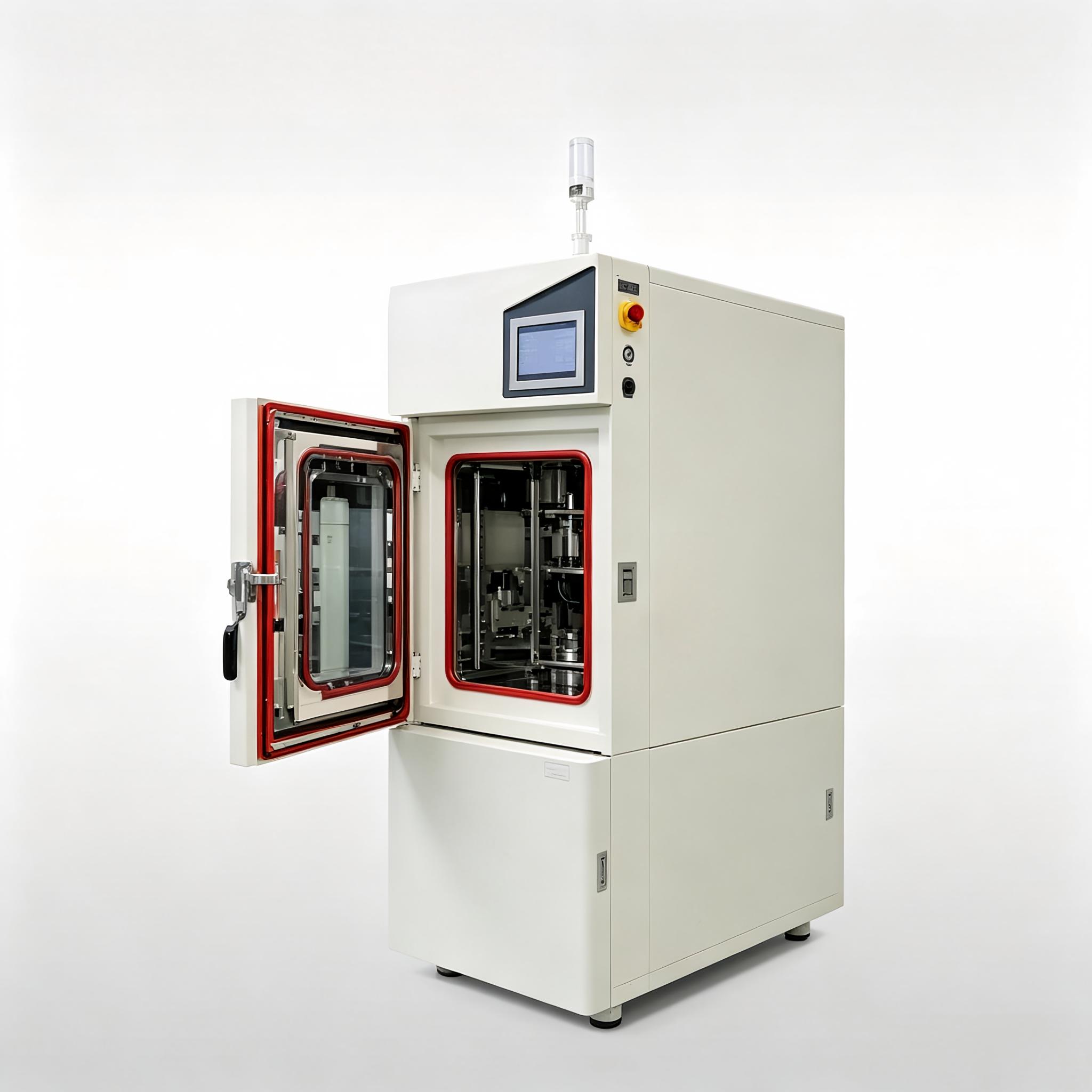
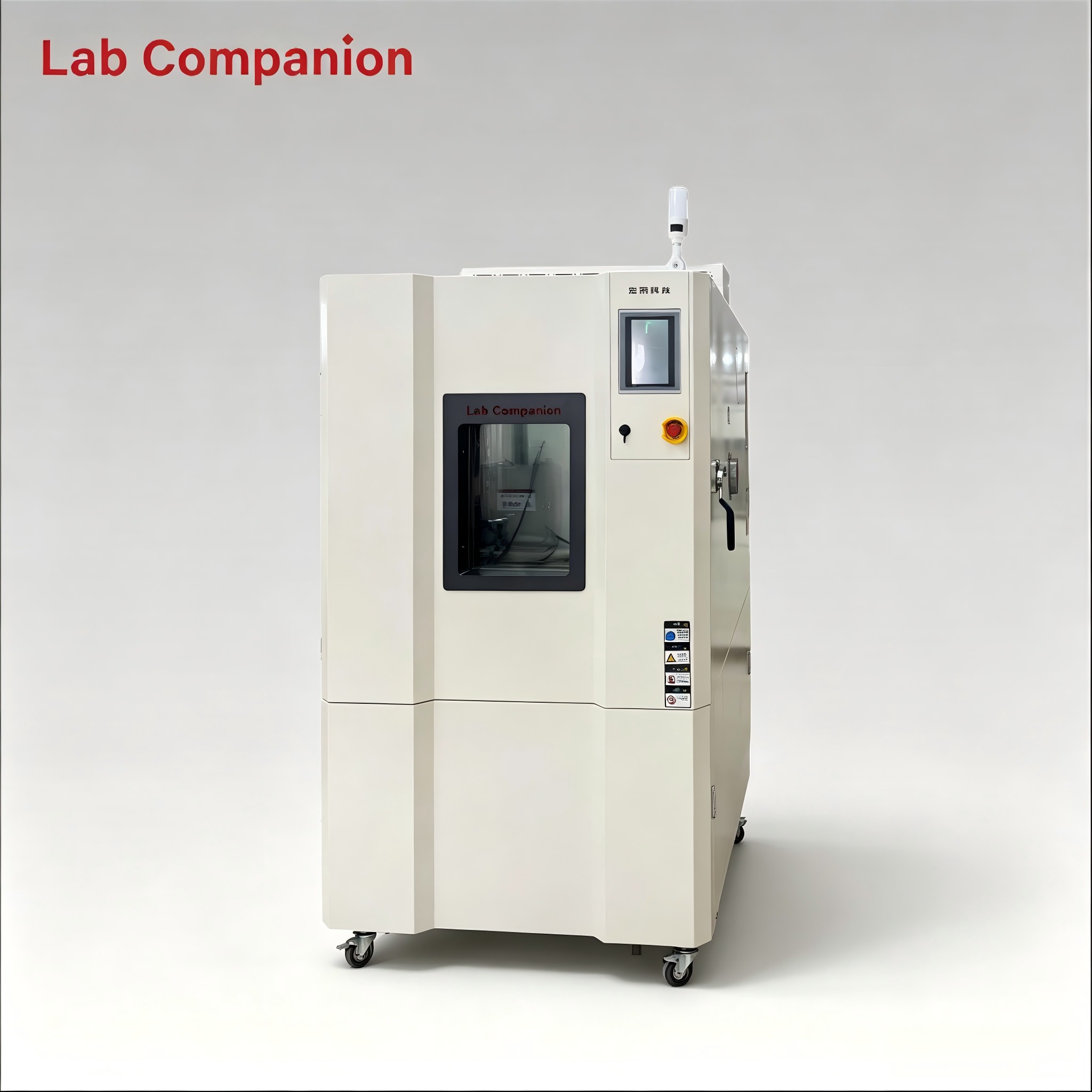
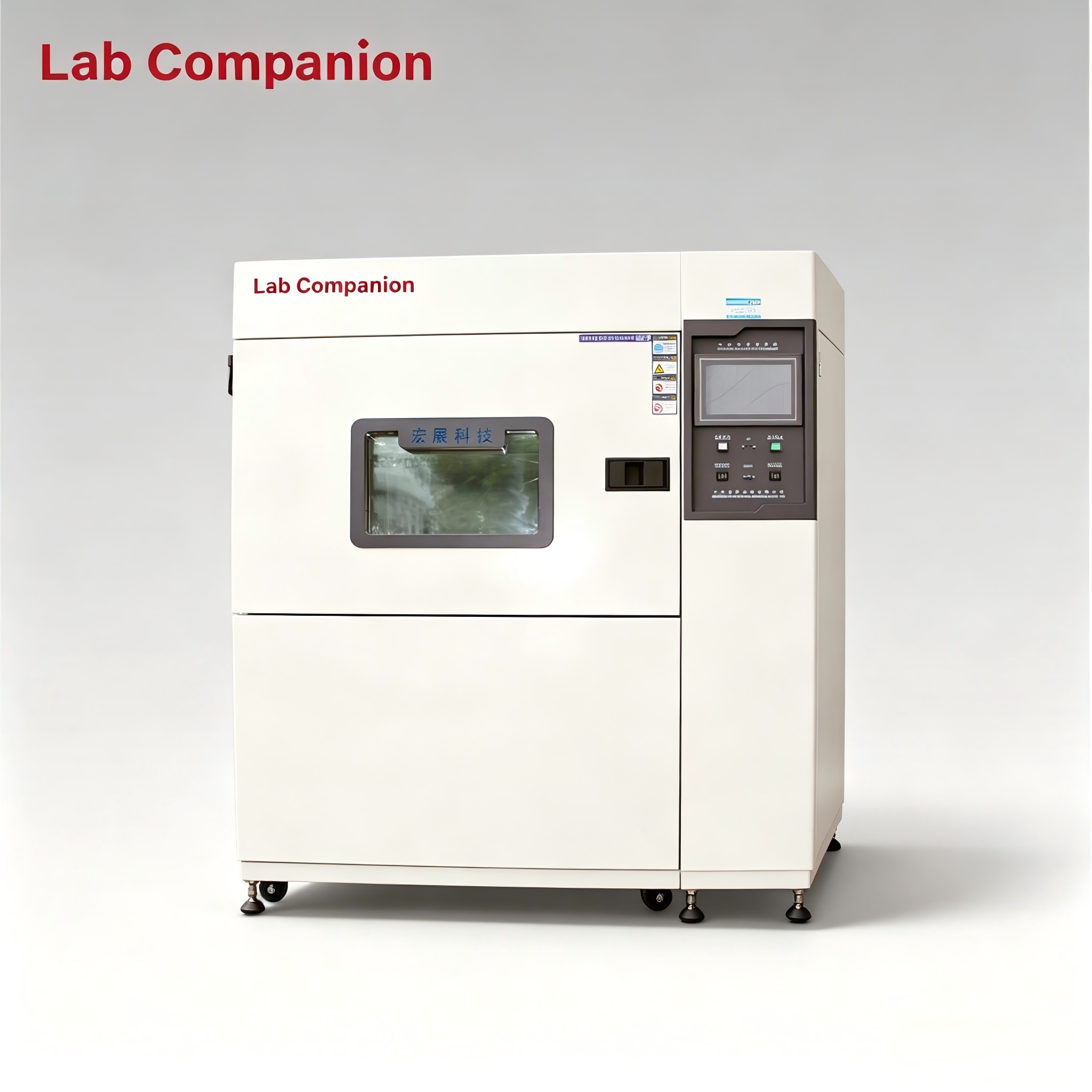
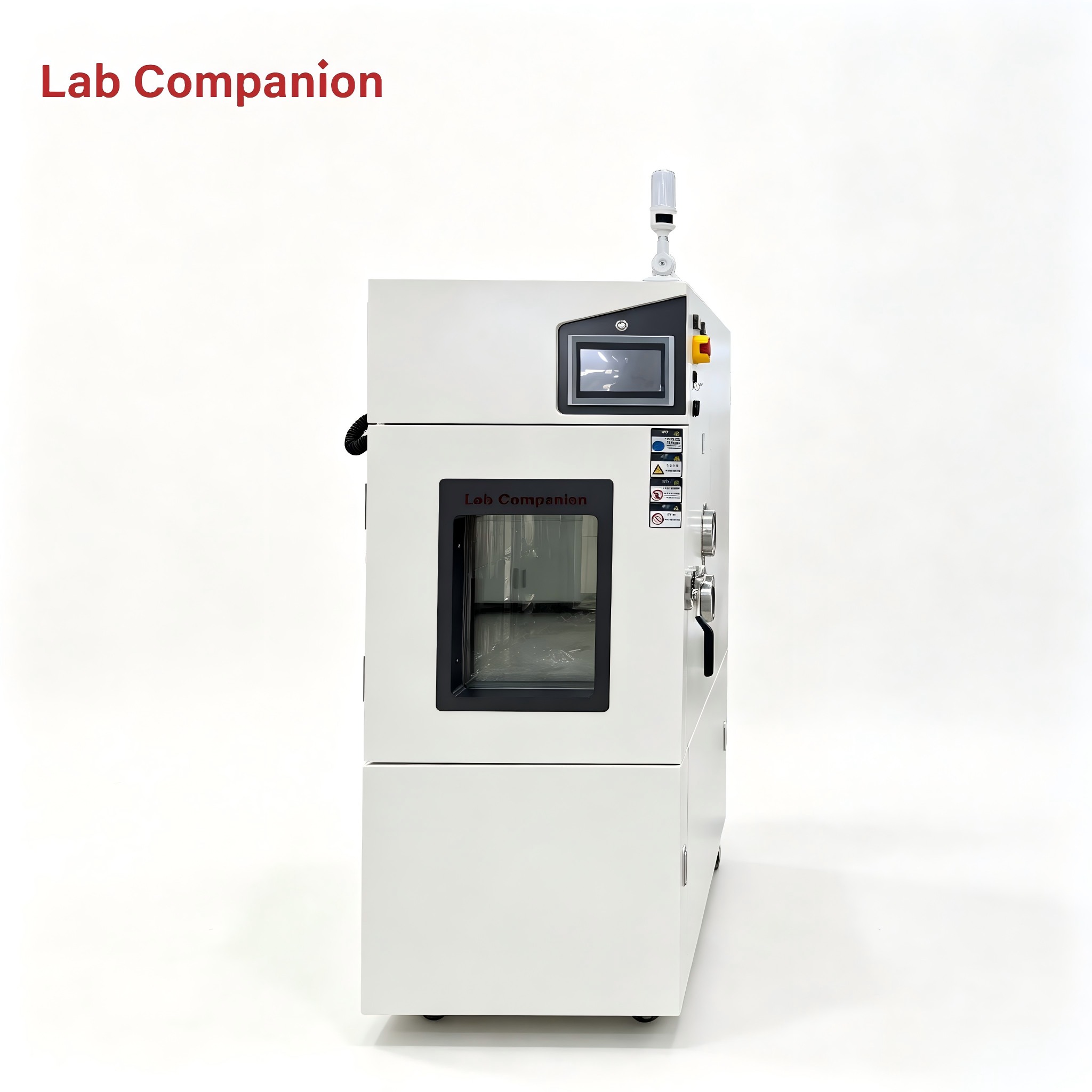
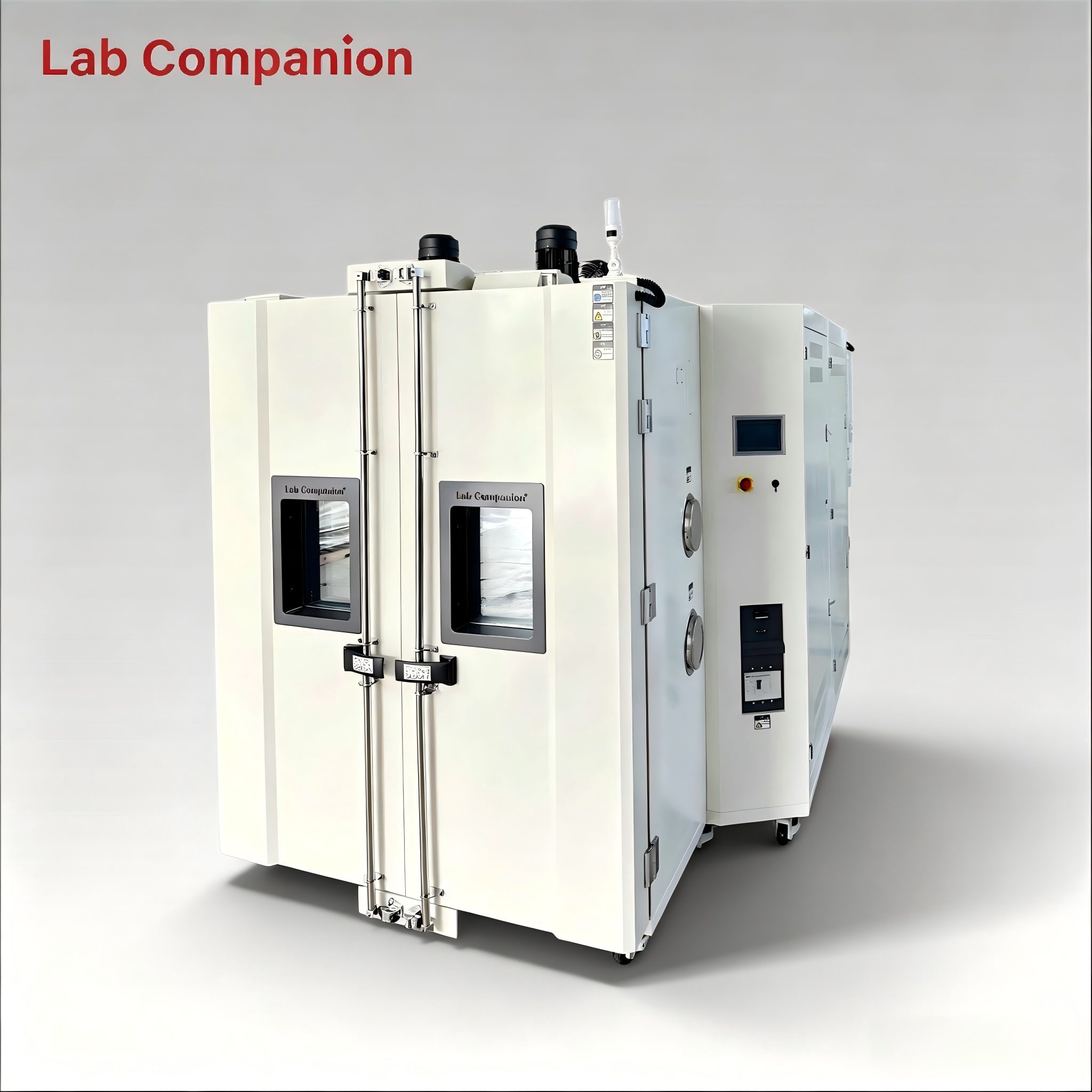
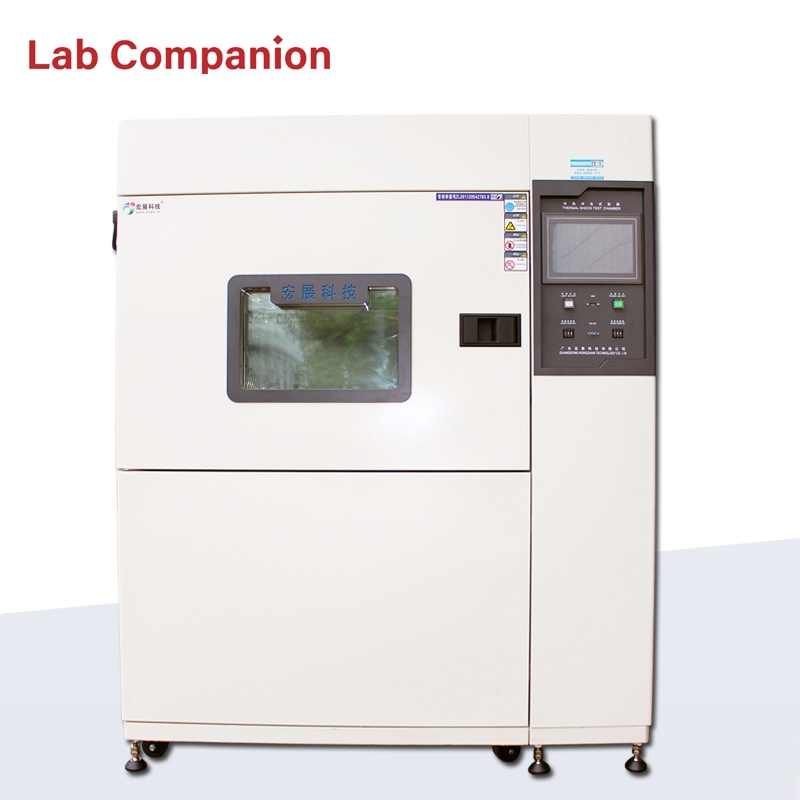
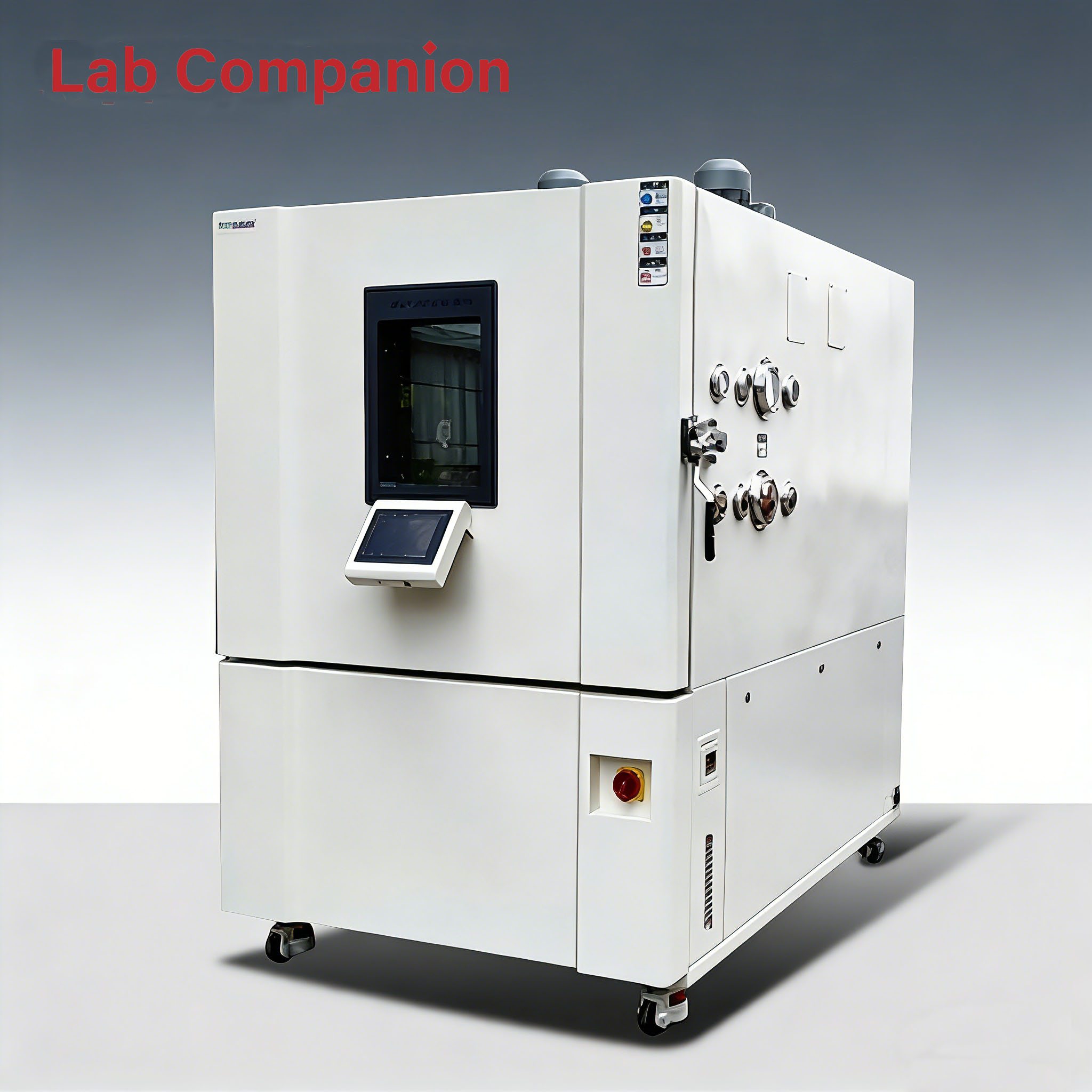


 Consigue una cotización
 Red IPv6 compatible