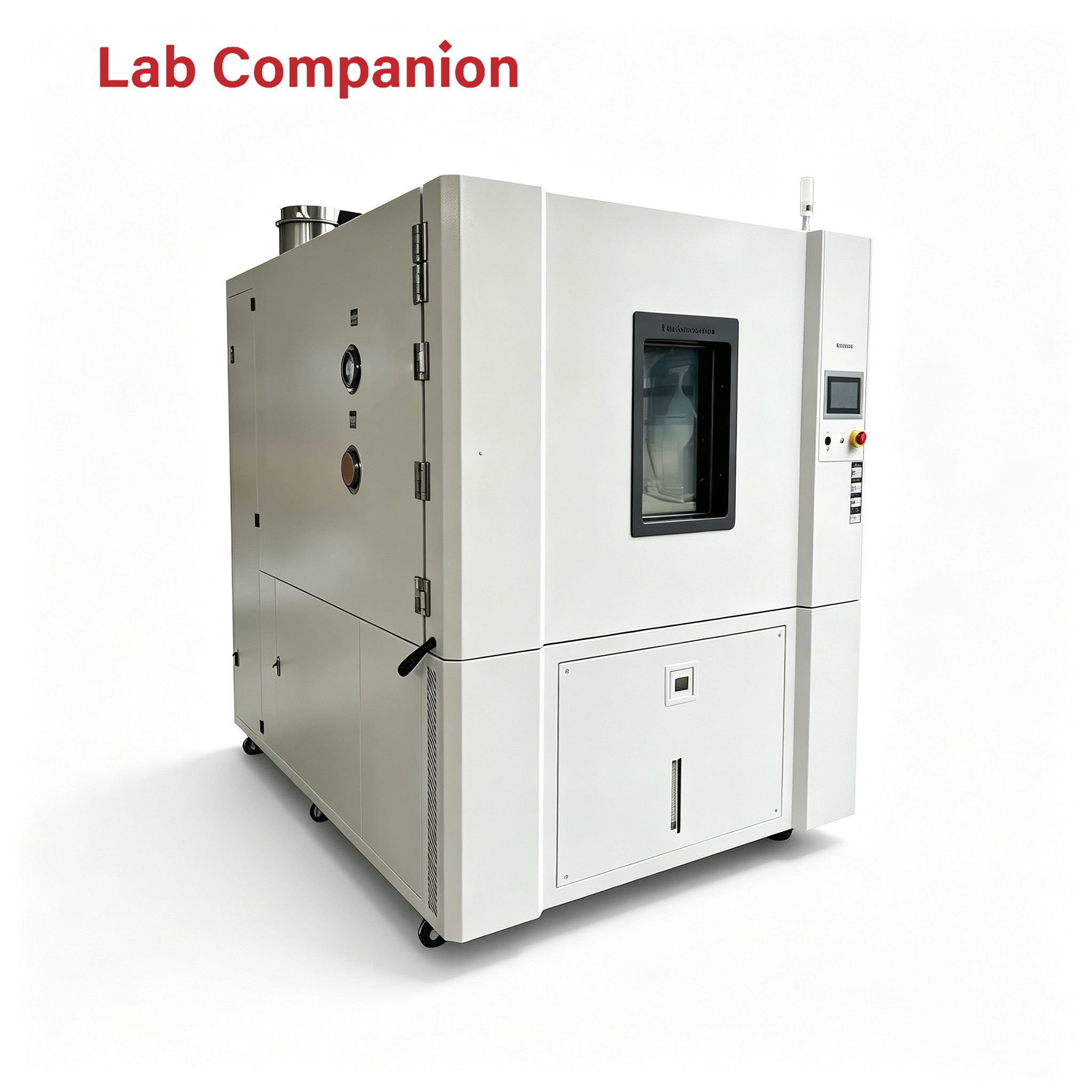
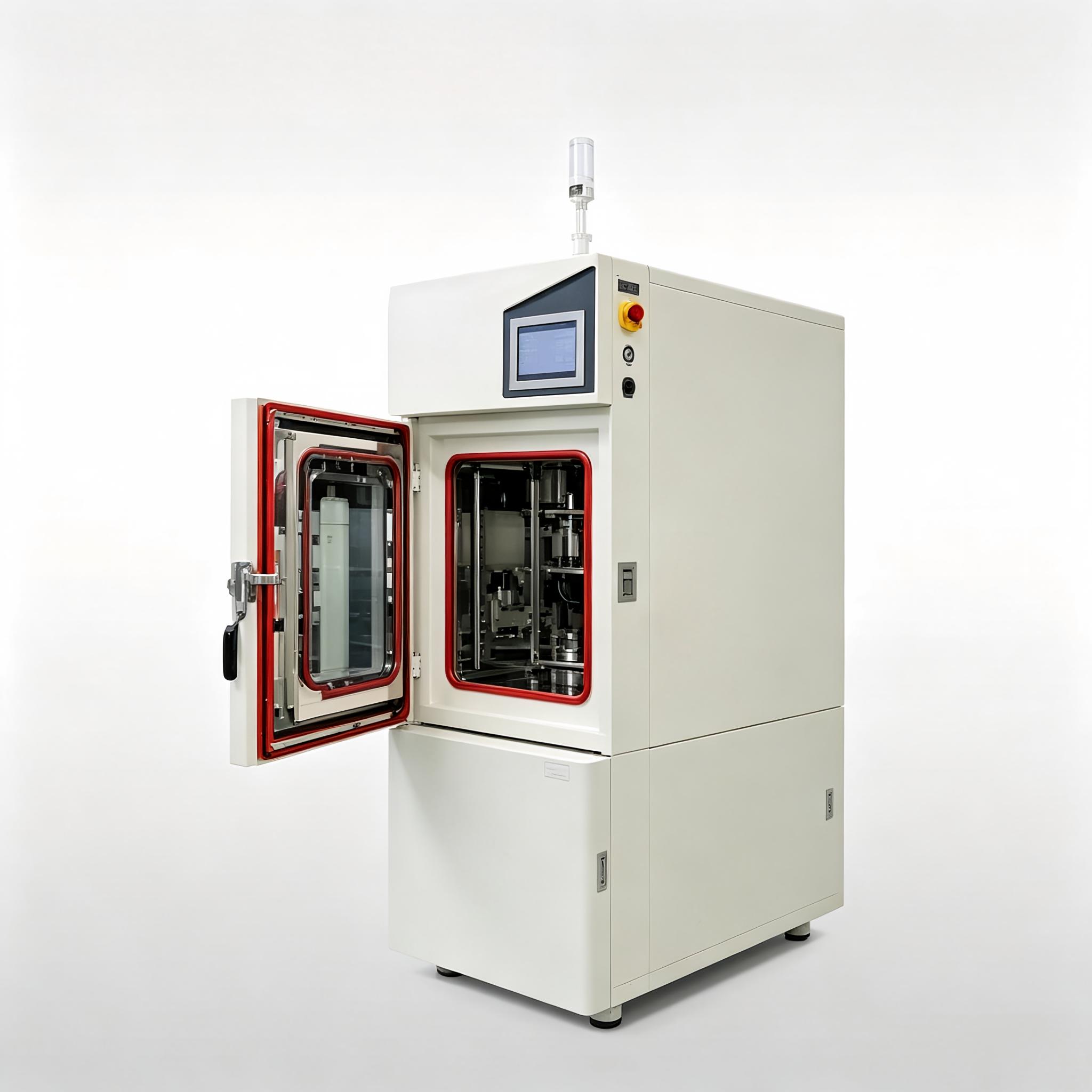
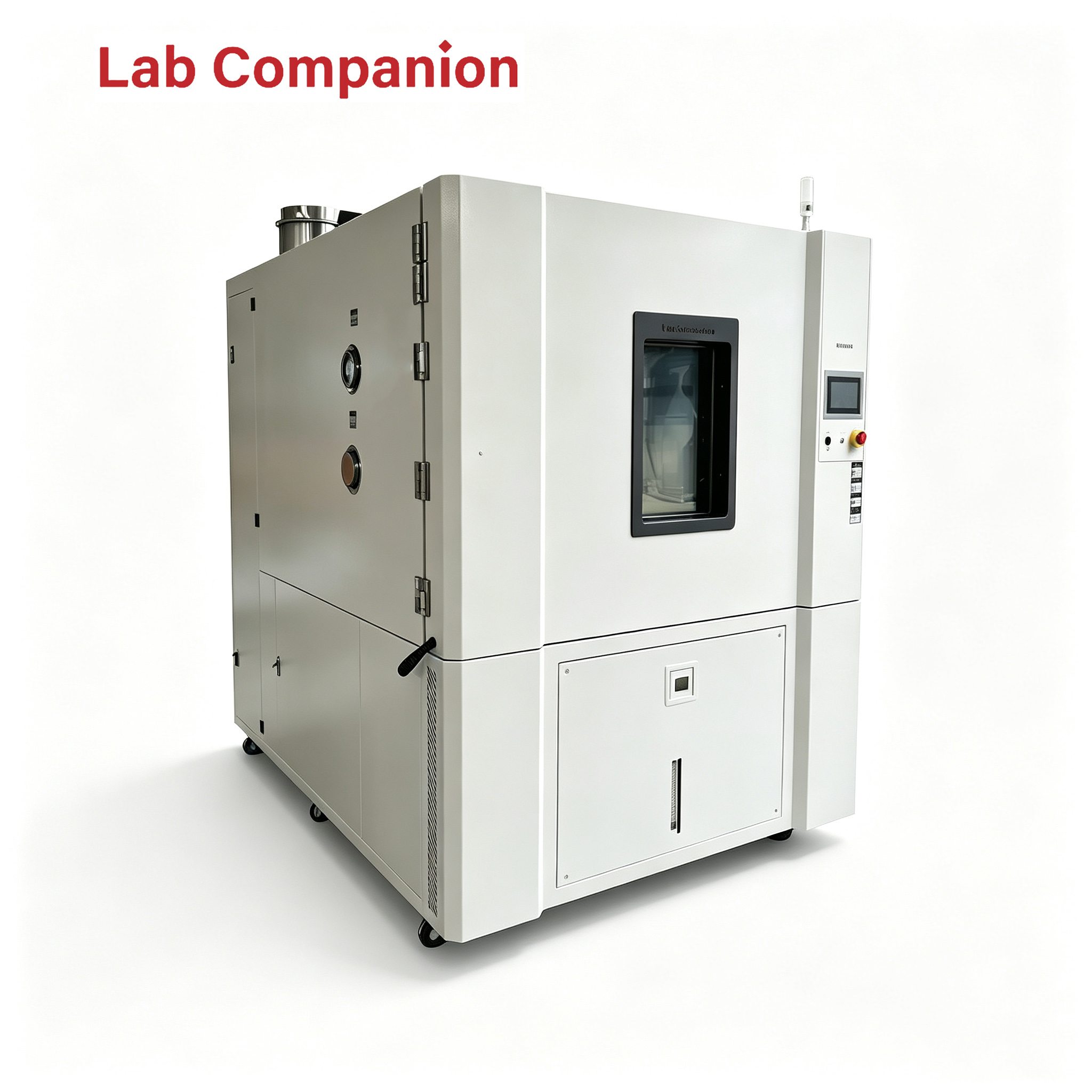
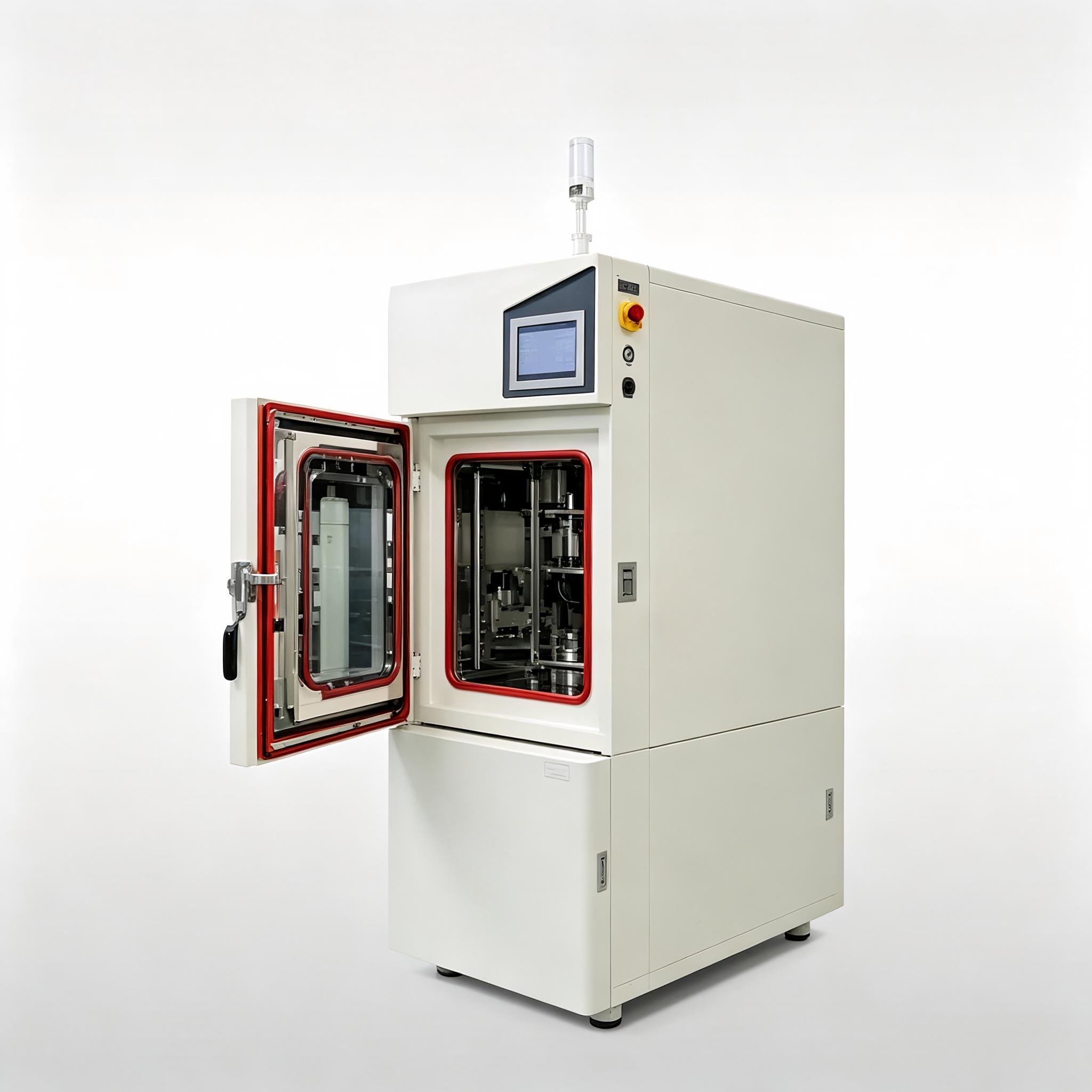
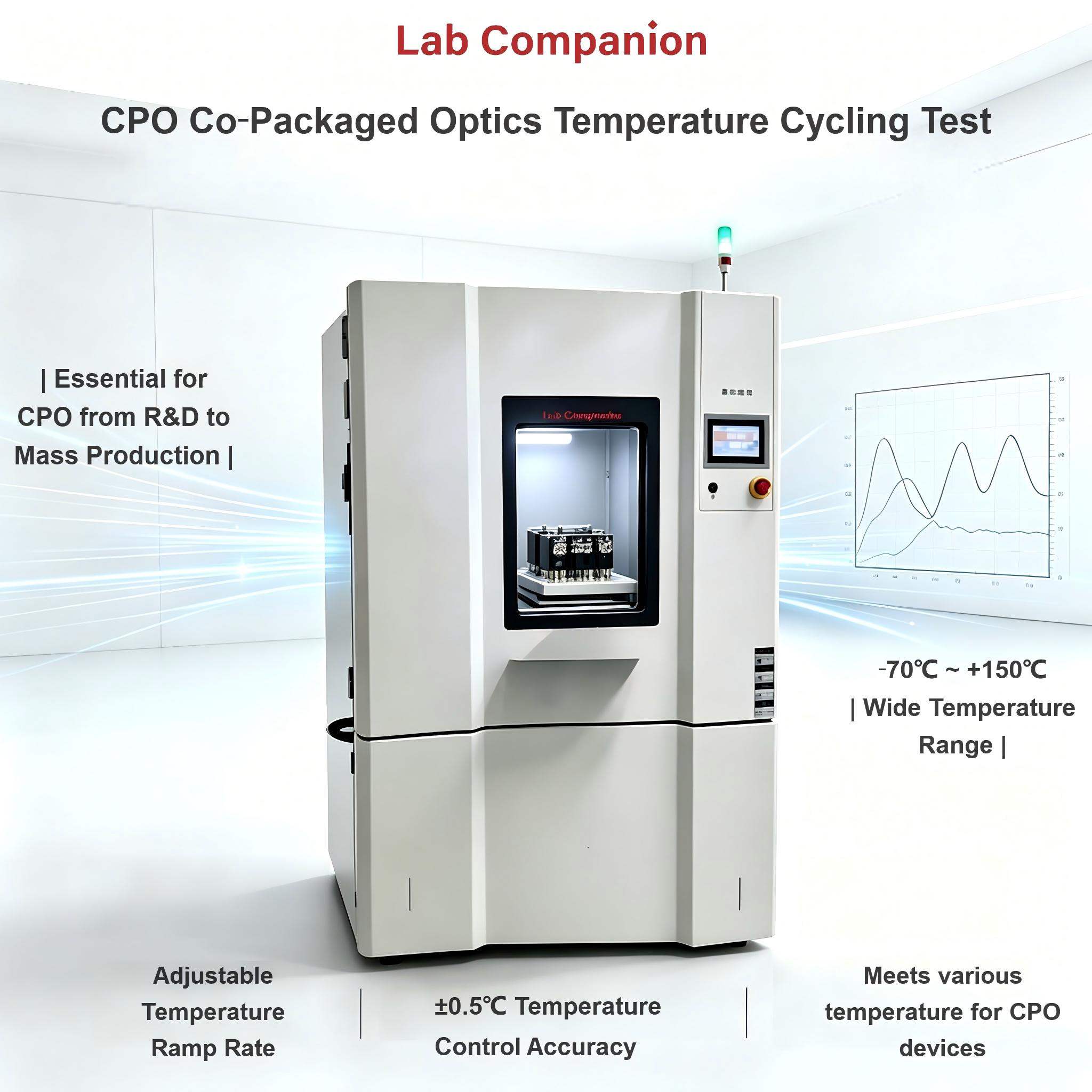
Temperature cycling testing stands as a critical step in product reliability verification and quality control across R&D processes, serving as a mandatory checkpoint for new product launches in electronics, new energy, aerospace and other high-demand industries. However, most enterprises worldwide struggle with three persistent pain points that hinder cost reduction, efficiency improvement and market expansion:overly long test cycles delaying R&D progress, inaccurate test data undermining decision-making, and excessive energy consumption driving up operational expenses.
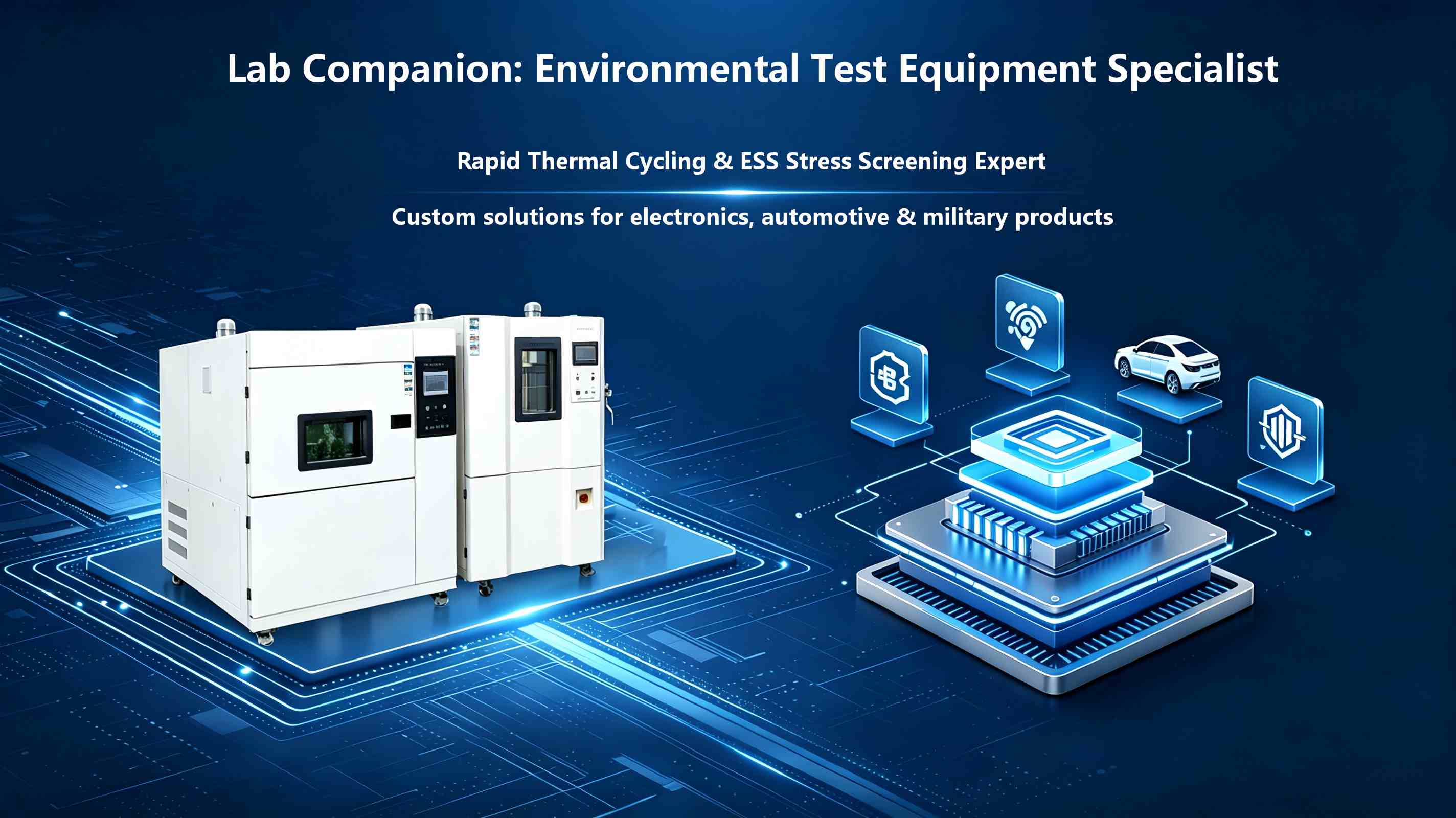
With 21 years of deep expertise in environmental test equipment, Lab Companion thoroughly understands the core challenges faced by global R&D teams. Leveraging proven technical accumulation and innovative engineering, we have developed high-performance rapid temperature change chambers that target and eliminate these industry bottlenecks. Our solutions deliver doubled testing efficiency, significant cost savings, and full-cycle support for enterprises to accelerate R&D, enhance product quality and seize market opportunities.
Targeted Solutions to 3 Critical Industry Pain Points
Pain Point 1: Lengthy Test Cycles Halt New Product Launches
Conventional temperature cycling equipment suffers from low performance, with a temperature change rate of only 3-5℃/min. Completing a standard -40℃ to 85℃ cycling test often takes 48 hours or more, dragging out R&D schedules, delaying time-to-market, and putting enterprises at a competitive disadvantage.
Lab Companion Solution: Ultra-Fast Temperature Cycling to Cut Test Cycles by 50%
Lab Companion Rapid Temperature Change Chambers abandon the inefficiencies of traditional models, equipped with self-developed high-efficiency temperature control systems and optimized air duct designs. The airflow circulation rate reaches up to 50 cycles per minute, enabling a dramatic boost in temperature change speed. Our standard TC series delivers a load temperature change rate of 10℃/min, while high-end custom models achieve an ultra-fast 20℃/min rate. This allows rapid simulation of temperature stress changes under extreme environmental conditions, completing reliability testing efficiently and reliably.
Proven Performance: A leading global smartphone manufacturer adopted Lab Companion Rapid Temperature Change Chambers for -40℃ to 85℃ cycling tests at 10℃/min, cutting the traditional 48-hour test cycle down to just 24 hours. This reduced overall new product R&D time by 50%, speeding up product iteration and market launch significantly.
Pain Point 2: Inaccurate Test Data Compromise Quality Control
The accuracy of temperature cycling test data directly guides product optimization and determines final reliability. Traditional equipment suffers from poor temperature control precision and uneven temperature fields, frequently causing temperature overshoot, large data deviations and invalid test results. Such unreliable data fails to support effective R&D improvements, even leading to potential product quality risks and increased trial-and-error costs.
Lab Companion Solution: High-Precision Temperature Control for Trustworthy Test Data
Lab Companion Rapid Temperature Change Chambers are integrated with a self-developed dual PID closed-loop control system and water vapor partial pressure control system, paired with high-precision PT100 platinum resistance sensors (±0.1℃ accuracy). This achieves ultra-precise temperature control: temperature fluctuation controlled within ±0.1~±0.5℃, temperature deviation ≤±0.5℃, and temperature uniformity ≤±2℃. All parameters fully comply with international and domestic authoritative standards including IEC and GB/T, meeting global testing compliance requirements.
Additionally, the chambers feature an intelligent temperature compensation function that automatically adjusts the temperature change rate based on sample load size. This completely eliminates data deviations caused by load variations, ensuring every set of test data is accurate, traceable and credible, providing solid data support for product R&D optimization and quality upgrades.
Pain Point 3: Excessive Energy Consumption Raises Operational Costs
Temperature cycling test equipment is typically high energy-consuming, and traditional models operate on an inefficient "simultaneous cooling and heating" mode, resulting in massive energy waste. Long-term operation generates huge electricity expenses, increasing enterprise operational burdens and squeezing profit margins.
Lab Companion Solution: Full-Link Energy-Saving Design to Save Nearly 10,000 kWh Annually
Catering to global enterprises’ demand for cost reduction, Lab Companion has implemented comprehensive energy-saving optimizations for our rapid temperature change chambers. Equipped with inverter energy-saving compressors, thickened high-density insulation layers, and energy-efficient cooling output temperature and humidity control systems, we upgrade core components and operating logic in full. Compared with traditional equipment of the same specification, our chambers reduce power consumption by 20%-30%; models upgraded with water-cooled heat dissipation can achieve an additional 30% energy savings.
Based on calculations of 8 hours of daily operation per unit and an industrial electricity rate of $0.15/kWh (or equivalent local tariff), Lab Companion Rapid Temperature Change Chambers save enterprises nearly $1,500 on annual electricity costs per unit. Long-term use delivers substantial operational cost savings, perfectly aligning with enterprises’ core goals of cost reduction and efficiency improvement.
Extra Core Advantages: Reduce R&D Team Workloads & Boost Efficiency Further
Beyond resolving the three core R&D pain points, Lab Companion Rapid Temperature Change Chambers combine exceptional stability and user-friendliness to reduce workloads for engineers and R&D teams, elevating overall testing efficiency:
• Ultra-Stable Operation, Minimize Downtime: We select high-quality imported compressors from world-renowned brands such as Tecumseh (France) and Copeland (USA), paired with refined structural design. Select models support 17,520 hours (approximately 2 years) of uninterrupted operation, greatly reducing downtime for maintenance and debugging, and ensuring continuous, smooth testing processes.
• User-Friendly Operation, Lower Learning Barriers: Equipped with a 7-inch high-definition true-color touch screen with an intuitive interface, the chambers support storage and one-click recall of over 200 preset test programs. Scene parameters can be switched quickly within 45 seconds without complex debugging, effectively easing engineers’ workloads and improving practical testing efficiency.
Lab Companion: Your Trusted Partner for R&D Efficiency & Cost Control
With 21 years of industry dedication, Lab Companion always puts global customer needs first, breaking through industry bottlenecks with technological innovation. Our rapid temperature change chambers excel in three core dimensions: doubled test efficiency, reliable and accurate data, and sharp cuts to energy and operational costs, while boasting durable stability and easy operation.
They are perfectly suited for testing demands across electronics, new energy, aerospace, hardware, plastics and other industries. Choosing Lab Companion Rapid Temperature Change Chambers means investing in a high-performance testing solution that acts as a "speed booster" for R&D and a "cost throttle" for operations. We help enterprises build a solid line of defense for product reliability, enhance core market competitiveness, and gain a leading edge in global market competition.
20℃/min ultra-fast temperature change + 72-hour continuous stable operation, with robust performance to guarantee urgent delivery, helping enterprises seize rush orders and retain core customers!
For small and medium-sized enterprises in industries such as electronic components, auto parts, and new energy batteries, urgent rush orders have long been the norm. Downstream automakers and core clients often place sudden orders, requiring temperature change testing and qualified reports to be completed within 24 hours — any delay will result in immediate cancellation of cooperation. However, traditional rapid temperature change chambers suffer from low efficiency and high failure rates, taking more than 12 hours to finish a single test run, and are prone to malfunctions that interrupt testing. This not only delays delivery schedules but also causes enterprises to lose orders and suffer heavy financial losses for no reason.
With 21 years of deep cultivation in the environmental testing equipment industry, Lab Companion fully understands the pain points of emergency testing for small and medium-sized enterprises worldwide. We have developed a dedicated emergency rapid temperature change chamber targeting these demands, relying on core advantages of ultra-high-speed temperature change and high operational stability. It can complete multiple sets of emergency temperature change tests within 24 hours, completely breaking the constraints of traditional equipment, enabling enterprises to handle rush orders calmly and firmly retain customer resources and market share.
Industry Emergency Pain Points: Traditional Equipment Fails Frequently, Making Rush Orders Hard to Fulfill
In-depth industry research shows that small and medium-sized enterprises generally face three core dilemmas when dealing with rush order testing, falling into a passive position throughout the process:
• Low Testing Efficiency, Unable to Meet Batch Demands: Traditional rapid temperature change chambers only achieve a load temperature change rate of 5-8℃/min, taking at least 12 hours to complete one -40℃~85℃ cycle test. Only one test run can be finished within 24 hours, making it completely inadequate for batch urgent testing needs and unable to meet customer delivery deadlines.
• Poor Equipment Stability, Prone to Testing Interruptions: Most traditional equipment uses low-quality core components, with an extremely high failure rate during continuous operation. Once it shuts down for maintenance mid-test, it often takes hours of downtime, directly missing the delivery window and wasting all previous testing efforts.
• Lack of Emergency Support, Exacerbating Delays: After equipment failures, manufacturers respond slowly with no dedicated services such as urgent debugging or expedited report generation, further prolonging the testing cycle and causing enterprises to miss cooperation opportunities.
An auto parts manufacturer once encountered such a predicament: it received an urgent order from an automaker, requiring 3 sets of vehicle sensor temperature change tests to be completed within 24 hours. When using traditional equipment, a refrigeration malfunction occurred after only 10 hours of operation, taking 6 hours to repair. Ultimately, the manufacturer failed to submit the test report on time, losing the long-term cooperative automaker client and incurring incalculable economic losses. Such cases are common in the industry, and the ability to handle emergency testing for rush orders has long become a core competitiveness for small and medium-sized enterprises to seize the market and gain a foothold.
Lab Companion Robust Emergency Solution: Speed + Stability + Remote Support, Complete Urgent Testing in 24 Hours
Targeting the pain points of industry emergency testing, Lab Companion launches a dedicated emergency rapid temperature change chamber, paired with a full-process remote emergency service system, realizing "faster testing, stable operation, and on-time delivery" to comprehensively help enterprises overcome rush order testing challenges and cope with market urgent demands calmly.
01 20℃/min Ultra-Fast Temperature Change, Doubling Testing Efficiency
Lab Companion's dedicated emergency model boasts a load temperature change rate of up to 20℃/min, 2-4 times more efficient than traditional equipment. It only takes 8 hours to complete one -40℃~85℃ cycle test, and 3 sets of urgent tests can be easily finished within 24 hours, perfectly adapting to the batch testing needs of rush orders. Equipped with a binary cascade high-efficiency refrigeration system and high-power heating module, it accelerates both heating and cooling: it only takes 3.2 hours to drop from 25℃ room temperature to -40℃, and 5.5 hours to surge from -40℃ to 85℃, greatly shortening the testing cycle and seizing delivery opportunities.
02 72-Hour Fault-Free Stable Operation, Eliminating Testing Interruption Risks
The equipment selects world-class core components, including French Tecumseh hermetic compressors and US Copeland refrigeration parts, combined with a modular precision structure design. It supports 72-hour continuous fault-free operation with a complete machine failure rate lower than 0.5%, completely avoiding the risk of mid-test shutdowns during emergency testing and ensuring smooth testing progress. It is also equipped with an intelligent fault early warning system that monitors the operation status of core components in real time, detects potential faults in advance, minimizes downtime, and keeps testing on track.
03 Full-Process Remote Emergency Service, Fully Guaranteeing On-Time Delivery
Lab Companion has a global service network and a professional technical support team, launching exclusive remote emergency services for rush orders: 2-hour rapid response, full-time online remote guidance and technical troubleshooting. If equipment faults occur, our professional engineers provide real-time remote debugging and maintenance guidance to resolve issues quickly and ensure uninterrupted testing. We also offer expedited test report services: standardized accurate reports can be generated within 1 hour after testing completion, helping enterprises submit for customer review quickly and fulfill orders smoothly.
Real Case Verification: Complete 3 Sets of Tests in 24 Hours, Successfully Retain Key Client Orders
An electronic components manufacturer received an urgent rush order from a leading smartphone brand, requiring 3 sets of -40℃~85℃ cycle temperature change tests for mobile phone camera modules to be completed within 24 hours with a qualified report submitted; otherwise, the order would be canceled directly. The manufacturer's traditional equipment could only complete 1 set of tests within 24 hours, leaving it helpless against the strict deadline. It immediately contacted Lab Companion to activate the dedicated emergency solution.
Lab Companion promptly arranged the T-200-20 rapid temperature change chamber, with our engineers providing remote debugging and pre-setting testing procedures. The equipment started testing at a 20℃/min ultra-fast temperature change rate, operating stably throughout without any malfunctions. Actual test data shows that each test run took only 7.5 hours, and 3 sets of tests were successfully completed within 24 hours. With a temperature control accuracy of ±0.1℃ and temperature field uniformity ≤±2℃, the test data was accurate and reliable. A standardized report was generated within 1 hour, allowing the manufacturer to pass customer review smoothly and successfully retain the large order and core cooperative relationship.
The person in charge of the enterprise stated: "The ultra-fast efficiency and high stability of Lab Companion's rapid temperature change chamber have completely solved our rush order testing problems. We later designated it as our exclusive emergency testing equipment, and to date, we have completed more than 20 rush order tests with Lab Companion's equipment, with zero delivery delays, helping us firmly stabilize our customer base."
Exclusive Emergency Support: Reserved Emergency Equipment, No Waiting for Rush Orders
To help small and medium-sized enterprises worldwide handle rush orders more calmly, Lab Companion reserves dedicated emergency testing equipment. Enterprises can make reservations in advance to secure exclusive equipment resources, and start testing immediately when rush orders arrive without waiting for equipment allocation. We also providefree remote debugging services for emergency testing: engineers connect with testing demands one-on-one remotely, pre-set testing procedures to enable quick test startup. For ultra-urgent needs, we offer priority remote technical support to further shorten testing preparation time, allowing enterprises to seize orders faster.
Lab Companion's dedicated emergency rapid temperature change chamber, paired with a comprehensive global remote emergency service system, completely resolves the rush order testing dilemmas of small and medium-sized enterprises. It frees enterprises from passive delays, helping them easily seize urgent orders, stabilize core customers, and comprehensively enhance core market competitiveness!
Industry Pain Point: Condensation Risks Threaten Precision Testing Safety
In high-end sectors such as semiconductors, optical components, and military-grade electronics, temperature and humidity testing is a critical process to verify product reliability and stability. However, condensation has long been a persistent industry challenge, especially under low-temperature high-humidity or alternating temperature-humidity conditions. Traditional test chambers are prone to forming condensation on inner chamber walls and sample surfaces, which can cause sample oxidation, performance degradation, or even short circuits and irreversible damage to precision components.
This not only leads to costly sample losses and interrupted testing schedules but also results in distorted test data, driving up R&D and testing costs for enterprises. Precision samples like microchips, high-precision optical lenses, and sensitive sensors are extremely vulnerable to condensation—even minor moisture buildup can render finished products scrapped, causing substantial financial losses and project delays. With 21 years of expertise in environmental test equipment, Lab Companion targets this core pain point with upgraded anti-condensation technology for its temperature & humidity test chambers, eliminating condensation risks at the source and securing full-process safety for precision sample testing.
Core Innovation: Triple Anti-Condensation System for Root-Cause Risk Elimination
Abandoning the traditional single anti-condensation design widely used in the industry, Lab Companion leverages its profound technical accumulation to develop an innovative "Pre-Heating + Anti-Condensation Coating + Optimized Airflow" triple closed-loop system. Tailored for the strict testing requirements of high-precision samples, this system achieves zero condensation under all operating conditions, thoroughly resolving the long-standing industry bottleneck with each upgrade directly addressing real-world testing pain points.
1. Intelligent Chamber Pre-Heating: Cut Off Condensation at the Source
The chamber is equipped with a self-developed intelligent pre-heating system that automatically raises the chamber temperature to 5-10℃ above the dew point before testing commences, while pre-conditioning samples to eliminate thermal temperature differences. This fundamentally prevents condensation caused by thermal shock in low-temperature high-humidity environments. During testing, a high-precision monitoring module tracks dew point temperature in real time, and AI algorithms dynamically adjust pre-heating power to maintain chamber temperature above the dew point consistently, blocking condensation formation at its origin.
2. Specialized Anti-Condensation Coating: Build a Physical Protective Barrier
Lab Companion applies a custom anti-condensation coating to all critical condensation-prone areas, including inner chamber liners, doors, and sample racks. This coating features excellent hydrophobic and anti-moisture properties, effectively preventing moisture adhesion. It also boasts high and low temperature resistance (-70℃ to +150℃) and corrosion resistance, ensuring long-term durability without peeling or degradation. Most importantly, it causes zero contamination to precision samples, balancing robust protection and operational safety.
3. Optimized Airflow Circulation: Suppress Moisture Accumulation
We have optimized the air duct design with a vortex guide duct and high-speed silent centrifugal fan, accelerating internal airflow circulation. This quickly disperses and evaporates trace moisture, preventing condensation buildup on samples and chamber walls. Uniform airflow also eliminates local low-temperature dead zones, further reducing condensation risks. Paired with an integrated boiler steam humidification system, it avoids the drawbacks of traditional water mist humidification, preventing secondary moisture damage to samples and maintaining a pure, stable testing environment.
Parameter Advantages: Precise Temperature & Humidity Control Boosts Anti-Condensation Performance
Complementing the core anti-condensation technology, Lab Companion test chambers deliver exceptional temperature and humidity control accuracy, creating a dual guarantee for reliable testing and enhanced anti-condensation performance, fully meeting the demands of precision sample testing.
• Wide Operating Range: Temperature coverage from -70℃ to +150℃, humidity control from 20%RH to 98%RH, adapting to extreme testing conditions and global industry standards;
• High Control Precision: Temperature accuracy ±0.3℃, humidity accuracy ±2%RH, temperature & humidity fluctuation ≤±0.3℃/±2%RH, locking in test parameters to avoid condensation from sudden temperature/humidity changes;
• Intelligent Dynamic Regulation: Equipped with high-precision dew point sensors that feed real-time data to a dual-PID cooperative control system, dynamically adjusting cooling, heating, humidification and dehumidification power to avoid mismatched "low temperature & high humidity" conditions;
• Flexible Alternation Speed: Adjustable temperature-humidity alternation rate from 0.1℃/min to 5℃/min, allowing customized gentle change curves based on sample characteristics to prevent condensation from rapid fluctuations.
Field Applications: Proven Performance Across High-End Industries
Lab Companion’s upgraded anti-condensation temperature & humidity test chambers have been widely deployed in semiconductor, optical, and military-grade electronics sectors worldwide, with proven performance validated by extensive real-world testing.
In thesemiconductor industry, leading chip manufacturers rely on Lab Companion HS Series chambers for reliability testing. Under harsh alternating conditions of -40℃ to +85℃, the chambers operate with zero condensation, boosting chip test pass rates and reducing costly sample scrap. In the optical industry, the chambers eliminate lens fogging and condensation, ensuring stable optical performance and accurate, repeatable test data for high-precision optical component R&D.
For military and defense applications, Lab Companion custom chambers meet strict military standards (GJB), providing a secure testing environment for electronic components and preventing condensation-related performance failures. Actual test data confirms: the chambers run continuously for 72 hours under extreme conditions (-40℃, 80%RH) with no condensation detected, far exceeding conventional industry performance benchmarks.
Craftsmanship & Innovation: Setting a New Standard for Precision Environmental Testing
While anti-condensation design may seem a detail, it directly impacts the safety of precision samples and the credibility of test data—two critical factors for enterprise R&D quality. For 21 years, Lab Companion has adhered to a customer-centric R&D philosophy, focusing on solving industry pain points through continuous technical refinement. Our triple anti-condensation system, paired with ultra-precise temperature and humidity control, completely eliminates condensation risks, protecting samples while improving testing efficiency and data reliability.
Moving forward, Lab Companion will continue to drive technological innovation and product iteration, upholding craftsmanship and professionalism to deliver safer, more accurate, and more reliable environmental testing solutions for global high-end industries. We are committed to empowering enterprises worldwide to enhance product reliability and core competitiveness through cutting-edge testing equipment.
Product Positioning: Exclusive for Semiconductor Chip Testing, Adapt to Extreme Temperature Changes from -70℃ to +150℃
Nowadays, semiconductor chips are accelerating iteration towards high integration, high computing power and miniaturization. The reliability test standards for high-end chips (including 5G communication chips, automotive-grade chips, radio frequency chips, etc.) continue to upgrade, imposing extremely stringent requirements on the extreme temperature change adaptability and temperature control accuracy of test equipment. Such high-end chips need to undergo hundreds of temperature change cycle tests in the ultra-wide temperature range of -70℃ to +150℃, simulating extreme working environments to accurately screen potential defects such as bonding wire fatigue, package delamination and performance attenuation, ensuring the long-term operational stability of chips.
However, conventional rapid temperature change equipment on the market generally has shortcomings such as insufficient temperature range coverage, low temperature control accuracy and poor scenario adaptability, making it difficult to meet international authoritative test standards such as JEDEC JESD22-A104, which directly restricts the R&D iteration and mass production progress of semiconductor chips. Focusing on the environmental testing equipment field and targeting industry pain points accurately, Lab Companion has launched an exclusive rapid temperature change test chamber for semiconductor chips. With its ultra-wide temperature range of -70℃ to +150℃ and high-precision temperature control performance, it perfectly adapts to the stringent test requirements of various semiconductor chips.
Customized Core Parameters, Precisely Matching the Rigid Needs of Semiconductor Testing
Lab Companion special rapid temperature change chamber for semiconductors is polished with all-dimensional core parameters around the characteristics of semiconductor chip testing, taking into account stability, accuracy and practicality, and fully conforms to the test standards of high-end chips:
• Ultra-wide Temperature Range Coverage: The basic temperature range covers -70℃ to +150℃, and can be flexibly expanded to -70℃ to +220℃. It is fully suitable for multiple scenarios such as -40℃~+150℃ cycle test of automotive-grade chips, ultra-low temperature test of radio frequency chips, and high-temperature aging test of advanced packaging chips, with no shortcomings in temperature range adaptation.
• Adjustable Temperature Change Rate + High-precision Temperature Control: The temperature change rate is freely adjustable from 5 to 20℃/min. Low-speed temperature change can be set for precision chips to avoid damage to the internal structure of chips caused by rapid temperature change; the temperature control accuracy reaches ±0.3℃, and the temperature uniformity in the chamber is ≤±0.5℃, fully in line with the international standard of JEDEC JESD22-A104. It can accurately capture the subtle performance fluctuations of chips during temperature change, ensuring the authenticity, reliability and traceability of test data.
• Exclusive Protection Design: Equipped with nitrogen replacement function, it can accurately control the low-oxygen environment in the chamber, effectively avoiding problems such as oxidation, condensation and corrosion during chip testing, protecting precision chips in all directions and ensuring the smooth progress of the test process.
Special Scenario-based Design, Adapting to Diverse Semiconductor Test Conditions
Based on the special process requirements of semiconductor chip testing, Lab Companion has created a full-process customized service, optimized the equipment structure and functional configuration, solved the industry problem of poor adaptability of traditional equipment, and covered multi-scenario test needs:
• Linkage Test Adaptation: Optimize the internal layout of the chamber and reserve standardized probe station interfaces, which can be directly connected to the chip test probe station to realize linkage testing without additional equipment modification, solving the pain points of incompatible interfaces and unreasonable layout, simplifying the test process and improving test continuity.
• Anti-interference Optimization: Built-in electromagnetic shielding module, which effectively isolates external electromagnetic interference, ensures stable signal transmission during chip testing, eliminates external factors interfering with test data, and guarantees accurate and error-free test results.
• Flexible Models + Intelligent Control: Launch compact small-capacity models such as 200L and 300L, suitable for small-batch R&D testing and sample verification of semiconductor chips; equipped with a 7-inch intelligent touch screen, supporting the storage of more than 200 sets of test programs, enabling rapid switching of test parameters within 45 seconds, adapting to the test needs of chips of different specifications and models, and greatly improving test efficiency.
Verified by Leading Enterprises, Helping Reduce Costs and Improve Efficiency in Chip R&D
With its robust performance, Lab Companion special rapid temperature change chamber for semiconductors has become the core test equipment for leading semiconductor enterprises in China and globally such as Hisilicon and SMIC, and has implemented multiple measured cases, effectively helping enterprises solve test problems and speed up R&D and mass production:
After a 5G chip enterprise was equipped with Lab Companion equipment, the full temperature range cycle test time from -40℃ to +150℃ was shortened to 30 minutes, the test efficiency was increased by 4 times, and the original 4-day test task could be completed in 1 day. The temperature control deviation was ≤±0.3℃, the test data fully met the standards, and it passed the JEDEC international certification at one time, avoiding rework loss and reducing test costs.
An automotive-grade MCU chip enterprise selected the 20℃/min rapid temperature change model, which can complete temperature switching in 2 minutes, with the temperature control accuracy stably maintained at ±0.3℃. Combined with the nitrogen replacement function to eliminate condensation, the test cycle was completed 15 days in advance, helping the chip pass the AEC-Q100 automotive-grade certification smoothly, and the chip package defect rate dropped below 0.05%, greatly improving product yield.
Supported by Authoritative Standards, Escorting Global Layout of Products
Lab Companion semiconductor rapid temperature change chamber strictly complies with many international and China’s authoritative test standards such as IEC, GB/T and JEDEC, and has passed CNAS calibration certification. The equipment test data is globally recognized and can be directly used for product compliance certification and overseas market access audit, helping semiconductor products go global easily.
At the same time, Lab Companion has built a global service system. Relying on global service outlets, it provides full-cycle technical support including 2-hour rapid response and dedicated on-site technical assignment. It is equipped with a professional semiconductor test technical team, which can customize personalized test solutions according to customers' exclusive test needs, helping semiconductor enterprises improve product reliability and seize core competitiveness in the global market.
Environmental Stress Screening (ESS) and Temperature Cycling (TC) are widely used reliability verification methods for electronic products, differing significantly in core principles, stress types, and application scenarios.
ESS is a multi-stress combined screening method. It efficiently identifies potential early-stage defects by applying multiple environmental stresses simultaneously, simulating the synergistic effects of real operating conditions.
TC is a single-stress screening method. It accelerates the exposure of thermal expansion/contraction-related defects through periodic temperature variations.
Key differences are as follows:
1. Stress Types & Defect Coverage
l TC: Only applies temperature cycling stress (e.g., -55°C to +125°C). Thermal stress induced by differential material expansion/contraction detects defects directly linked to thermal matching, including solder joint fatigue, poor chip bonding, package cracks, and multi-layer dielectric splitting.
l ESS: Adopts a multi-stress superimposition strategy, synchronously applying temperature cycling, random vibration, and electrical stress (e.g., dynamic voltage switching). This coupling effect effectively exposes complex failure modes such as structural loosening, poor connector contact, microcrack propagation, and intermittent conduction failure, especially intermittent faults hard to replicate under single-stress conditions.
2. Equipment Investment & Cost
l TC: Requires only temperature test chambers, with low procurement costs, standardized operation, easy maintenance, minimal energy/labor consumption, and suitability for large-scale mass production deployment.
l ESS: Demands an integrated test platform comprising temperature control systems, vibration tables, electrical stress loading modules, and high-precision monitoring systems. Initial investment typically exceeds RMB 1 million, with high-end configurations costing several million yuan. It imposes strict requirements on site, power supply, cooling systems, and technician expertise, leading to substantially higher operational costs.
3. Application Scenarios & Industry Requirements
l TC: A routine screening method widely used in consumer electronics and industrial control equipment—fields sensitive to cost or with conventional reliability needs.
l ESS: Boasting a high defect detection rate (60%–80% for intermittent faults), it is mandated by industry standards for high-reliability sectors including aerospace, automotive electronics, military equipment, and medical devices to ensure critical system functionality.
4. Screening Effectiveness
l Studies indicate TC screens 75%–85% of defects, random vibration screens 15%–25%, while their combination (core of ESS) achieves a detection rate of up to 90%.
l ESS’s multi-stress coupling better simulates real-world comprehensive stresses, enabling more thorough elimination of early-stage failures.
5. Lab Companion ESS & TC Test Chambers - Guangdong Lab Companion Co., Ltd.
High efficiency guarantees quality, maximizing reliability assurance.
Lab Companion ESS series complies with universal climatic test standards, offering chamber volumes from 270L to 1300L and a temperature range of -70°C to +180°C, meeting diverse customer needs. Optimal temperature change rates: 5K/min, 10K/min, 15K/min.
Your product functionality remains intact throughout production, R&D, and quality assurance. Leave reliability testing to us.
Temperature cycling test chambers are core equipment for product reliability verification, with adaptability directly affecting product performance and service life. Industry-specific application scenarios and testing standards vary greatly, making standard equipment unable to meet refined needs. With 20 years of industry expertise, LABCOMPANION has developed customized temperature cycling test solutions targeting pain points in three core sectors—automotive components, medical devices, electronic & electrical products—relying on precise temperature control technology to become a trusted partner for enterprises.
I. Automotive Components Industry: Solving Outdoor Condition Simulation & Batch Testing Issues
Automotive components must withstand extreme outdoor temperature and humidity, with the weather resistance of sensors, connectors and other core parts critical to driving safety. Key pain points: insufficient temperature range of standard equipment for simulating full working conditions (-30℃ cold start, 70℃ high-temperature exposure); low batch testing efficiency causing production bottlenecks; strict industry standards requiring traceable, repeatable test data.
LABCOMPANION’s customized rapid temperature cycling test chambers offer targeted solutions: -40℃~85℃ temperature range for full-scenario testing, ±0.3℃ control accuracy and ≤±0.5℃ fluctuation to ensure uniform temperature field; programmable LED controller supporting over 200 preset programs to boost batch efficiency; intelligent data acquisition system for real-time recording and compliant report generation, meeting quality traceability needs. This solution serves leading automotive component enterprises, testing brake system sensors and control modules to identify potential defects, ensuring stable operation under harsh conditions and compliance with industry standards.
II. Medical Device Industry: Adapting to Sterility & Precision Temperature Control for Compliance Testing
Medical devices are directly linked to patient safety, requiring reliability testing to balance precision temperature control and sterile cleanliness. Core pain points: precise temperature control for drying syringes, catheters and other consumables to avoid material damage; high-humidity simulation for monitors in hospital environments; compliance with ISO 13485 and other standards for market access.
LABCOMPANION provides an integrated solution of temperature-humidity chambers and precision ovens. Precision ovens with 304 stainless steel sealed inner chambers offer ±0.3℃ accuracy, 60℃-120℃ drying range to protect consumables; temperature-humidity chambers simulate 55℃+95%RH environment, with CE and ISO9001 certifications for data compliance; customizable large-capacity chambers support full-scale testing of large medical devices. Widely used in manufacturing and pharmaceutical distribution, it ensures sterility and compliance in production, and verifies cold chain packaging reliability in distribution.
III. Electronic & Electrical Industry: Addressing High-Precision Aging Testing for PCBs & Components
The service life of electronic & electrical products (PCBs, capacitors, resistors) depends on thermal stability. Key pain points: precise temperature control for PCB drying to remove solder paste moisture and prevent cold soldering; uniform temperature field for component high-temperature aging; adjustable multi-temperature zones for research to ensure data repeatability.
LABCOMPANION’s combined solution of precision ovens and temperature cycling chambers meets diverse needs: precision ovens with convection heating system (≤2℃ uniformity, ±0.3℃ accuracy) for 100℃ PCB drying; temperature cycling chambers (-40℃~85℃) with programmable cycles for component aging; research-grade equipment (40℃-200℃, 98% data repeatability) for academic institutions. It reduces cold soldering rates in production and supports electronic material research in academia.
IV. Full-Process Service Support: End-to-End Assurance from Requirement to Implementation
LABCOMPANION’s core competitiveness lies in both tailored products and full-process support. Professional teams conduct on-site assessments to design solutions, with post-delivery installation, commissioning and training. 16 national service centers, with the Dongguan headquarters covering the Pearl River Delta, offer 2-hour response, on-site support within 3 days and 1-year full equipment warranty.
From automotive component condition simulation to medical device compliance testing and electronic product aging verification, LABCOMPANION resolves industry pain points with customized technologies. Backed by 20 years of experience and authoritative certifications, it continues to provide reliable testing support for core industries, helping enterprises improve product quality and safety.
Core Logic: Match testing requirements, balance performance and full life-cycle cost, and avoid over-specification for under-utilization.
I. Core Testing Requirements
1. Temperature Change Rate
Clarify the loaded rate and deviation requirements (e.g., ≤±0.5℃/min), and match the application scenarios:
l 5–10℃/min for consumer electronics
l 10–20℃/min for automotive/aerospace industries
2. Temperature & Humidity Range
Cover the specified testing standards:
l -40~85℃ for new energy products
l -55~125℃ for aerospace products
Select models with 20%–98%RH range if humidity testing is required.
3. Sample Compatibility
l The chamber volume should be ≥ 3 times the sample volume.
l Dynamic load compensation is required for high-heat-capacity samples (e.g., metal components).
II. Hardware Performance
1. Refrigeration System
Prioritize dual-compressor cascade systems equipped with imported brands (Danfoss/Copeland) and eco-friendly refrigerants (R404A/R23).
2. Air Duct & Heating System
Adopt scroll diversion + baffle design, with 0–100% linear adjustment of heating tubes.
3. Sensors
Use imported PT1000 sensors with a sampling frequency of ≥ 10 times/second.
III. Software Functions
1. Algorithm
PID closed-loop control + adaptive temperature zone compensation, supporting custom rate curve setting.
2. Data Management
Automatic data recording and export (Excel/CSV format), with support for remote control and multi-channel alarm.
3. Safety Features
Over-temperature protection, compressor overload protection, water shortage protection, etc. Explosion-proof pressure relief devices are mandatory for flammable and explosive samples.
IV. Full Life-Cycle Cost
1. Procurement Cost
Select models based on actual needs; avoid blind pursuit of high rates (the price of 10℃/min models is 1.5–2 times that of 5℃/min models).
2. Operation Cost
Prefer inverter compressors to reduce electricity consumption by 15%–20%.
3. Maintenance Cost
Choose models with modular structure, and confirm annual free calibration services.
V. Expandability & Compatibility
Support post-purchase installation of humidity, explosion-proof, and data acquisition modules.
Compatible with upper computers and testing fixtures for automated testing.
VI. Manufacturer Services & Qualifications
Provide customized solutions and loaded rate test reports.
Ensure the equipment has passed ISO 9001 and CE certifications, complying with the GB/T 2423.22 standard.
Ø Selection Case
Testing Scenario: Automotive motor controller testing (8kg, AEC-Q100 standard)
Recommended Model: 150L chamber with 10℃/min loaded rate, -40~125℃ temperature range, and explosion-proof function.
Benefits: Balances testing requirements and cost, improving testing efficiency by 4 times.
Definición y uso de la cámara de prueba de ciclos de temperaturaCámara de prueba de ciclos de temperatura es un tipo de equipo de laboratorio ampliamente utilizado en diversas industrias, su función principal es realizar ciclos del producto dentro de un cierto rango de temperatura para simular el funcionamiento del producto en diferentes ambientes de temperatura. El equipo es una herramienta importante para realizar pruebas de confiabilidad del producto, control de calidad y evaluación del desempeño del producto.La cámara de prueba de ciclos de temperatura se usa ampliamente y puede usarse para pruebas en diversos campos, como el aeroespacial, automotriz, electrónico, de energía eléctrica, médico y otros. En el sector aeroespacial, las cámaras de prueba de ciclos de temperatura se utilizan para probar el rendimiento de los componentes de las aeronaves a temperaturas extremas para garantizar su confiabilidad en entornos extremos. En el campo automotriz, la cámara de prueba del ciclo de temperatura se utiliza para probar el rendimiento de los componentes del automóvil en diferentes condiciones de temperatura y humedad para garantizar que el automóvil pueda funcionar normalmente en una variedad de entornos. En el campo de la electrónica y la energía, las cámaras de prueba de ciclos de temperatura se utilizan para probar el rendimiento y la confiabilidad de equipos electrónicos en diferentes condiciones de temperatura para garantizar que el equipo pueda funcionar de manera estable durante mucho tiempo. En el campo médico, las cámaras de prueba de ciclos de temperatura se utilizan para probar el rendimiento y la confiabilidad de equipos médicos en diferentes condiciones de temperatura y humedad para garantizar el funcionamiento normal del equipo.El principio de funcionamiento de la cámara de prueba de ciclos de temperatura es realizar la prueba de ciclos controlando la temperatura y la humedad en la cámara. El dispositivo tiene una variedad de modos de control de temperatura, como control de temperatura constante, control de temperatura programado, control de temperatura programado, etc., que se pueden seleccionar según las necesidades. Durante el proceso de prueba, la cámara de prueba de ciclos de temperatura colocará el producto en diferentes entornos de temperatura para realizar pruebas y simular el uso del producto en diferentes entornos. Una vez completada la prueba, los usuarios pueden mejorar y actualizar el producto de acuerdo con los resultados de la prueba para mejorar la confiabilidad y el rendimiento del producto.En resumen, la cámara de prueba de ciclos de temperatura es un equipo de laboratorio ampliamente utilizado en diversas industrias, y su función principal es realizar ciclos del producto dentro de un cierto rango de temperatura para simular el funcionamiento del producto en diferentes ambientes de temperatura. El equipo se puede utilizar para pruebas en diversos campos, como el aeroespacial, automotriz, electrónico, eléctrico, médico y otros, y es una herramienta importante para realizar pruebas de confiabilidad del producto, control de calidad y evaluación del desempeño del producto.
Equipo de prueba de envejecimiento UVLa estructura de la cámara de prueba está hecha de materiales metálicos resistentes a la corrosión, incluidas 8 lámparas ultravioleta fluorescentes, una bandeja de agua, un soporte para muestras de prueba y sistemas e indicadores de control de temperatura y tiempo.2. La potencia de la lámpara es de 40W y la longitud de la lámpara es de 1200mm. El rango del área de trabajo uniforme de la caja de prueba es 900 × 210 mm.3. Las luces se instalan en cuatro filas, divididas en dos filas. Los tubos de cada fila de luces se instalan en paralelo y la distancia entre centros de las luces es de 70 mm.4. La muestra de prueba se instala fijamente en una posición a 50 mm de la superficie de la lámpara. La muestra de prueba y su soporte forman la pared interior de la caja, y sus partes traseras están expuestas al aire de enfriamiento a temperatura ambiente debido a la diferencia de temperatura entre la muestra de prueba y el aire dentro de la caja. Para crear condiciones de condensación estables en la superficie de la muestra de prueba durante la etapa de condensación, la cámara de prueba debe generar convección de aire natural a través de la pared exterior de la cámara y el canal de la muestra de prueba en la parte inferior.5. El vapor de agua se genera mediante una bandeja de agua ubicada en la parte inferior de la caja de calentamiento, con una profundidad de agua que no excede los 25 mm y equipada con un controlador automático de suministro de agua. La bandeja de agua debe limpiarse periódicamente para evitar la formación de incrustaciones.6. La temperatura de la cámara de prueba se mide mediante un sensor fijado en una placa de aluminio negro (pizarra) con un ancho de 75 mm, una altura de 100 mm y un espesor de 2,5 mm. La pizarra debe colocarse en el área central de la prueba de exposición, y el rango de medición del termómetro es de 30-80 ℃ con una tolerancia de ± 1 ℃. El control de las etapas de iluminación y condensación debe realizarse por separado, y la etapa de condensación se controla mediante la temperatura del agua de calefacción. 7. La cámara de prueba debe colocarse en una sala de prueba con una temperatura de 15-35 ℃, a 300 mm de la pared y debe evitar la influencia de otras fuentes de calor. El aire en la sala de pruebas no debe circular con fuerza para evitar afectar las condiciones de iluminación y condensación.Estimado cliente:Hola, nuestra empresa es un equipo de desarrollo de alta calidad con una sólida solidez técnica, que brinda productos de alta calidad, soluciones completas y excelentes servicios técnicos a nuestros clientes. Los principales productos incluyen cámaras de prueba de temperatura y humedad constantes sin cita previa, Máquinas de prueba de envejecimiento acelerado por UV, cámaras de prueba de cambio rápido de temperatura, cámaras de pruebas ambientales sin cita previa, probadores de envejecimiento UV, cámaras de temperatura y humedad constantes, etc. Nuestra empresa se adhiere al principio de construir un negocio con integridad, mantener la calidad y esforzarse por lograr el progreso. Con un ritmo más decidido, escalamos continuamente nuevas alturas y contribuimos a la industria nacional de automatización. Damos la bienvenida a clientes nuevos y antiguos para que elijan con confianza los productos que les gustan. ¡Le atenderemos de todo corazón!
Prueba de confiabilidad de la lámpara de bicicletaLas bicicletas se encuentran en un entorno social de altos precios del petróleo y protección del medio ambiente, con protección del medio ambiente, fitness, vida lenta... Como los equipos deportivos recreativos multifuncionales y las luces de bicicleta son una parte indispensable e importante del ciclismo nocturno, si el La compra de luces de bicicleta de bajo costo y no después de la prueba de confiabilidad, la falla al conducir de noche o a través del túnel, no solo para el ciclista tiene una seria amenaza para la seguridad de la vida, al conducir, pueden ocurrir accidentes de colisión porque el conductor no puede ver al ciclista. , por eso es importante contar con luces de bicicleta que pasen la prueba de confiabilidad.Razones del fallo de la lámpara de bicicleta:a. Deformación, fragilidad y decoloración de la carcasa de la lámpara causada por la alta temperatura de la lámparab. Coloración amarillenta y fragilidad de la carcasa de la lámpara causada por la exposición a los rayos ultravioleta al aire libre.do. Subir y bajar colinas debido a cambios de temperatura altos y bajos en el ambiente causados por fallas en las lámparasd. Consumo anormal de energía de las luces del coche.mi. Fallan las luces tras mucho tiempo de lluviaF. La falla en caliente ocurre cuando las luces están encendidas durante mucho tiempogramo. Durante la conducción, la lámpara se suelta y hace que la lámpara se caiga.h. Fallo en el circuito de la lámpara causado por la vibración y la pendiente de la carreteraClasificación de prueba de lámparas de bicicleta:Prueba ambiental, prueba mecánica, prueba de radiación, prueba eléctrica.Prueba de características iniciales:Tome 30, encienda la lámpara con fuente de alimentación de CC de acuerdo con el voltaje nominal, después de que las características sean estables, mida la distancia entre la corriente y el centro óptico, menos de 10 productos defectuosos están calificados, más de 22 no están calificados, si el El número de productos defectuosos está entre 11 y 22, se recolectan otras 100 muestras para realizar pruebas y el número de productos defectuosos bajo la inspección original se califica cuando el número es inferior a 22. Si el número excede 22, se descalifica.Prueba de vida: Diez bombillas pasaron la prueba característica inicial y 8 de ellas cumplieron los requisitos.Velocidad de prueba de bicicleta: entorno simulado de 15 km/hPrueba de alta temperatura (prueba de temperatura): 80 ℃, 85 ℃, 90 ℃Prueba de baja temperatura: -20 ℃Ciclo de temperatura: 50 ℃ (60 min) → temperatura normal (30 min) → 20 (60 min) → temperatura normal (30 min), 2 ciclosPrueba de calor húmedo: 30 ℃/95% HR/48 horasPrueba de detección de estrés: Alta temperatura: 85 ℃ ← → Baja temperatura: -25 ℃, tiempo de permanencia: 30 min, ciclo: 5 ciclos, encendido, tiempo: ≧ 24 hPrueba de niebla salina de concha: 20 ℃/15 % de concentración de sal/pulverización durante 6 horas, método de determinación: la superficie de la carcasa no debe presentar óxido evidentePrueba de impermeabilidad:Descripción: La clasificación IPX de las lámparas resistentes a la lluvia debe ser al menos IPX3 o superiorIPX3 (resistencia al agua): Deje caer 10 litros de agua verticalmente desde una altura de 200 cm a 60˚ (tiempo de prueba: 10 minutos)IPX4 (anti-agua, anti-salpicaduras): 10 litros de agua caen desde 30 ~ 50 cm en cualquier dirección (tiempo de prueba: 10 minutos)IPX5:3m 12,5L de agua desde cualquier dirección [agua débil](tiempo de prueba: 3 minutos)IPX6: 3 m Rociado fuerte 30 litros desde cualquier dirección [agua fuerte, presión: 100 KPa] (tiempo de prueba: 3 minutos)IPX7 (resistente al agua): se puede utilizar durante 30 minutos a menos de 1 m en agua.Prueba de vibración: número de vibración 11,7 ~ 20 Hz/amplitud: 11 ~ 4 mm/tiempo: arriba y abajo 2 h, aproximadamente 2 h, 2 h antes y después de 2 h/aceleración 4 ~ 5 gPrueba de caída: 1 metro (caída con la mano), 2 metros (caída en bicicleta, caída desde el cuadro)/suelo de hormigón/cuatro veces/cuatro ladosPrueba de impacto: Plataforma de madera plana de 10 mm/Distancia: 1 m/diámetro Masa de 20 mm Bola de acero de 36 g Caída libre/superficie superior y lateral una vezImpacto de baja temperatura: Cuando la muestra esté fría a -5 ℃, mantenga esta temperatura durante tres horas y luego realice la prueba de impacto.Prueba de irradiación: prueba de brillo de irradiación de larga duración, prueba de irradiación de bajo voltaje, brillo de luz, color de luzLámpara de bicicleta clasificación de sustantivos:
Características estructurales de la caja de control de temperatura y humedad.
El nombre completo de la cámara de control de temperatura y humedad es "Cámara de prueba de temperatura y humedad constantes", que es un equipo de prueba esencial en aviación, automoción, electrodomésticos, investigación científica y otros campos. Se utiliza para probar y determinar los parámetros y el rendimiento de productos y materiales eléctricos, electrónicos y de otro tipo después de cambios ambientales de alta temperatura, baja temperatura, humedad y calor o temperatura constante. Se puede dividir principalmente en "escritorio" y "vertical" según los requisitos y estándares de prueba, siendo la diferencia la temperatura y humedad que se puede alcanzar. El tipo vertical se puede usar para bajas temperaturas y secado por debajo de la temperatura ambiente, mientras que el tipo de escritorio solo se puede usar para temperaturas y alta humedad por encima de la temperatura ambiente.
Adecuado para diversos pequeños aparatos eléctricos, instrumentos, materiales y componentes para pruebas de calor húmedo, también es adecuado para realizar pruebas de envejecimiento. Esta cámara de prueba adopta la estructura más razonable y el método de control estable y confiable actualmente disponible, lo que la hace estéticamente agradable, fácil de operar, segura y con alta precisión en el control de temperatura y humedad. Es un equipo ideal para realizar pruebas de temperatura y humedad constantes.
1) El cuerpo de la caja de prueba tiene la forma de una estructura integral, con el sistema de refrigeración ubicado en la parte inferior trasera de la caja y el sistema de control ubicado en la parte superior de la caja de prueba.
(2) Dentro de la capa intermedia del conducto de aire en un extremo del estudio, hay dispositivos tales como calentadores, evaporadores de refrigeración y aspas de ventilador distribuidos; En el lado izquierdo de la caja de prueba, hay un orificio para cable de Ø 50 y la caja de prueba es una puerta única (manija de puerta integrada de acero inoxidable)
(3) El sello de caucho de silicona antienvejecimiento y de alta temperatura de doble capa puede garantizar eficazmente la pérdida de temperatura de la cámara de prueba.
(4) Hay ventanas de observación, dispositivos de prevención de heladas y accesorios de iluminación conmutables en la puerta de la caja. La ventana de observación adopta vidrio templado hueco de múltiples capas y la película conductora de la lámina adhesiva interna se calienta y descongela. Los accesorios de iluminación utilizan lámparas Philips de marca importada, que pueden observar eficazmente los cambios experimentales en el estudio desde todos los ángulos.
Estimado cliente:
Hola, nuestra empresa es un equipo de desarrollo de alta calidad con una sólida solidez técnica, que brinda productos de alta calidad, soluciones completas y excelentes servicios técnicos a nuestros clientes. Los principales productos incluyen cámaras de prueba de temperatura y humedad constantes sin cita previa, Máquinas de prueba de envejecimiento acelerado UV, cámaras de prueba de cambio rápido de temperatura, cámaras de pruebas ambientales sin cita previa, probadores de envejecimiento UV, cámaras de temperatura y humedad constantes, etc. Nuestra empresa se adhiere al principio de construir un negocio con integridad, mantener la calidad y esforzarse por lograr el progreso. Con un ritmo más decidido, escalamos continuamente nuevas alturas y contribuimos a la industria nacional de automatización. Damos la bienvenida a clientes nuevos y antiguos para que elijan con confianza los productos que les gustan. ¡Le atenderemos de todo corazón!
Control de temperatura de la cámara de prueba de irradiación de simulación solar.La cámara de prueba utiliza una fuente de luz artificial combinada con un filtro EXTERIOR G7 para ajustar la fuente de luz del sistema para cumplir con los requisitos de IEC61646 para simuladores solares mediante la simulación de la radiación de la luz solar natural. La fuente de luz del sistema anterior se utiliza para realizar la prueba de fotoenvejecimiento IEC61646 en el módulo de células solares, y la temperatura en la parte posterior del módulo debe controlarse constantemente entre 50 ± 10 °C durante la prueba. Puede controlar automáticamente la temperatura; Configure un radiómetro para controlar la irradiancia de la luz, asegurando que permanezca estable en un nivel específico y al mismo tiempo controlando el tiempo de prueba.Durante el período del ciclo de luz ultravioleta en la cámara de prueba de irradiación de simulación solar, las reacciones fotoquímicas generalmente no son sensibles a la temperatura. Pero la velocidad de cualquier reacción posterior depende de la temperatura. La velocidad de estas reacciones se acelera al aumentar la temperatura. Por lo tanto, controlar la temperatura durante la exposición a los rayos UV es fundamental. Además, es necesario asegurar que la temperatura de la prueba de envejecimiento acelerado sea consistente con la temperatura más alta a la que el material está expuesto directamente a la luz solar. En la cámara de prueba de irradiación de simulación solar, la temperatura de exposición a los rayos UV se puede establecer en cualquier temperatura entre 50 ℃ y 80 ℃ según la iluminancia y la temperatura ambiente. La temperatura de exposición a los rayos UV se ajusta mediante un controlador de temperatura sensible y un sistema de soplador para lograr una excelente uniformidad en la temperatura de esta cámara de prueba.Estimado cliente:Hola, nuestra empresa es un equipo de desarrollo de alta calidad con una sólida solidez técnica, que brinda productos de alta calidad, soluciones completas y excelentes servicios técnicos a nuestros clientes. Los principales productos incluyen cámaras de prueba de temperatura y humedad constantes sin cita previa, Máquinas de prueba de envejecimiento acelerado UV, cámaras de prueba de cambio rápido de temperatura, cámaras de pruebas ambientales sin cita previa, probadores de envejecimiento UV, cámaras de temperatura y humedad constantes, etc. Nuestra empresa se adhiere al principio de construir un negocio con integridad, mantener la calidad y esforzarse por lograr el progreso. Con un ritmo más decidido, escalamos continuamente nuevas alturas y contribuimos a la industria nacional de automatización. Damos la bienvenida a clientes nuevos y antiguos para que elijan con confianza los productos que les gustan. ¡Le atenderemos de todo corazón!