In environmental simulation testing, temperature chambers’ control accuracy, rate stability and energy efficiency directly determine test data reliability and cost-effectiveness. With over 20 years of technical expertise, Labcompanion integrates dual PID temperature control and energy compensation into its chambers, breaking the traditional trade-off between accuracy and efficiency. It delivers high precision, fast response and low energy consumption, meeting stringent demands in automotive, semiconductor, military and other industries. This document analyzes the two core technologies from technical principles, collaborative advantages and application scenarios.
I. Dual PID Temperature Control: Core of Precise Temperature Regulation
Upgraded from traditional single PID, Labcompanion’s dual PID system integrates AI fuzzy algorithm to achieve intelligent adaptive control, with core advantages as follows:
• Dual-loop control: Takes temperature deviation and temperature change rate as input variables, dynamically optimizes PID parameters via fuzzy reasoning, and adapts to samples with different heat capacities without manual intervention.
• Temperature-humidity independence: Integrates water vapor partial pressure control to avoid coupling interference, with humidity fluctuation controlled at ±1%~±3%RH.
• Low-temperature performance: Independent closed-loop control by refrigerators reduces internal energy loss; temperature fluctuation stabilizes at ±0.1~±0.5℃, 30% more accurate than traditional equipment.
• Rate & program compatibility: 0.1℃/min~20℃/min full-range rate (20℃/min under load for T-200-20 model); built-in standard program templates, supports 200+ custom programs, compatible with GB/T, GJB, JEDEC standards.
II. Energy Compensation: Guarantee for Efficiency & Stability
Labcompanion’s energy compensation technology addresses energy loss and temperature zone crosstalk through hardware-software synergy, with key advantages as follows:
• Hardware optimization: Equipped with inverter compressors, binary refrigeration system and plate heat exchangers to adjust cooling/heating power dynamically; energy storage design for high-low temperature switching reduces energy consumption; 3-second pneumatic dampers control energy crosstalk within ±1℃ for three-chamber models.
• Intelligent energy adjustment: Deeply linked with dual PID + AI algorithm, adjusts compensation strategies in real time; energy consumption during constant temperature is reduced by over 40%.
• Green compliance: Binary cascade refrigerant configuration (R404A for high-temperature cycle, R23 for low-temperature cycle) meets dual-carbon goals.
III. Synergistic Advantages of Dual Technologies
• Maintains ±0.5℃ deviation and ≤±2℃ uniformity even at 20℃/min high-speed temperature change (under load), avoiding sample damage.
• Balances energy consumption and stability, reducing fault shutdown rate for long-term cycle tests.
• Covers -70℃~180℃ conventional temperature range (extendable for customized models), adapting to diverse test needs.
• Modular design: Two-chamber models for batch screening (basket moving time ≤10s); three-chamber models for precision power-on tests.
IV. Industry Applications
• Automotive components: Simulates -40℃~125℃ driving cycle temperature changes, compatible with condensation tests and ISO 16750-4 standard.
• Semiconductor & automotive electronics: 150L~1000L full-spec models for small-batch tests; ±0.1~±0.3℃ control accuracy meets JEDEC standards, exposing chip defects.
• Military: Complies with GJB 150.3A/GJB 150.4A standards; supports high-voltage explosion-proof and ultra-low temperature (-220℃ standard for customized models) configurations, serving aerospace and military equipment testing.
V. Summary
Dual PID temperature control ensures precision, while energy compensation achieves energy saving. Together, they realize three-dimensional optimization of precision, efficiency and energy consumption. Labcompanion provides customized solutions for various industries, supporting laboratory intelligence and green upgrading, and helping enterprises improve product reliability and reduce test costs.
The core function of cooling in a test chamber is to dissipate heat and regulate temperature, ensuring stable operation of key components such as the compressor. The two common cooling methods are air cooling and water cooling , which differ significantly in heat transfer medium, application scenarios, advantages, and limitations. A detailed analysis is provided below.
I. Air Cooling
1. Core Principle
Heat is dissipated through air circulation. Fans drive ambient air flow to remove heat generated by the compressor and refrigeration system, using air directly as the cooling medium without additional media.
2.Application Conditions
Optimal cooling efficiency is achieved when the ambient operating temperature is maintained at “25±5℃”, the range where air heat exchange efficiency peaks.
3.Key Advantages
l Low maintenance cost & convenience: No auxiliary equipment required; only regular cleaning of fans and filters is needed, with no piping or cooling tower maintenance.
l Suitable for northern China climates: Northern regions have consistently low temperatures, easily meeting the 25±5℃ requirement for stable heat dissipation, making it the mainstream choice.
l Flexible installation: No complex piping; plug-and-use operation with no obstacles to relocation or site adjustment.
4.Main Disadvantages
l Highly ambient temperature-dependent: In high ambient temperatures (e.g., summer heat, enclosed spaces), air heat exchange efficiency drops sharply, severely reducing cooling performance.
l Impacts equipment lifespan: Compressors operate under high load in high temperatures, shortening service life with prolonged use.
l Slow cooling speed: Air has low specific heat capacity, resulting in lower heat transfer efficiency than water and slower cooling under identical conditions.
II. Water Cooling
1. Core Principle
Water serves as the cooling medium, leveraging its fluidity and high specific heat capacity. Circulating water absorbs heat from the refrigeration system, which is then released via external devices (cooling tower, chiller) for continuous heat dissipation.
2.Supporting Requirements
Requires additional installation of a cooling tower, water pump, dedicated circulation piping, or integration with a standalone chiller to form a complete water circulation cooling system.
3.Key Advantages
l Ambient temperature-independent : Stable heat dissipation regardless of high temperatures or enclosed spaces, with strong adaptability.
l High heat dissipation efficiency & fast cooling : Water’s far higher specific heat capacity enables rapid heat transfer and temperature reduction.
l Extended equipment lifespan : Compressors run efficiently under low load, significantly prolonging service life.
l Suitable for southern China climates : Southern regions experience hot, humid summers where air cooling is easily compromised, making water cooling the preferred option.
4.Main Disadvantages
l High upfront investment : Additional costs for purchasing cooling towers, pumps, pipes, and related installation and materials.
l Complex installation & relocation : Piping layout requires advance planning; fixed sites are difficult to relocate or modify.
l Ongoing maintenance needs : Regular water quality checks and pipe scale removal are necessary to prevent clogging and maintain circulation efficiency.
III. Core Summary of Air Cooling vs. Water Cooling
l Identical core purpose : Both methods cool test chambers by dissipating heat, differing only in cooling medium (air/water) and heat transfer path.
l No absolute superiority : Selection depends primarily on test site environment, climate conditions, and equipment configuration, not inherent merit.
l Critical selection rule : Air cooling is prohibited for compressors above 6HP ; water cooling is mandatory to ensure heat dissipation efficiency and equipment safety.
IV. Summary
In short, choose air cooling for low-temperature northern environments, low-power units, and ease of maintenance; select water cooling for high-temperature southern environments, high-power units, and high-efficiency heat dissipation.
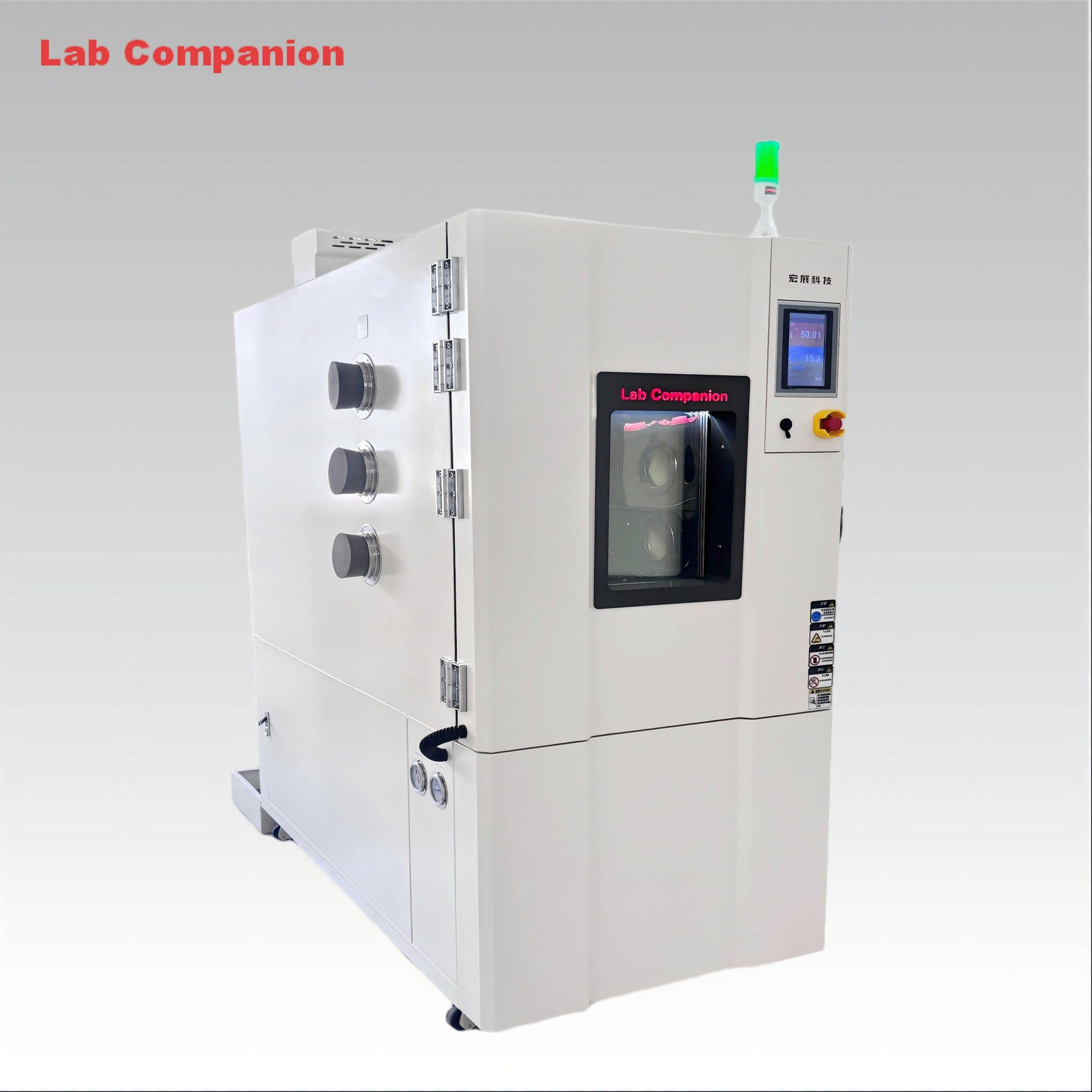
The precise environmental simulation capability of the temperature and humidity test chamber relies on a modular structure design of "chamber base + functional systems + control system". All components work in synergy to achieve accurate regulation and stable maintenance of temperature and humidity. The core structure is divided into the following parts:
I. Chamber Basic Structure: Core of Environmental Bearing
1. Inner Tank: As the core carrier of the test area, it is usually made of SUS 304 stainless steel for excellent corrosion resistance and easy cleaning. The smooth inner wall is equipped with one or two axial fans (quantity depends on test chamber volume), which circulate air inside the chamber to ensure uniform airflow distribution. For some models, the inner tank is treated with anti-condensation technology to prevent water dripping from affecting test results.
2. Outer Shell: Mainly constructed from galvanized steel sheets with electrostatic powder coating, it serves as protection and thermal insulation. The gap between the outer shell and inner tank is filled with dense mineral wool to minimize heat exchange between the inside and outside of the chamber, reducing energy consumption.
3. Chamber Door & Door Seal: The door is fitted with multi-layer heated glass, which allows real-time observation of test status; the heating and defrosting function prevents glass fogging. A silicone door seal is attached to the inner side of the door to ensure airtightness and avoid temperature/humidity leakage.
4. Shelves: Height-adjustable stainless steel shelves are designed for placing test samples. They ensure unobstructed air circulation around samples and do not interfere with internal airflow.
II. Temperature Control System
1. Heating Assembly: Installed near the air duct of the inner tank, it features electric heating tubes as the core component. With high temperature resistance and uniform heat generation, the tubes directly supply heat to the internal air and respond to heating commands from the controller.
2. Refrigeration System: Air conditioning components are integrated into the air handling system at the rear of the test chamber. Circulating air is cooled when passing through a heat exchanger. The condenser is generally air-cooled, with a water-cooled option available.
III. Humidity Control System
A. Humidification Device
l Electrode-type Humidifier: Consists of electrode rods and a humidification water tank (for storing distilled/deionized water). Steam is generated by heating the water when the electrode rods are energized.
B. Dehumidification Device
l Refrigeration Dehumidification Module: Linked with the evaporator, it achieves dehumidification through cooling and condensation.
l Drainage PipeCollects condensed water and discharges it outside the chamber to maintain inner tank dryness.
IV. Operation & Control System
1. Operators can send commands to the Labcompanion controller via the color LCD touchscreen to control the test chamber. Intuitive graphic symbols enable a user-friendly interface, simplifying operation without requiring additional instructions.
2. The Labcompanion controller is a self-monitoring, 32-bit digital measurement and control system specifically designed for test system applications.
Key Features
l Height-adjustable color LCD touchscreen for flexible operation.
l The program memory can store 100 test programs, with a total of up to 1000 program steps, supporting 250 program step cycles and 9999 program cycles.
l Software supports non-voltage input/output switches.
l Integrated temperature and humidity limit monitoring system.
l Connectable to host server systems via RS232-C serial interface or to network systems via TCP/IP.
l Switchable Chinese/English interface.
In summary, the structural design of the test chamber is centered on precision control, stable operation and reliability, with all components corresponding to the temperature/humidity control principles. Understanding the core components facilitates efficient equipment maintenance and troubleshooting.
In the reliability testing of new energy, electronic and electrical, aerospace and other fields, the multi-layer high and low temperature humidity test chamber breaks through the limitations of traditional single-chamber equipment by virtue of structural and technological innovations, becoming a core equipment for efficient and accurate environmental simulation testing. Its core features are as follows:
1. Layered Independent Structure to Block Working Condition Interference
• Adopts a vertical layered core structure with 3-5 built-in independent sealed chambers, made of 316L stainless steel for high/low temperature corrosion resistance and deformation resistance.
• High-density thermal insulation materials (thermal conductivity ≤0.023W/(m·K)) are installed between layers, combined with double-channel silicone rubber seals and door gap heating defrost strips to form a strong "thermal barrier".
• Practical tests confirm simultaneous operation of 80℃/95%RH (top layer) and -30℃/30%RH (bottom layer), with inter-chamber interference ≤1%, ensuring the independence and accuracy of multi-variable tests.
2. Parallel Testing Mode to Maximize Efficiency
• Breaks the time-consuming bottleneck of traditional "serial testing" and realizes "spatial parallel testing" upgrade.
• A four-layer equipment can simulate four different temperature and humidity conditions simultaneously; 16 sample groups complete 4-day test volume of ordinary equipment in 8 hours, improving efficiency by 12 times.
• Each chamber is equipped with independent compressors, humidifiers and air duct systems, supporting parallel operation of composite working conditions (constant temperature, alternating, low temperature, etc.), shortening R&D cycles by 30% (verified by new energy enterprises).
3. Dual-Algorithm Precision Control with Excellent Data Stability
• Adopts coordinated control of "PID + fuzzy control" dual algorithms, combined with high-precision capacitive sensors and temperature compensation technology.
• Temperature fluctuation is stabilized at ±0.5℃, humidity deviation ≤±3%RH (up to ±2%RH for some models); multi-directional guide fans and flow equalizing plates eliminate in-chamber temperature gradient, ensuring uniform environmental impact on samples.
• Fuzzy control adjusts refrigeration power quickly for sudden load changes, restoring stable conditions within 3-5 minutes and avoiding test interruption caused by temperature/humidity overshoot.
4. Intensive Energy-Saving Design to Reduce Comprehensive Costs
• Optimized design of "shared main unit + layered frequency conversion" reduces floor area of a three-layer equipment to 35% of three single-chamber equipment; centralized power supply cuts line cost by 40%.
• Frequency conversion module dynamically adjusts power based on chamber load, with total energy consumption 40% lower than same-capacity ordinary equipment and single-unit power ≤5kW.
• Reduces per-batch test cost by over 30% for enterprises, balancing space utilization, energy conservation and operation economy.
5. Intelligent Data Management to Meet Standardized Requirements
• Supports independent storage and on-screen display of layered data, generates "temperature-humidity-layer number" 3D curves, and automatically exports CNAS-certified reports to meet ISO, GB/T and other traceability standards.
• High-end models are equipped with IoT modules for remote monitoring, fault early warning and connection with R&D management systems, reducing material thermal aging rate analysis error from ±8% to ±1.5% and realizing full-process digital test control.
In summary, with the core advantages of "multi-chamber independence, efficient parallelism, precise control and energy-saving intensification", the equipment reconstructs environmental testing logic, provides technical support for product reliability verification, and becomes a key tool for R&D and quality control in high-end manufacturing.
High and low temperature test chambers are the "invisible guardians" in industrial production and scientific research innovation. They can simulate extreme environments to test product reliability, from small mobile phone chips to large automotive components. Starting from basic cognition, core parameters, industry trends, and usage misunderstandings, this article interprets their value and Labcompanion's practice.
I. Basic Cognition: The "Environmental Tester" for Product Quality
High and low temperature test chambers simulate natural environments by artificially regulating temperature, exposing performance defects of products under extreme temperature conditions in advance, helping enterprises optimize designs before mass production and avoid recall risks. Their applications cover electronic and electrical, medical, automotive, scientific research institutions and other fields, with test objects including PCB boards, monitors, automotive sensors, etc.
II. Key Parameters: Core Indicators for Selecting the Right Equipment
Core parameters determine equipment adaptability, with key indicators as follows:
1. Temperature control accuracy (deviation ±0.1℃~±0.5℃, high precision suitable for scientific research/high-end manufacturing);
2. Temperature uniformity (high-quality equipment ≤±2℃, high-end models ≤±1℃);
3. . Temperature range (conventional -40℃~150℃, special scenarios up to -80℃~200℃+);
4. Temperature change rate (10℃/min+ rapid temperature change can shorten test cycles);
5. Volume (from dozens of liters of desktop to dozens of cubic meters of walk-in, suitable for different scenarios).
III. Industry Trends: Green, Intelligent and Customized as the Mainstream
With industry upgrading, three major trends highlight competitiveness: 1. Green energy saving: Adopting environmentally friendly refrigerants, optimized refrigeration cycle and other technologies, energy consumption can be reduced by 20%+; 2. Intelligent interconnection: Realizing remote monitoring, automatic data collection and analysis, suitable for digital management; 3. Customization: Providing personalized designs for medical sterility, new energy explosion-proof and other needs.
IV. Usage Misunderstandings: Four Major Pitfalls to Avoid
1. The temperature change rate is not the faster the better; it needs to match product characteristics and test standards;
2. Uniformity cannot be ignored; uneven temperature field will lead to result deviation; 3. Regular maintenance is indispensable, otherwise it will affect accuracy and increase energy consumption;
4. The load capacity should not exceed 30% of the chamber volume to avoid damaging temperature field uniformity.
V. Labcompanion: A Quality Practitioner Following Trends
Labcompanion focuses on R&D and practices the three major trends: In terms of green energy saving, it adopts environmentally friendly refrigerant R449A and cascade refrigeration + CO₂ working fluid technology, reducing energy consumption by 28%~38% and obtaining provincial energy-saving certification; In terms of intelligence, it is equipped with an AI intelligent control system, supporting remote monitoring and automatic data analysis, with preset 200+ test programs; In terms of customization, it provides customized temperature range, chamber structure, etc., covering the needs of various industries. Its equipment has excellent core parameters: temperature control accuracy ±0.1℃~±0.3℃, uniformity ≤±1.5℃, temperature range -80℃~200℃. Relying on 20 years of experience, it provides full-process services from demand analysis to maintenance.
High and low temperature test chambers bear the responsibility of ensuring product quality. Accurately understanding core information can help select equipment and avoid pitfalls. Labcompanion creates trend-compliant equipment through technological innovation, providing support for quality upgrading in various industries.
1. There are significant differences in test standards across industries (e.g., ISO, GJB, FDA). Can the equipment directly meet multi-standard compatibility without manual parameter adjustment?
Answer: The core pain point is that standard adaptability affects certification applications. Hongzhan is built with a library of over 200 industry standard programs (including ISO 16750 for electronics, GJB 150, FDA 820 for medical devices, etc.), which can be matched with requirements with one click without manual programming. The data format complies with certification specifications, facilitating rapid approval.
2. When testing special-shaped samples (such as long strip components, irregular assemblies), can the equipment's inner tank layout and door opening method be adapted to avoid blocking the air duct and affecting test results?
Answer: Conventional equipment mostly has fixed inner tanks and front-opening doors, which are difficult to adapt to special-shaped/large samples. Hongzhan supports customization of inner tank sizes from 36L to 10000L, and can design zoned air ducts and reserve sample wire outlets. Door opening methods can be front-opening, side-opening, or double-opening (suitable for extra-long samples), ensuring temperature uniformity during testing of special-shaped samples without affecting data.
3. Can existing laboratory equipment such as data loggers, vibration tables, and salt spray chambers be linked and controlled with high and low temperature test chambers to achieve comprehensive testing of temperature and humidity + vibration + salt spray?
Answer: Equipment synergy compatibility is easily overlooked. Hongzhan equipment is equipped with standardized interfaces (RS485, Ethernet) and can be seamlessly connected with third-party instruments. Through the central control system, it can synchronously control multiple environmental factors such as temperature and humidity, vibration, and salt spray, with real-time data synchronization and integration, adapting to complex reliability testing needs in aerospace, new energy and other industries.
4. When testing flammable, corrosive, or volatile gas-containing samples, does the equipment have special protective designs to avoid safety hazards or equipment damage?
Answer: The impact of sample characteristics on equipment is easily overlooked. Hongzhan can customize special protective models: explosion-proof inner tanks and inert gas replacement systems for flammable samples; Hastelloy inner tanks (acid and alkali resistant) for corrosive samples; activated carbon filtration devices for volatile samples, ensuring safety and extending equipment service life.
5. Can the equipment be compatible with unstable laboratory voltage (such as voltage fluctuations during peak workshop electricity usage) or special power supply requirements (such as 110V voltage overseas) to avoid frequent shutdowns or component burnout?
Answer: Power supply compatibility is easily overlooked. Hongzhan equipment supports a wide voltage range of 110V-440V, adapting to domestic and foreign power supply standards. It has a built-in intelligent voltage stabilization module and can operate stably even with a voltage fluctuation of ±15%. Equipped with triple protection against overload, overvoltage, and undervoltage, it avoids equipment damage or test interruption caused by power supply issues.
1. Electronics Industry (Chips, Components)
Q: Does inner tank size and material affect testing for small precision components?
A: Select 36-100L small-volume inner tank (reduces temperature fluctuation); prioritize 304 stainless steel (corrosion-resistant, uniform heat conduction). Confirm multi-point temperature collection (≥8 points) support. Hongzhan offers customizable zoned temperature measurement, synchronous data upload, and chip batch testing compatibility.
Q: Will the refrigeration system degrade after 72 hours of continuous high-intensity testing?
A: Focus on refrigeration configuration: choose two-stage cascade refrigeration (more stable than single-stage) with imported compressors (Danfoss/Coppa). Hongzhan equipment features MTBF of 20,000 hours, no continuous operation attenuation, and overload protection.
2. New Energy Industry (Batteries, Charging Piles)
Q: For battery testing with explosion-proof requirements, how to judge equipment explosion-proof rating and safety design?
A: Must comply with ATEX explosion-proof certification. Inner tank equipped with explosion-proof pressure relief valve and inert gas inlet; circuit adopts flameproof design. Hongzhan customizes Ex d IIB T4 explosion-proof test chambers, suitable for lithium battery thermal runaway simulation.
Q: Can equipment heating/cooling rate meet large-capacity battery pack testing? Is energy consumption high?
A: Select custom models ≥1000L with temperature change rate ≥10℃/min; adopt CO₂ natural refrigerant system (38% lower energy consumption than traditional). Hongzhan optimizes refrigeration circuits for new energy, maintaining stable rates under heavy loads and saving over 10,000 yuan in annual electricity costs.
3. Aerospace Industry (Components, Aircraft Assemblies)
Q: Can temperature uniformity meet standards in extreme temperature ranges (-80℃ to 200℃)?
A: Select equipment with "PID self-tuning + fuzzy control"; inner tank adopts honeycomb air duct design (reduces temperature difference). Hongzhan maintains uniformity ≤1.5℃ even at -80℃, passes GJB military standard certification, suitable for simulating extreme high-altitude environments.
Q: Can equipment connect to high-level data acquisition systems? Is data transmission stable?
A: Confirm RS485/Ethernet interface support, compatibility with LabVIEW/Excel, data sampling rate ≥1 time/second, and storage capacity ≥1 million records. Hongzhan equipment has electromagnetic shielding, ensuring interference-free transmission and seamless integration with aerospace research systems.
4. Medical Industry (Consumables, Devices)
Q: Medical consumables testing requires high inner tank cleanliness; what are the relevant equipment designs?
A: Inner tank made of 316L medical-grade stainless steel (sterilization efficiency ≥99%), with 120℃ automatic high-temperature sterilization; air duct designed with no dead corners (prevents dust accumulation). Hongzhan cleanroom test chambers comply with ISO 13485, suitable for syringe and medical sensor sterility testing.
Q: Test data needs 5+ years of traceability; do equipment storage and export functions meet requirements?
A: Must have audit trail, encrypted data storage for ≥5 years, one-click export to PDF/Excel, and tamper-proof design. Hongzhan equipment is equipped with industrial-grade storage modules, meeting FDA/CE regulatory requirements, facilitating medical device registration.
Industry-Specific Selection Core
Precise matching with industry-specific demands is key:
Electronics: Focus on precise temperature control and small-volume adaptation
New Energy: Prioritize explosion-proof, wide temperature range, and large-load capabilities
Aerospace: Emphasize extreme temperature resistance and high-level data connectivity
Medical: Highlight compliance, cleanliness, and data traceability
Avoid blind pursuit of uniform parameters; conduct targeted screening per industry standards (GJB, ISO 13485). Guangdong Hongzhan Technology Equipment provides industry-customized solutions, covering core technical requirements across fields. With professional certifications and compatible designs, it helps customers avoid selection pitfalls and achieve precise matching.
From the customer perspective, this guide sorts out core questions and selection criteria for high-low temp test chamber specs/performance across industries, with answers integrated with Hongzhan's advantages, fitting practical procurement scenarios.
Common Core Technical Spec Questions
1. How to choose temperature range? Is wider better?
Customer question: "Different industries have different temp requirements. Wide range or needs-based?"
Selection: Avoid blind pursuit of ultra-wide range (costly). Match industry needs: Electronics/Medical: -40℃~150℃ (basic); New Energy: -70℃~150℃ (extreme cold); Aerospace: -80℃~200℃ (extreme env). Hongzhan customizes -100℃~300℃ full range for cost-effectiveness.
2. How to choose temp change rate? Difference between "average" and "instantaneous"?
Customer question: "Rapid temp change needs 10℃/min. Average or instantaneous rate?"
Selection: Prioritize full-process average rate (actual test scenario fit). Electronics: 5-10℃/min sufficient; New Energy/Aerospace: ≥15-20℃/min. Hongzhan uses AI dynamic temp control + imported compressors, supporting 5-30℃/min adjustable with no instantaneous attenuation.
3. How to choose inner tank size? Conflict between load and temp uniformity?
Customer question: "Samples vary in size. Fixed or custom volume? Will uniformity drop when fully loaded?"
Selection: Volume matches single-test sample quantity (reserve 30% air duct space). Conventional: 36L (lab small-batch), 150L (industrial medium-batch), 500L+ (large samples). Prioritize custom tank brands. Hongzhan customizes 36L-10000L tanks with honeycomb air ducts, maintaining ≤1.5℃ uniformity even at full load.
4. Practical significance of temp accuracy/uniformity? How to verify?
Customer question: "Spec says ±0.5℃ accuracy. Achievable in use? Will deviation affect results?"
Selection: Accuracy determines data validity: Electronic chips: ≤±0.3℃; Medical devices: ≤±0.5℃; Uniformity: ≤1℃ (avoid local sample failure). Verification: Request 3rd-party calibration reports (e.g., NIM certification). Hongzhan equipment is calibrated before delivery, supporting on-site recheck.
5. How to judge humidity range/accuracy for humidity-heat models? Retrofit possible later?
Customer question: "Some tests need humidity. 0-98% RH or 40-95% RH? Retrofit humidity function later?"
Selection: General scenarios: 20-98% RH (±2% RH); Medical/Electronics: 5-98% RH (±1.5% RH, avoid low-humidity failure). Retrofit not recommended (air duct/control system modification risks stability); choose full-equipped models initially. Hongzhan humidity-heat models support 10-98% RH (ultrasonic humidification + condensation dehumidification) and offer pre-installed upgrade solutions for stability.
6. Upper limit for continuous operation? How to ensure stability long-term?
Customer question: "Need 100+ hours continuous test. Overload risk? Accuracy drop after 1 year?"
Selection: High-quality equipment has no mandatory limit; key is core component redundancy (e.g., dual-compressor backup). Confirm annual calibration and 1-year core component warranty. Hongzhan supports 7x24h operation (MTBF 20000h) with overload protection/high-temp alarm, free annual calibration, and ≤0.1℃ accuracy attenuation after 1 year.
Key selection tips: Match temp range, accuracy and uniformity to industry needs; reserve air duct space for tank size; prioritize humidity-heat function initially. Focus on continuous operation capability and core components; choose eco-friendly refrigerants. Hongzhan's customizable, precise, stable and eco-friendly equipment meets core spec demands, helping customers avoid pitfalls and select accurately.
1. Refrigeration System Protection
- Compressor Overpressure Protection: Real-time monitors compressor internal pressure. Automatically triggers protection when pressure exceeds the safety threshold to avoid overpressure damage and ensure stable refrigeration system operation.
- Compressor Overheating Protection: Equipped with overheating detectors to sense compressor operating temperature. Immediately cuts off the circuit when overheated to prevent winding burnout and extend equipment service life.
- Compressor Overcurrent Protection: Monitors compressor current via a detection module. Rapidly cuts off power when current is abnormally high to avoid damage to the compressor and related electrical components.
- Refrigerant Pressure and Overload Protection Device: Monitors refrigerant circulation pressure to prevent system damage from leakage or abnormal pressure; protects against refrigeration system overload to ensure safe operation.
2. Test Chamber Protection
- Adjustable Overtemperature Protection: Flexibly sets overtemperature thresholds to adapt to different samples' temperature tolerance. Triggers protection promptly when the test chamber temperature reaches the set threshold.
- Three-Layer High-Temperature Overtemperature Protection: Hierarchical design: 1) Basic overtemperature protection linked with test control logic; 2) Electronic device for fast response; 3) Ultimate barrier to cut off heat source under extreme high temperature, ensuring sample and equipment safety.
- Fan Motor Overcurrent Protection: Provides overcurrent protection for circulating fan motor. Cuts off power quickly when current exceeds standard due to abnormal load or jamming to prevent burnout and ensure normal temperature uniformity circulation.
- Fault Abnormality Protection: Monitors equipment operation. Cuts off control power immediately to prevent fault expansion when abnormalities (e.g., temperature runaway, motor failure) occur; outputs fault indication and alarm signals for quick troubleshooting.
- Active Water Shortage Prompt: Equipped with water level sensor. Issues acousto-optic prompt when water level is too low, reminding timely replenishment to avoid test disruption or humidification component damage.
- Dynamic High and Low Temperature Protection: Intelligent adaptive adjustment. Dynamically modifies protection values according to test temperature curve to ensure test smoothness and intervene promptly in abnormal temperature fluctuations, improving safety and accuracy.
3. Other Protections
- Main Power Phase Sequence and Phase Loss Protection: Monitors power phase sequence and phase presence. Cuts off main power immediately on phase sequence error or loss to prevent motor reversal and electrical component burnout, ensuring overall electrical safety.
- Short Circuit Protection: Equipped with short circuit protectors. Fuses or trips quickly to cut off fault circuit when short circuit occurs, avoiding fires and equipment damage.
- Leakage/Surge Prevention Protection: Multi-layer design: leakage circuit breaker ensures operator safety; FUSE and RC electronic components suppress grid surges, protecting precision electronic parts.
- Controller Internal Automatic Detection Protection: Real-time detects core temperature/humidity sensor. Triggers protection and fault prompt on sensor abnormality to avoid test deviation or equipment misoperation.
- Water Cutoff and Dry Burning Protection: Dual protection: prevents humidification system damage from water cutoff idling; avoids electric heating component burnout in water-free state, ensuring humidification and heating system safety.
- Expansion Protection Device: Reserves two fault detection input interfaces for additional protection components or upgrades, enhancing system expandability and adaptability.
Summary
The test chamber's safety protection devices form a comprehensive, multi-level system covering refrigeration, test chamber and electrical systems. Integrating real-time monitoring, early warning and rapid response, they effectively prevent equipment damage from abnormalities (overpressure, overheating, etc.), protect samples and operators. Reserved expansion interfaces enhance flexibility and adaptability, ensuring stable, safe and reliable operation under various conditions.
In product reliability testing, test chamber selection directly determines result value. While composite salt spray and high-low temperature test chambers are both environmental test equipment, their applications differ greatly. This guide helps you quickly select suitable equipment by testing requirements, application scenarios and core parameters.
I. Clarify Core Requirements First: What Problem Do You Need to Solve?
The first selection step is clarifying the core purpose—verifying "corrosion resistance" or "temperature change resistance", the essential difference between the two.
1. Choose Composite Salt Spray Test Chamber: When Focusing on "Corrosion Resistance Reliability"
For products exposed to high-salt/humid environments or relying on coatings/platings, the composite salt spray test chamber is ideal. It simulates marine/coastal industrial corrosion environments to accurately assess protective system durability.
Typical Requirement Scenarios:
① Coastal-used automotive parts (prevent coating peeling/rusting)
②Galvanized hardware (confirm salt spray corrosion resistance duration)
③ Marine engineering equipment (test overall salt corrosion resistance)
2. Choose High-Low Temperature Test Chamber: When Focusing on "Temperature Change Stability"
For products working in extreme/frequent temperature changes, the high-low temperature test chamber is essential. It simulates high-low temperature cycles to detect functional failures and structural deformations caused by temperature shifts.
Typical Requirement Scenarios:
• Mobile phone batteries (test low-temperature discharge performance)
• Industrial controllers (ensure high-temperature parameter stability)
• Outdoor instruments (assess temperature-induced shell cracking risk)
II. Quick Matching by Industry and Product Type
Product characteristics in different industries determine testing priorities. The following classifications enable quick selection.
1. Industries and Products Prioritizing Composite Salt Spray Test Chamber
Core feature: Products in high-salt environments or with protective coatings as key quality indicators.
• Automotive: Body parts, chassis components, electroplated decorations
• Hardware Electroplating: Galvanized/chromium parts, tools, sanitary hardware
• Marine/Shipbuilding: Ship parts, marine equipment, port machinery
• Outdoor Equipment: Communication base stations, PV brackets, lamp housings
2. Industries and Products Prioritizing High-Low Temperature Test Chamber
Core feature: Product performance sensitive to temperature or requiring extreme temperature adaptability.
• Electronics: Chips, circuit boards, sensors, home appliances
• New Energy: Lithium batteries, PV modules, energy storage devices
• Military/Aerospace: Military electronics, aerospace components
• Medical Devices: Portable medical equipment, outdoor emergency tools
III. Key Parameter Checklist for Selection
After confirming the general direction, match key parameters to avoid cost waste or insufficient performance.
1. Composite Salt Spray Test Chamber: Focus on "Corrosion-Related Parameters"
• Salt Spray Type: NSS/ASS/CASS (select per standard; CASS for automotive parts)
• Deposition Rate: 0.5-2mL/(80cm²·h) (comply with test standards)
• Additional Functions: Temperature-humidity cycle/drying (as needed)
• Chamber Material: PVC/PP (strong corrosion resistance)
2. High-Low Temperature Test Chamber: Focus on "Temperature Change-Related Parameters"
• Temperature Range: Conventional -70℃~150℃ (extendable for special needs)
• Change Rate: 5℃/min (rapid) for impact resistance; conventional for daily tests
• Humidity Function: Temperature-humidity type (if needed); pure high-low temperature otherwise
• Chamber Volume: Ensure product fit with ≥5cm wall distance (temperature uniformity)
IV. Selection Pitfalls: Common Misunderstandings
• Misunderstanding 1: Avoid redundant functions—no complex temperature control for salt spray tests; no humidity function for temperature-only tests
• Misunderstanding 2: Match parameters to actual needs—overly wide temperature ranges increase costs unnecessarily
• Misunderstanding 3: Comply with industry standards (e.g., ISO 9227 for automotive) to ensure valid results
This guide summarizes key issues and solutions for temperature & humidity test chambers during dual 85 testing (85℃, 85% RH), focusing on quick troubleshooting and long-term maintenance for operators and customers.
I. Core Issues & Resolution System
Each issue includes root cause, immediate solution, and long-term prevention (except for defect exposure).
1. Failure to Reach 85% RH
Root Cause: Compressor over-dehumidifies—evaporator temperature below dew point (79-80℃) causes condensation, outpacing humidification.
Immediate Solution: Disable compressor; run only heating and humidification to maintain 85℃ and avoid condensation.
Prevention: Regularly calibrate humidifier atomization volume and check evaporator temperature sensor accuracy.
2. Temperature Out-of-Control/Fluctuations
Root Cause: Mainly faulty solid-state relays (keeps heating elements on), plus aging heating tubes or defective temperature sensors.
Immediate Solution: Cut power; inspect circuit with multimeter (relay on-off, heating tube damage, sensor accuracy) and replace faulty parts.
Prevention: 10-15min pre-calibration before testing; replace vulnerable parts (relays, sensors) every 1000 operating hours.
3. Water Marks/Condensation on Products
Root Cause: Residual oil/dust on products, or dense samples blocking air ducts (poor circulation, localized high humidity).
Immediate Solution: Pause test; clean products with anhydrous ethanol, dry, and reposition samples for proper spacing.
Prevention: Establish pre-test cleaning standards; clean air duct filters regularly and optimize sample rack layout.
4. Incorrect Operation Logic
Root Cause: Operator errors—misactivated refrigeration, wrong parameters (fast heating, delayed humidification), or mismatched operation modes.
Immediate Solution: Reset program (disable refrigeration, set 85℃/85% RH, sync humidification with heating).
Prevention: Develop SOPs; new employees must pass operation assessments (including simulated faults).
5. Material/Process Defect Exposure
Root Cause: Extreme environment accelerates aging—e.g., poor heat-resistant EVA film hydrolyzes (yellowing, delamination); leaky electronic packages cause corrosion/short circuits.
Measures: Inspect products post-test, record defects; judge qualification by material standards; optimize processes (e.g., use hydrolysis-resistant EVA, enhance sealant density).
Test chambers, as core equipment for environmental reliability testing across industries such as electronics, automotive, aerospace, and new energy, rely on a multi-dimensional, redundant safety protection system to ensure long-term operational stability, personnel safety, and the integrity of test samples and equipment. Beyond basic safety guarantees, these protection mechanisms are designed to adapt to complex test scenarios and extreme environmental conditions. Here’s a professional and detailed breakdown of the core protection settings:
1. Refrigeration System Protection
Compressor protection: Equipped with overpressure, overheating, and overcurrent triple protection mechanisms. Real-time monitoring of operating pressure, exhaust temperature, and working current prevents compressor burnout, cylinder scuffing, or seal damage caused by abnormal conditions such as refrigerant leakage, pipeline blockage, or voltage fluctuations.
Refrigerant protection: Integrated high/low pressure switches and overload protection devices continuously monitor the refrigerant circulation system. When pressure exceeds the safe threshold or the system is overloaded, the device automatically cuts off the corresponding circuit and triggers an alarm, ensuring stable refrigerant flow and avoiding system damage due to pressure anomalies.
2. Test Area Protection
Multi-layer over-temperature protection (redundant design):
1st layer: Adjustable high/low temperature over-temperature protection, dynamically linked to the set operating control temperature. When the test area temperature deviates from the set range by a preset value, the system automatically adjusts the heating/cooling module or pauses operation to prevent sample damage.
2nd/3rd layers: Independent electronic high-temperature over-temperature protection devices (double redundancy). Directly connected to the power supply circuit, these devices bypass the main control system to cut off power immediately if the 1st layer protection fails, eliminating potential fire hazards or equipment damage caused by excessive temperature.
Fan motor overcurrent protection: Monitors the operating current of the test area circulation fan. If the motor jams, wears, or experiences current surges due to other faults, the protection system triggers an alarm and cuts off power to avoid motor burnout and ensure uniform temperature distribution in the test chamber.
Fault alarm system: Integrates sound and light alarms with a digital display. When abnormalities occur (e.g., over-temperature, water shortage, or sensor failure), the system immediately cuts off the relevant power supply, activates the alarm, and displays the specific fault cause on the control panel for quick troubleshooting.
Active water shortage reminder: For humidity-controlled test chambers, a real-time water level monitoring sensor in the humidity water tank triggers an audible and visual alarm when the water level is too low. The system pauses the humidity control function to prevent dry burning of the humidifier and ensure the stability of the humidity control system.
Dynamic high/low temperature protection: Real-time adapts to the set test parameters (temperature range, rate of change). During rapid temperature rise/fall or extreme temperature tests, the protection system dynamically adjusts the safety threshold to avoid false triggers while ensuring comprehensive protection against temperature anomalies.
3. General Electrical Protection
Main power supply protection: Equipped with phase sequence and phase loss protection devices. Automatically detects the phase sequence and integrity of the three-phase power supply; if phase sequence reversal or phase loss occurs, the system locks the power supply and alarms to prevent damage to the compressor, fan, and other core components caused by incorrect power supply.
Short circuit & leakage/surge protection: Configured with high-sensitivity short circuit breakers to quickly cut off power in case of line short circuits, avoiding electrical fires or component burnout. Equipped with leakage circuit breakers and RC electronic surge protectors to prevent electric shock hazards caused by equipment leakage and suppress voltage surges from the power grid, protecting the control system and electronic components.
Sensor self-detection: Real-time self-inspection of temperature, humidity, and other key sensors. If a sensor malfunctions (e.g., signal loss, inaccurate measurement), the system immediately alarms and switches to backup sensor data (if equipped) or pauses operation to ensure the reliability of test data and prevent misoperation due to false sensor signals.
Dry heating protection (humidity water circuit): For the humidity water circuit and humidifier, a dedicated dry heating protection device monitors the water level and heating status. If the humidifier heats without water, the protection system cuts off the heating power immediately to avoid humidifier burnout and extend the service life of the humidity system.
Expandable protection: Reserved 2 fault detection input interfaces, supporting customized addition of special protection modules (e.g., gas leakage protection for flammable/explosive test samples, pressure protection for sealed test chambers) to meet the safety requirements of industry-specific test scenarios.
These multi-layered, redundant, and configurable protection mechanisms form a comprehensive safety barrier for test chambers. Whether in routine reliability testing or extreme environmental simulations, they ensure the equipment operates stably and reliably, while maximally safeguarding the safety of operators, test samples, and the equipment itself—becoming a key guarantee for the accuracy of test results and long-term operational efficiency.








 Consigue una cotización
 Red IPv6 compatible